Protect the benefit. Protect the beneficiary. But when the government mandates a social benefit, it should not leave private businesses alone to absorb the cost.
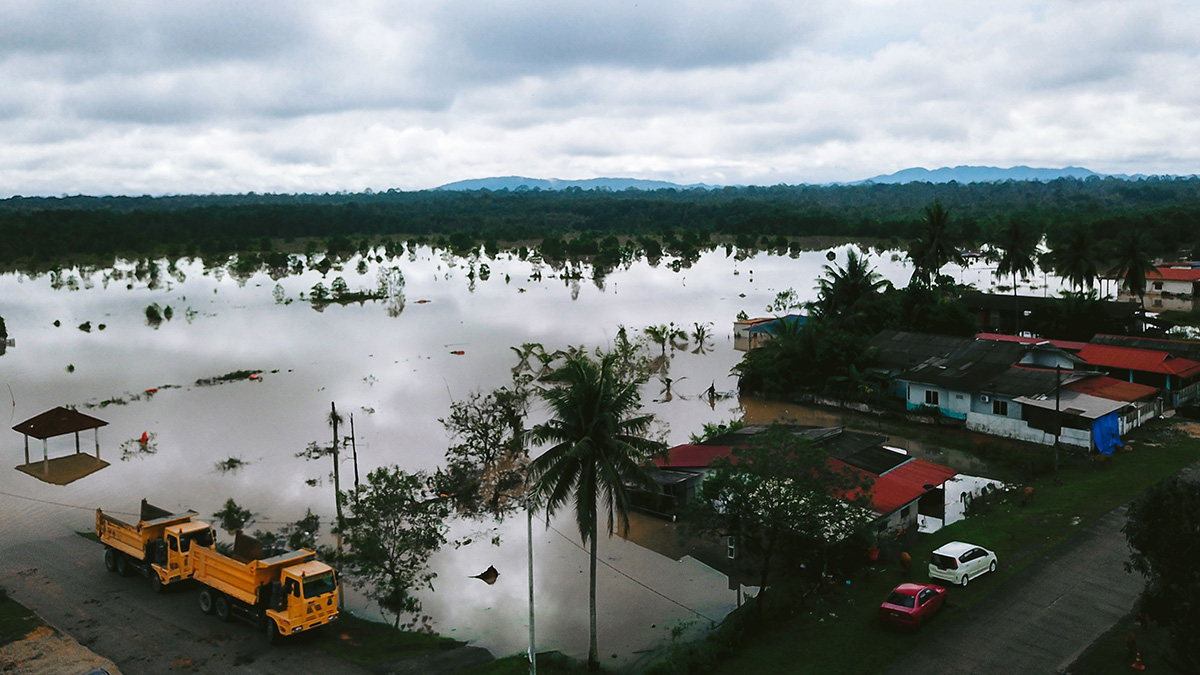
On August 17, the southwest monsoon dropped over 200 millimeters of rain on Metro Manila in five hours. Marikina’s own mayor called it half a day of Ondoy’s rainfall, compressed into an afternoon. The Marikina River rose to second alarm, and residents in low-lying barangays evacuated ahead of it. Two days later, the rain still hasn’t let up, and a red rainfall warning is up over the capital.
I have run kitchens long enough to know what a flood actually costs a restaurant. Not in theory, but in covers that don’t happen, a rider who can’t cross a flooded street, staff who can’t get to their shift, stock that spoils when the power goes and the chiller fails. A night of revenue simply disappears, while rent, payroll, and utilities stay due regardless.
A flood doesn’t ask whether a business can afford to close. It comes, you deal with it, and you hope you have enough reserves to get through.
Every restaurant owner I know has a version of this story. We’ve learned to build around disruptions we can’t control.
HB 7318, as written, risks creating another kind of shock. Except this one is man-made.
The Shock, Quantified
Take a ₱500 meal, VAT-inclusive, already offered at a 50% promotional discount. The guest pays ₱250. Assume food and direct cost run 35% of the regular price, or ₱175. Under current law, that promotion leaves ₱75 in contribution before rent, labor, and utilities.
Now apply HB 7318. The mandatory 20% senior citizen/PWD discount and VAT exemption stack on top of the already-discounted ₱250. Strip out 12% VAT first, per BIR rules: ₱250 net of VAT becomes ₱223.21. Take another 20% off that, or ₱44.64. The guest now pays ₱178.57.
Against the same ₱175 cost, the restaurant is left with ₱3.57.
We went from ₱75 to ₱3.57, a collapse of more than 95%, before paying a peso of rent, labor, utilities, or any of the other costs of running the restaurant.
That’s the part that worries me. The industry is already stretched. The Restaurant Association of the Philippines’ August 2026 Industry Pulse survey found that 78.8% of operators describe themselves as thin-margin, under pressure, or operating at a loss.
And I want to be very clear about something. The benefit isn’t the problem, and neither are the people who receive it.
Our elders and our kapwa with disabilities deserve to be served with dignity, discount intact, every time.
I’m a chef. My instinct is to feed people well and be generous with the plate. I don’t want to reach for a calculator every time a senior citizen sits at my table. That is not how hospitality should feel.
But I also know what happens at the end of the month.
The suppliers have to be paid. So do our people. There is rent, electricity, gas, water, taxes. A restaurant can be generous, but it cannot keep giving away money it doesn’t have.
Keep squeezing the margin and eventually something has to give. Prices go up for everyone else. You cut somewhere you don’t want to cut. Or, eventually, you close.
So the question isn’t whether seniors and persons with disabilities deserve the benefit.
They do.
The question is why the business serving them should be expected to finance it.

A Flood Is Nobody’s Decision
Obviously, a flood and a legislated discount are not the same thing. My point is what happens to a business when a cost lands that it has no choice but to absorb.
There is also one very important difference.
A flood is nobody’s decision. An unfunded mandate is.
And because it is a decision, it can be designed differently.
The government already recognizes that some burdens should be shared. That’s why we have calamity funds, assistance programs, insurance and other mechanisms to spread extraordinary costs instead of leaving everything with whoever happened to take the hit.
But with mandatory discounts, the government decides on the benefit and leaves the establishment to finance most of it.
Yes, businesses can claim a tax deduction. But a deduction is not reimbursement. You recover only part of what you gave away. And if your business isn’t making taxable income in the first place, there may be very little to recover.
Before Asking Business to Pay, Account for Public Money
This is where the flood comparison becomes uncomfortable.
The Department of Finance told the Senate that “ghost” flood control projects — infrastructure that was supposed to help prevent weeks like this one — may have cost the economy an estimated ₱42.3 billion to ₱118.5 billion in losses from 2023 to 2025, equivalent to as many as 266,000 jobs.
Those are estimated economic losses, not a confirmed amount of stolen cash. I think that distinction matters.
But something clearly went terribly wrong with public spending that was supposed to protect taxpayers. The Senate inquiry, the Independent Commission for Infrastructure, and the court cases that followed are still trying to establish exactly what happened.
I’m not going to claim that money recovered from flood-control anomalies could simply pay for the SC/PWD tax credit. We haven’t done that calculation, and I don’t want to pretend we have.
My point is simpler.
Before the government passes another cost down to businesses, shouldn’t we also be asking what happened to the public money already entrusted to it?
When public money leaks, the answer cannot simply be to make private businesses pay more.
Protect the Benefit. Fund the Mandate.
There is a way to do this without taking anything away from senior citizens or persons with disabilities.
Restore the tax credit.
The guest still gets the same discount. The restaurant still gives it at the table. But instead of forcing the establishment to absorb most of the cost, the state ultimately carries the cost of the benefit it mandated.
We have already decided, rightly, that seniors and persons with disabilities deserve this support.
Then we should all carry the responsibility for providing it.
That’s what kapwa means to me. We take care of our elders and persons with disabilities because they are part of us. But the businesses employing our people, paying taxes, buying from local suppliers, and trying to keep their doors open are part of the same community.
I’m not asking businesses to be excused from that responsibility. I’m asking that the responsibility be shared.
I’ve spent my career learning how to keep kitchens open through floods I didn’t cause. I can accept that some things are beyond anyone’s control.
This isn’t one of them.
Protect the benefit. Protect the beneficiary. Fund the mandate.
Chef Tatung Sarthou is a cook who talks too much, writes a bit, and occasionally wins awards for both. He’s the man who started Simpol, where he tries to make sense of Filipino cooking—and life—one guisa at a time.
Read more Stories on Simpol.ph
What’s Left In Our Homes When The Flood Drains Down