
What defines good art when massive grants aren’t part of the equation?
The local filmmaking community was recently set ablaze by a Facebook post from film critic and writer Jason Tan Liwag. He shed light on a new conversation: student thesis films reaching six-to-seven-digit budgets.
Consequently, this revelation has sparked an intense, polarizing debate across the industry. It forces educators, students, and veteran filmmakers to ask a fundamental question:
Does a ₱500,000 project grant really need to come first, or should the birth and soul of the material dictate the budget?
The “Bloated” Student Production Budgets
Traditionally, student thesis films have kept things modest. Budgets averaged between ₱50,000 to ₱100,000, scraped together from savings, small grants, or crowdfunding. Lately, however, that financial ceiling has skyrocketed.
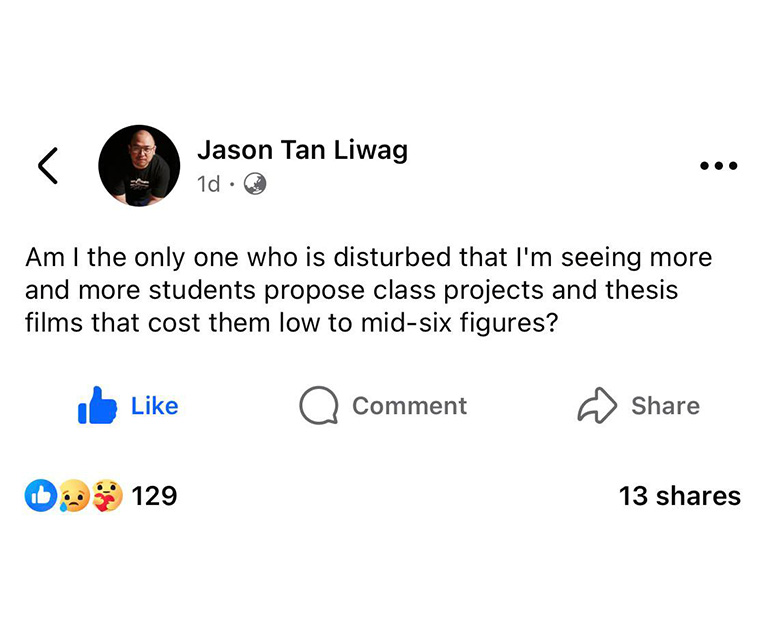
Some student short films are amassing close to ₱1,000,000. In comparison, that is a budget usually reserved for professional, independent mid-length films or micro-budget features.
Ang problema sa bloated film thesis budgets e gumagawa ang mga bata ng pelikula based on the belief that more expensive equipment create better movies.
That’s like buying an expensive laptop to improve your writing. “
Dustin Celestino, a film and theatermaker joining the discourse.
The Primacy of the Story
Meanwhile, peers acknowledge that production is expensive at any level due to higher expectations and crazy inflation. Costs are soaring for transport, food, and fair pay for artists. Even so, many insist the priority must always remain the story.
In fact, independent creators are sharing similar sentiments about self-producing. For instance, theater and film director Laurence De Vera points out that you really only need a mobile phone to bring a vision to life.
(our film) ‘fifty-fifty’ cost under Php 500 to make. you really don’t need much to make a decent film. you’ll end up postponing your film/dream if you wait for that 50k camera. pick up your damn phone and make a movie.”
Laurence De Vera added,
for us it was a dated DSLR with a dead pixel. 2 years ago, ‘fifty-fifty’ screened in cinemas nationwide as an opener for Dan Villegas’ ‘Uninvited’ for the 50th MMFF, Student Shorts Competition.”
Furthermore, critics argue these massive budgets create an uneven playing field. As a result, artistic excellence gets sidelined by deep pockets and flashy gear.
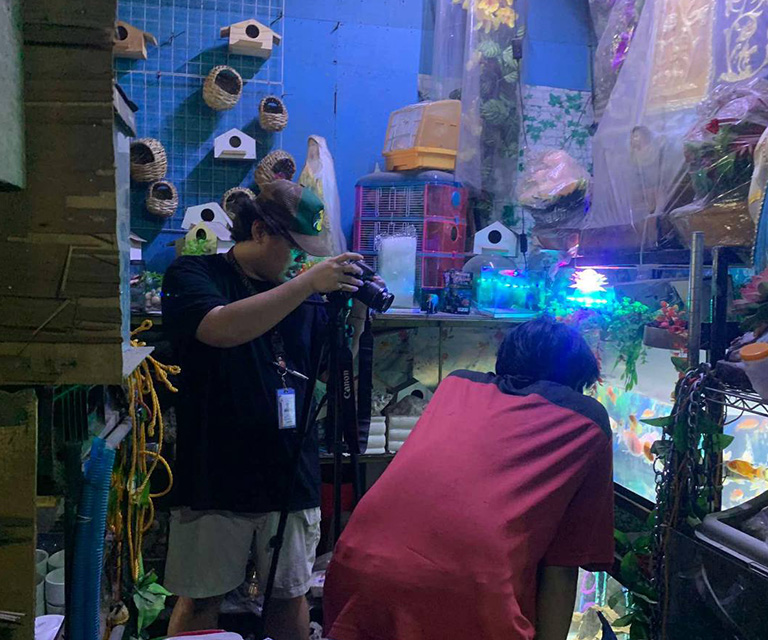
After all, a great script will always beat the most expensive camera package.
The Cross-Disciplinary Debate
Ultimately, this conversation has rapidly outgrown film schools.
It is drawing in theater actors, independent crew members, visual artists, and seasoned producers who are weighing in on the ethics of it all. On one hand, some argue that handling big budgets prepares students for commercial filmmaking realities.
On the other hand, indie veterans counter that true cinematic brilliance comes from resourcefulness, storytelling, and conceptual depth rather than throwing capital at high-end rentals.
Indeed, this argument carries weight. The Philippines’ most well-regarded film icons built their legendary reputations on low-to-no-budget films. We literally have Lav Diaz, a world-renowned filmmaker, and Kidlat Tahimik, the National Artist for Film, as proof.
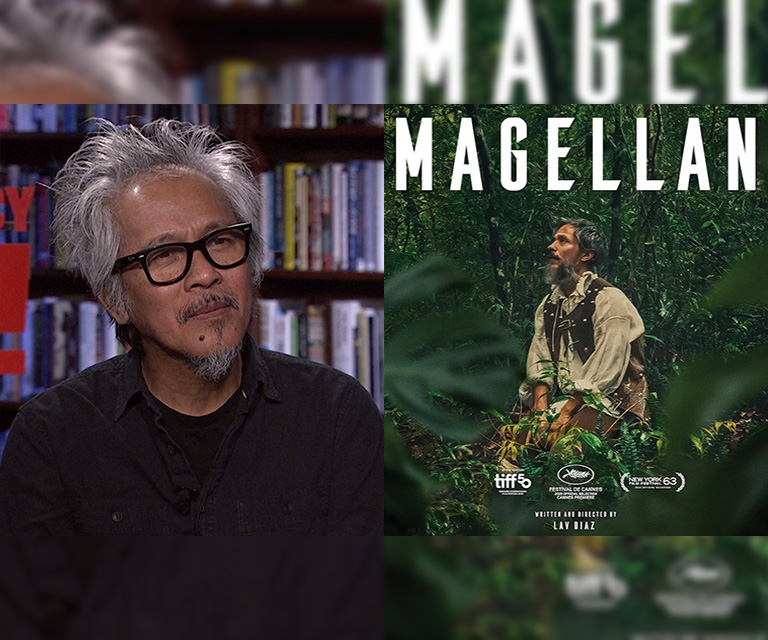
Through these raw projects, they established their names at prestigious festivals like Cannes, Venice, Locarno Film Festival, and Berlin Film Festival.
This discourse exposes a widening socio-economic crisis within art education. It challenges institutions to reconsider how they evaluate student work:
Should a film, or art, in general, be judged on the cinematic gloss that a massive budget can buy, or on the raw strength of its narrative and directorial vision?
Read more Stories on Simpol.ph
On Limiting Festival Rituals: The Loss of Communal Act with Wattah Wattah Festival
Gab Cabangon is pondering on his band roots with angst-fueled track “Ikot Ulit”