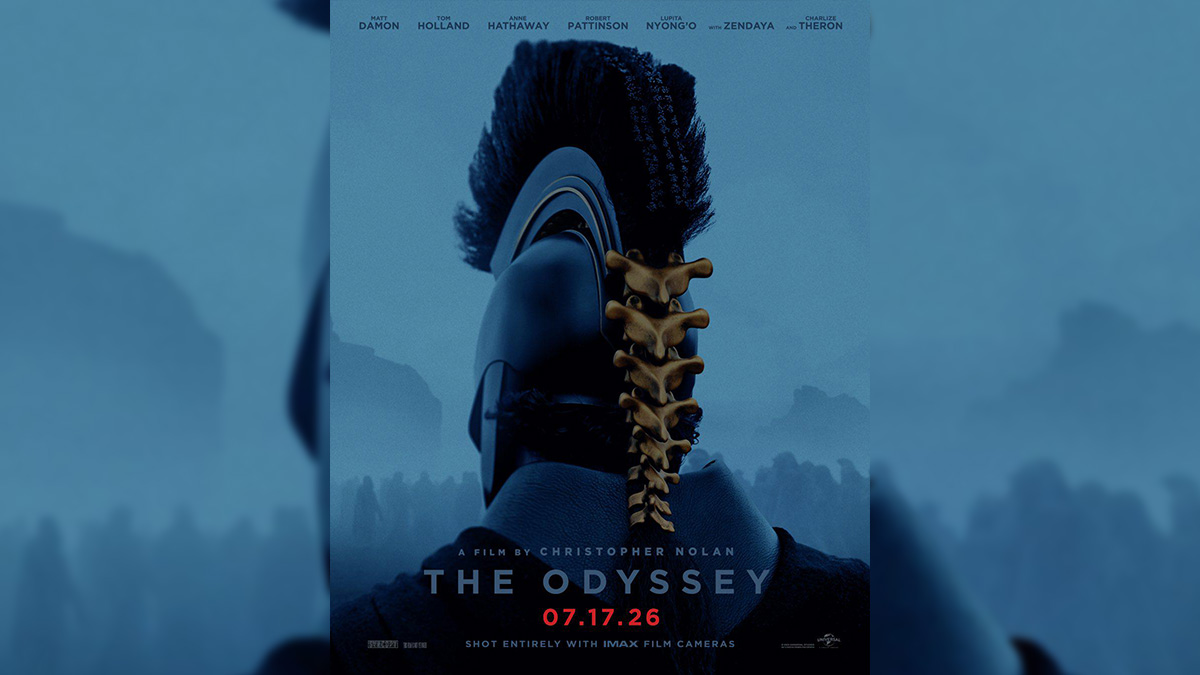
Christopher Nolan’s reputation for character studies immediately gave the audience an idea of what his interpretation of The Odyssey may look like. People familiar with his style of storytelling know not to just expect spectacle; they know to expect something human.
The Odyssey gave us exactly that.
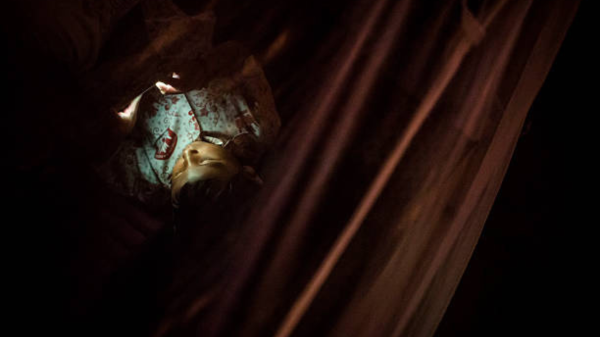
Where most portrayals of Odysseus (played by Matt Damon) and his journey frames it as a heroic voyage back home, Nolan sees tragedy. Desperation, guilt, and moral decay haunt every step Odysseus took back home. The myth of a cunning general is transformed into a horrific depiction of war and the toll it takes on its participants. Both from the soldiers who wreak havoc, and the innocents caught in the wake of destruction.
Desperation and Deceit
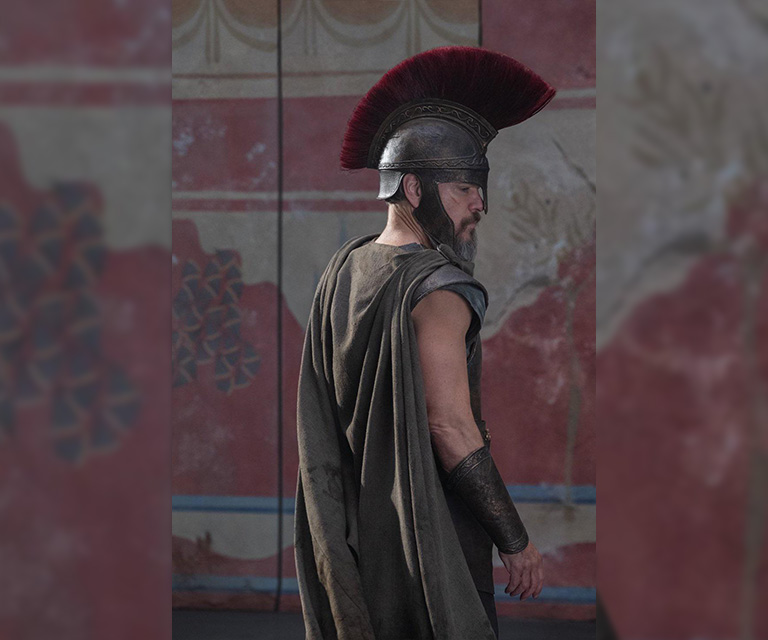
Odysseus, in the Homeric epic, is painted as a man of cunning intelligence. In this film, this trait is supplemented by one that hits closer to home. Desperation.
His character arc, one that slowly reveals itself to the audience throughout the film, is tied directly to the end of the Trojan War. After a decade of stalemate with the Trojans, it is Odysseus’ desire to return home that drives him to ultimately commit a taboo. Weaponizing trust. The Odyssey places heavy importance on Zeus’ Law. The sacred moral code of hospitality requiring hosts to welcome, feed, and protect travelers before asking their name. Driven by the belief that strangers might be gods in disguise. By building a wooden horse as a sacred offering to Athena, a god shared by the Trojans and Greeks. Odysseus jumpstarts the beginning of the end of the ancient world. This gesture of peace becomes the very vehicle through which he and the armies of Greece end the war through brutality.
This desperation creates a ripple effect felt across the ancient world. A society once honor-bound to accept strangers now only sees in them their demise, and violently so. The consequences of Odysseus’ desperation clung to him on his way back to Ithaca.
When armies reach a state of absolute desperation, human lives are nothing more than numbers to dwindle and deplete. It is the common folk who bear the immediate, violent brunt of political ambition. They are left with trauma and terror long after the conquerors have set sail for home.
The Trojan Horse as a Symbol of Guilt
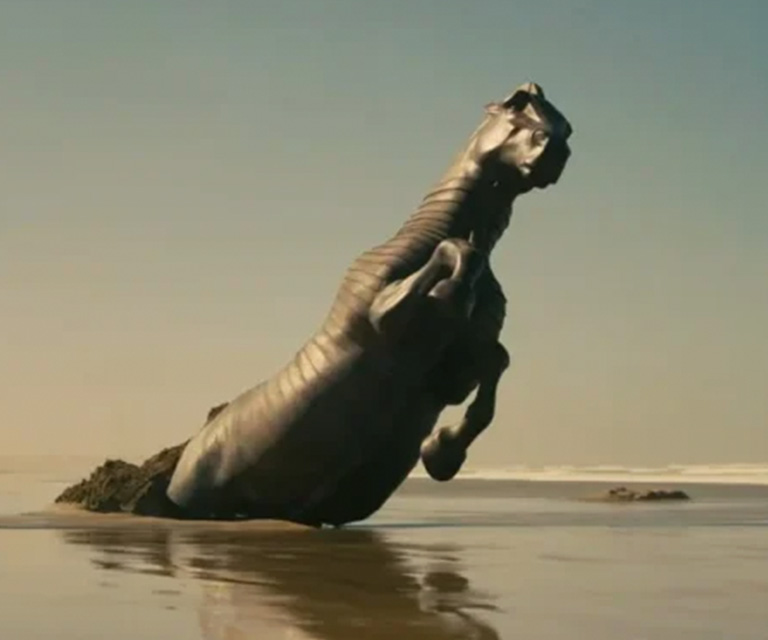
In classic Nolan fashion, he withholds the full context of the Trojan Horse until late in the film. Using fractured flashbacks that mirror Odysseus’ refusal to confront what he did. Slowly, but surely, the Trojan Horse transforms from a mere military strategy into a symbol of Odysseus’ guilt. Forcing him to reexamine whether or not he truly deserves to return home.
This guilt carries over to the climax of the film. Disguised as a beggar, he asks his wife, Penelope (played by Anne Hathaway):
What if the Odysseus you knew lost his way?”
Odysseus’s guilt stems from the realization that to win the war, he had to destroy his own humanity. Not unlike the tragedy of real-world war veterans returning from combat.
While the populace suffers war’s physical destruction, the veterans carry its internal ruin. Themes of Post-Traumatic Stress Disorder (PTSD) and moral injury. The deep psychological wound inflicted when a person violates their own fundamental core beliefs during war, perpetuate the film from the very beginning.
The very traits that war demands. Cold pragmatism, emotional detachment, and a willingness to commit violence. The exact qualities that make reintegration into peaceful society nearly impossible.
The film asks its audience;
Can a man who weaponized trust ever truly believe in peace again?
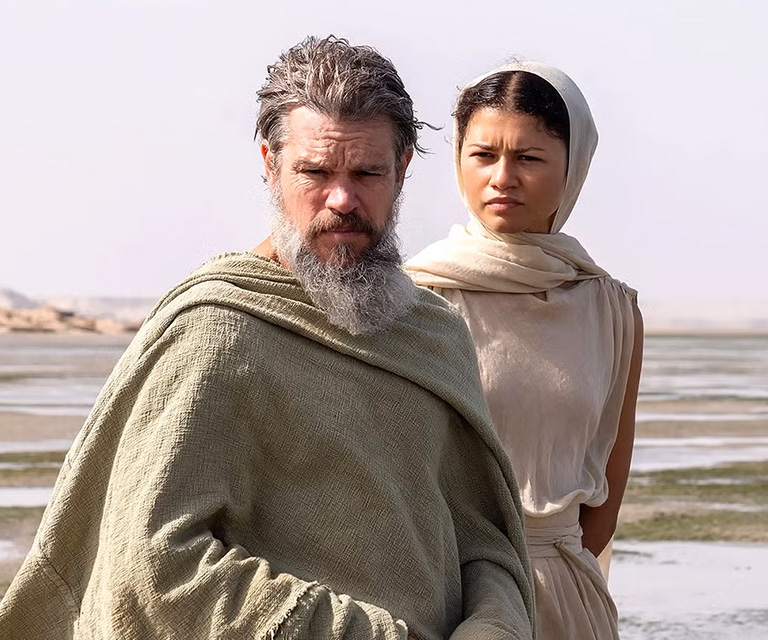
Moral Corruption and the Tragedy of Returning Home
The horror of war isn’t left on the battlefield; it’s brought home.
The climax of the film takes Odysseus back to Ithaca, now overrun by suitors looking to have Penelope’s hand in marriage and subsequently, his throne. When Penelope challenges her suitors to string Odysseus’ bow, none succeed but the man himself. Instead of portraying this as cathartic justice, the film treats the slaughter of the suitors with unsettling inevitability. The nobles of Ithaca abused Zeus’ Law, just as Odysseus did. To the audience, this can be seen as redemption, but to Odysseus, it’s a symbolic death. He only sees his sins in the suitors’ faces.
Odysseus doesn’t bring peace home; he imports the uncompromising, destructive logic of Troy into his own home.
Having spent years corrupting the sacred law to survive, Odysseus can no longer separate the battlefield from civilian life. He reclaims his throne, but at the cost of his soul. His reunion with Penelope and his son Telemachus (played by Tom Holland) is tinged with tragedy: they recognize the man’s face, but the king who left twenty years ago was consumed long ago by war.
Nolan’s Masterpiece of Human Decay
War destroys twice. First, it destroys the lands and lives of the innocent; second, it hollows out the survivors, ensuring that even when the soldier finally comes home, the conflict never truly ends.
Christopher Nolan’s The Odyssey isn’t just a triumph of practical scale and IMAX filmmaking; it’s a sobering portrait of moral erosion. By centering the story on desperation, guilt, and the slow corruption of the human spirit, Nolan shows that the hardest part of any journey isn’t surviving the voyage — it’s remaining human enough to enjoy what you fought to return to.
Read more Stories on Simpol.ph
Spider-Man Swings To PHP92M Opening-day Gross in PH
“Filipiñana” Is Headlining NYC’s Film Forum And Cinemalaya This August 2026