rule #2: I can’t make anybody fall in love with anybody else.”
One of the most memorable lines from Disney’s Aladdin comes from the Genie as he explains the limits of his magic. Despite possessing nearly limitless power, even he understands that love is not something that can be granted through a wish. Genuine affection must be given freely, not by force.
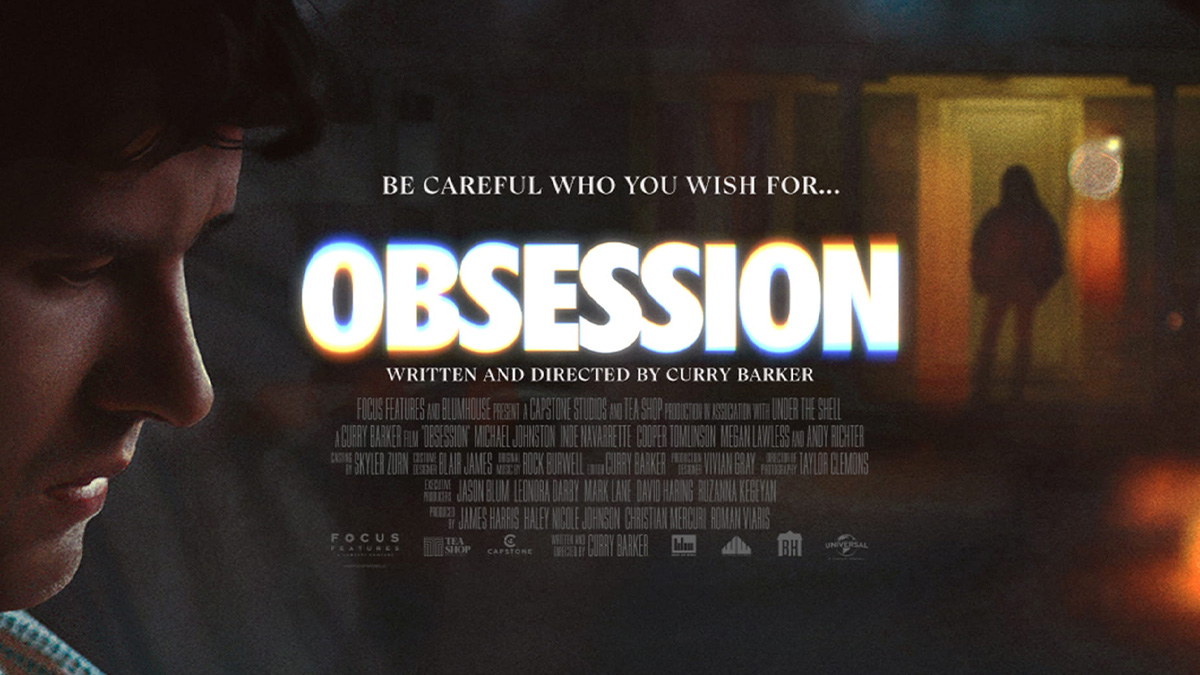
This concept is explored in Curry Barker’s Obsession.
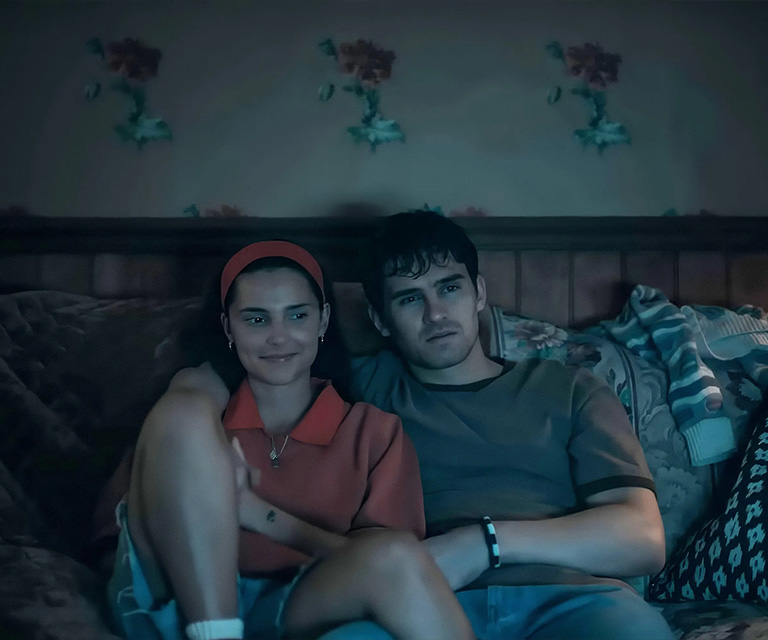
The film revolves around Bear. A socially awkward young man with low self esteem who has a crush on his co-worker Nikki. Setting the story’s unsettling events into motion. His inability to tell Nikki how he actually felt led him to wish on the “One Wish Willow”. That she would be obsessed with him more than anyone in the world. This single action brought forth a different kind of horror.

The Loss of Autonomy
Bear is initially pleased by the wish as the girl he likes is now suddenly obsessed with him. But as time goes on the wish reveals itself to be something more sinister. Nikki is no longer acting out of her own free will. Her behavior becomes unnaturally fixated towards Bear. Her emotions exaggerated and forced. As if something external is controlling her every move. What initially appeared to be romantic is exposed as the true horror of the film.
Despite this, Bear fails to fully recognize the severity of what he has done. Instead of questioning the ethics of his wish, he begins to benefit from it, passively accepting Nikki’s distorted affection. This creates an unsettling dynamic where love is no longer mutual.
The True Horror of Obsession
What Obsession critiques here is not simply romance, but entitlement. The belief that emotional connection can be obtained without vulnerability or mutual choice. Bear does not pursue Nikki. Instead, he attempts to rewrite her will and control her. This reframes the narrative from a love story into something far more unsettling.
On a broader level, Obsession can be interpreted as the desire for effortless solutions to complex emotional struggles. The “One Wish Willow” functions as a shortcut for Bear. The fantasy that love can be guaranteed or simplified. It shows that removing struggle from emotional connection will remove authenticity leaving a hollow shell of intimacy.

Giving Indie Films A Chance
Interestingly, the same authenticity that Obsession defends within its story is also what defines its creation. Curry Barker, like many independent filmmakers, operates outside the safety of mainstream formulas. Proving that compelling stories do not always require massive studio backing, only a strong vision and creative freedom.
In an industry increasingly dominated by sequels, remakes, and cinematic universes, independent films serve as a reminder that original stories still have a place in modern cinema. They prove that compelling storytelling can emerge from anywhere. Regardless of budget or recognition. By seeking out and supporting films like Obsession, audiences not only discover hidden gems but also help foster a film landscape where creativity and innovation continue to thrive.
Curry Barker represents a new generation of storytellers who are proving that passion and originality can be just as powerful as a multi-million-dollar budget.
Their work reminds audiences that a good movie is not defined by the size of its production. But by its ability to keep audiences captivated even long after the credits have rolled.
Read more Stories on Simpol.ph
LGBTQIA+ Representation in Philippine Cinema
Roel Robles: The Man Behind One of Star Wars’ Most Iconic Lightsabers
The Doomscroll Apocalypse: Linda Walker and The Digital Reality in portrait mode