Long before TikTok edits turned Count Dooku into an unlikely internet favorite and long before fans began ranking lightsabers with the seriousness of fantasy football drafts, there was a quiet moment inside the art department at Lucasfilm when a Filipino sword changed the course of Star Wars design history.
The big gigs
It was the early 2000s, during the development of Star Wars: Episode II — Attack of the Clones. The production team was searching for something distinctive for Count Dooku, the aristocratic villain portrayed by Christopher Lee.
Dooku was not meant to fight like the frantic Jedi audiences had already seen. He was older, measured, elegant — less brawler, more duelist. His weapon needed to reflect that.
Enter Roel Robles.
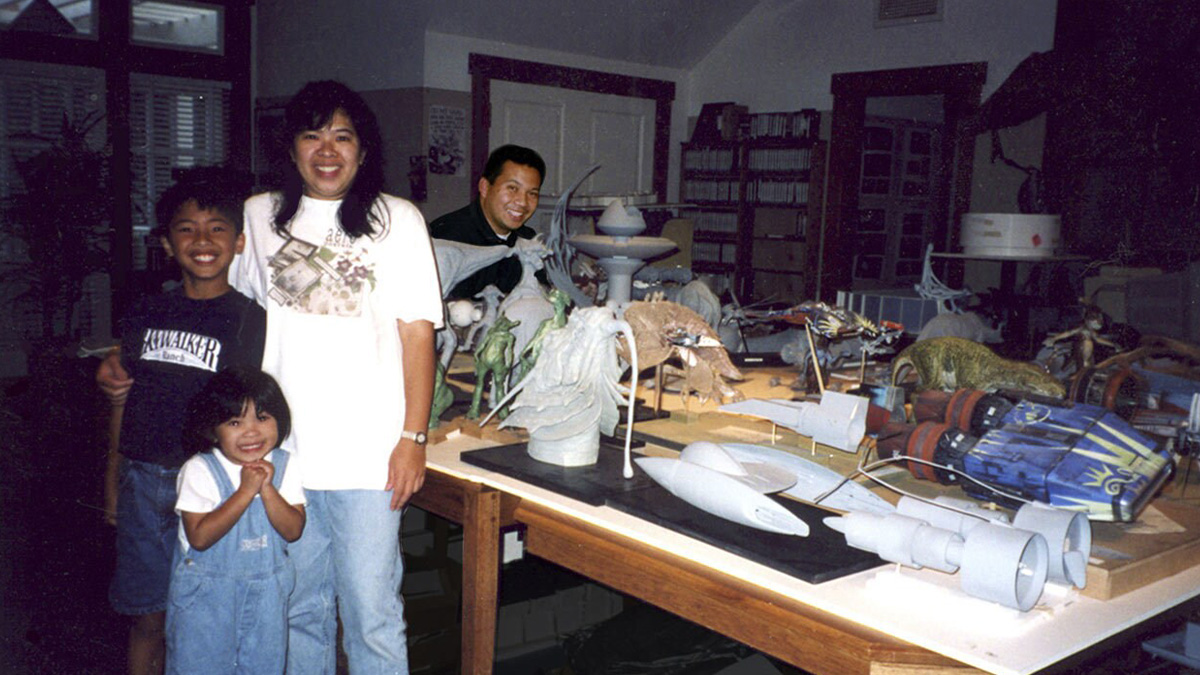
Before becoming a concept artist at Lucasfilm, Robles had worked in the company’s mail room, slowly making his way into the art department through persistence and talent.
By the time Attack of the Clones entered production, he had become part of the creative machine responsible for shaping one of the most visually recognizable film franchises in history. Still, like many artists behind blockbuster films, his contributions remained largely invisible to audiences.
The creative trademark
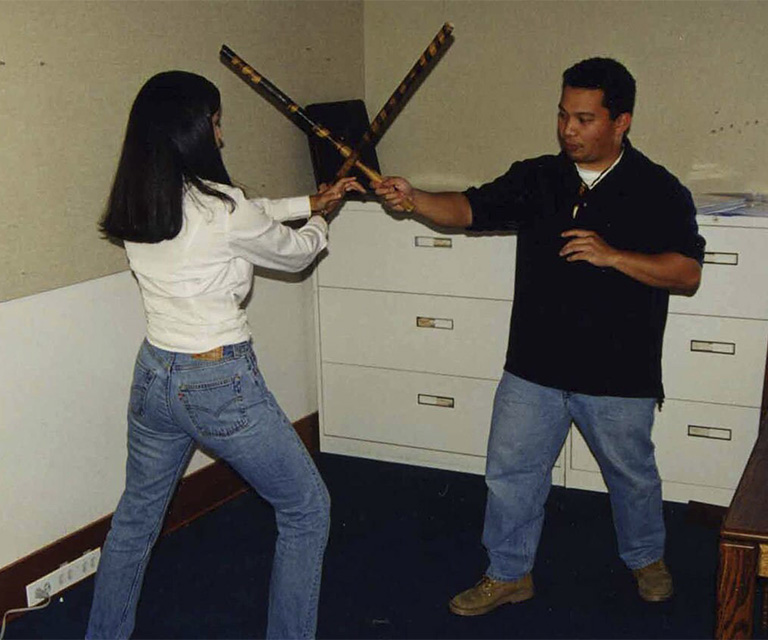
Robles approached the assignment differently. Rather than sketching abstract concepts from imagination alone, he brought in his personal collection of swords and blades, many of them rooted in Filipino martial traditions. He practiced Filipino martial arts himself and understood the philosophy behind the weapons — practical, fluid, and deeply tied to movement.
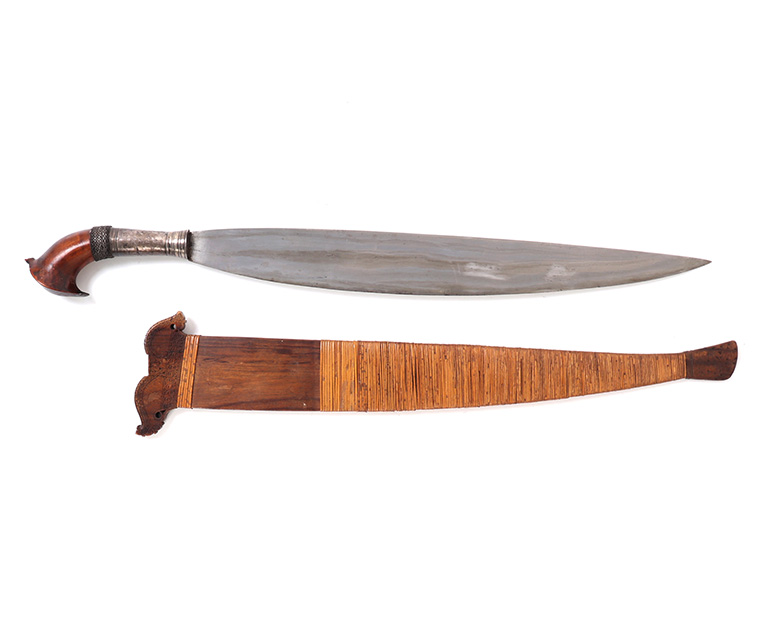
Among the collection was the barong, a traditional Filipino blade associated with the Tausūg people of the southern Philippines. Unlike the long, slender swords typically associated with European fencing, the barong carried a compact but heavy blade paired with a curved handle designed for grip and control.
It was functional but elegant in its own way, the kind of weapon that looked understated until placed in motion.
For Robles, the connection immediately made sense. Count Dooku fought with precision rather than brute force. His movements were refined, almost theatrical, resembling classical fencing more than modern combat choreography.
The curved handle of the barong seemed like a natural extension of that fighting style. It offered not only visual distinction but character psychology — a subtle clue about the man holding it.
Then came the review.
When George Lucas entered the room to examine the concepts and sword references, he reportedly gravitated toward the Filipino blade almost immediately.
At the same time, another artist, Dermot Power, had already been experimenting with the idea of a curved lightsaber hilt. The overlap became one of those rare moments in filmmaking where separate creative instincts lock together perfectly, almost like the cinematic equivalent of a group chat accidentally cooking up a masterpiece.
Together, the artists refined the weapon into the now-iconic curved hilt seen in the film. The final design balanced several influences at once: Filipino craftsmanship, European fencing traditions, and Christopher Lee’s commanding screen presence.
The result was subtle enough that many viewers never recognized its cultural origins, yet distinct enough that fans instantly understood this was not an ordinary lightsaber.
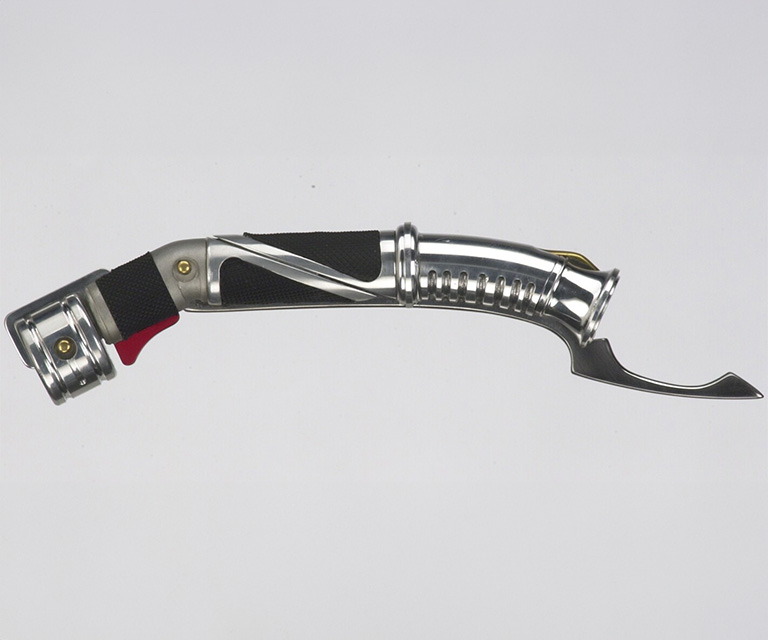
And honestly? That curve changed everything.
Dooku’s saber became one of the most recognizable weapons in the Star Wars universe, standing apart from the standard symmetrical hilts carried by most Jedi and Sith. It looked sophisticated, almost intimidatingly classy — the weapon equivalent of someone showing up overdressed and somehow making everyone else look underprepared.
For Robles, the experience carried deeper meaning beyond aesthetics. In later interviews, he described the project as an opportunity to weave Filipino culture into a global phenomenon. At a time when Filipino representation in mainstream Hollywood remained limited, the inclusion of a design inspired by traditional Filipino weaponry felt significant, even if audiences did not immediately recognize it.
Local to Global representation
Since then, Filipino blades and martial arts have appeared more frequently across action films and television, their influence quietly spreading through Hollywood choreography and weapon design. Yet Count Dooku’s lightsaber remains one of the clearest examples of that cultural crossover — a Filipino-inspired silhouette glowing red in a galaxy far, far away.
What makes stories like this resonate is not simply the thrill of discovering hidden trivia. It is the realization that culture rarely travels loudly. More often, it slips into global consciousness through details: a weapon handle, a movement style, a design choice tucked into the background of a blockbuster film.
Somewhere inside one of cinema’s most iconic sci-fi weapons is the shape of a Filipino blade carried across generations, continents, and eventually into the hands of a Sith Lord. For many fans, that discovery feels oddly personal — proof that even in worlds built on fantasy, pieces of home still find their way in.
Read more Stories on Simpol.ph
Jemay Santiago gets vulnerable in sharing creative process in new R&B single “1A”