For readers, this shift in spending behavior directly affects how money is earned, saved, and enjoyed in daily life. It explains why financial priorities are changing, especially among younger consumers who now influence major market trends. Understanding this movement helps individuals make smarter purchasing decisions, anticipate pricing culture, and recognize how emotional value is shaping modern consumption. This is especially true when examining Treatonomics consumer spending trend 2026 and its broader impact on society.
In practical terms, it also shows why brands are redesigning products, marketing, and pricing strategies around accessibility and “instant joy” rather than long-term ownership. The Treatonomics consumer spending trend 2026 is evident in these strategic shifts.
The Rise of Treatonomics in a Volatile Economy
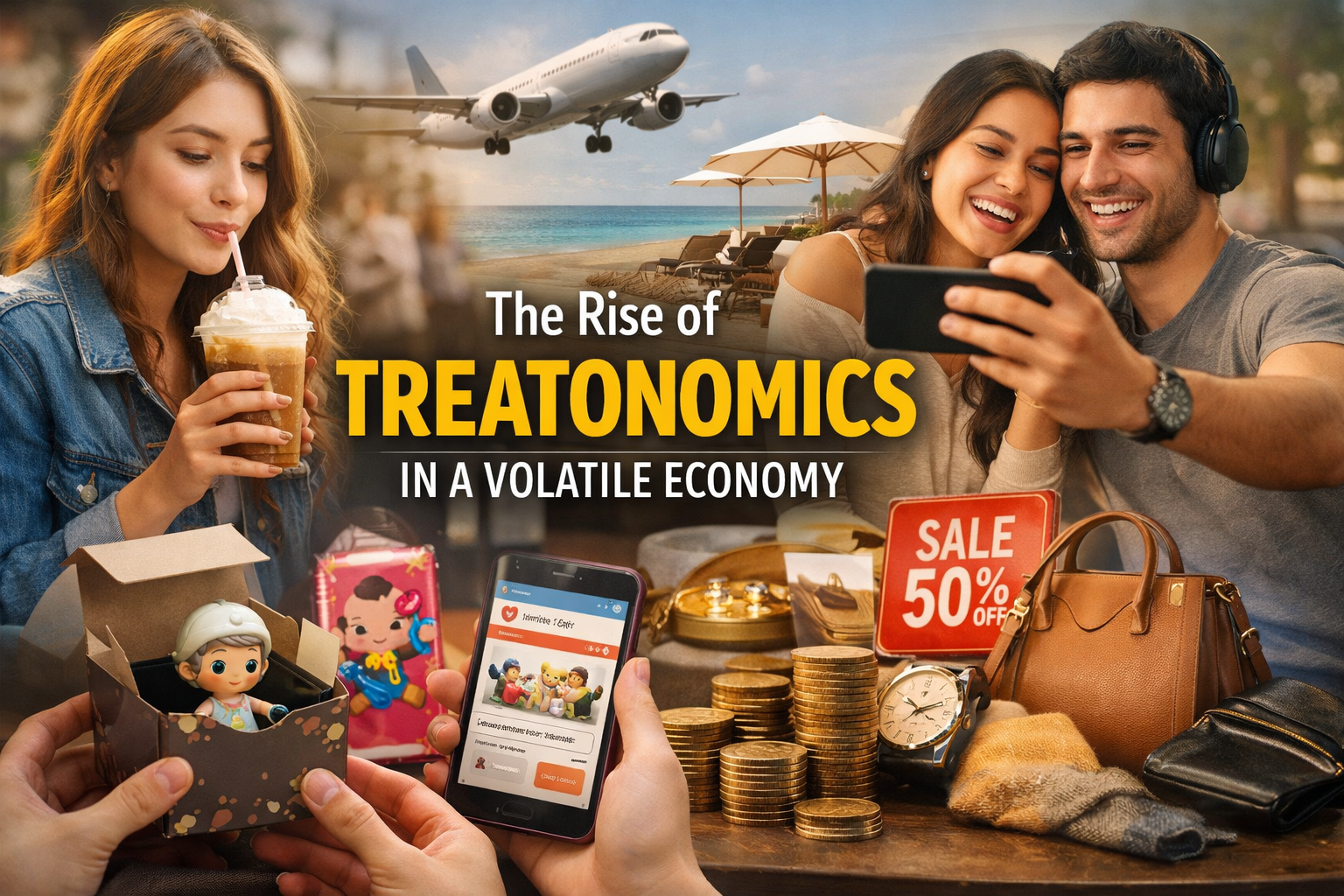
In 2026, Gen Z consumers are increasingly prioritizing emotional reward over long-term asset accumulation. Rather than focusing primarily on traditional milestones such as home ownership or long-term savings tied to material goods, many are adopting what analysts describe as “Treatonomics”—a spending pattern centered on frequent, low-cost pleasures that deliver immediate satisfaction. This fits squarely within the Treatonomics consumer spending trend 2026 that market experts are tracking.
This shift is not purely indulgent; it reflects economic uncertainty, rising living costs, and changing cultural definitions of success. Financial behavior is increasingly shaped by the need for psychological relief in small, manageable forms.
“Little Treats” Culture: Micro-Indulgence as Emotional Reset
One of the clearest expressions of Treatonomics is the rise of “little treats”—small purchases designed to provide instant emotional uplift. These include aesthetic coffee drinks, limited-edition snacks, blind-box collectibles, and micro-luxury items that offer novelty rather than necessity.
Consumer trend analysis from global market researchers indicates that younger buyers are more likely to allocate discretionary income toward “frequent, low-cost rewards” instead of rare, high-value purchases. This pattern reflects a shift in how satisfaction is measured: repetition of joy versus accumulation of assets. Notably, the Treatonomics consumer spending trend 2026 illustrates how these changes are shaping the market.
Shared Luxury and Fractional Access Models
Another defining feature of this trend is the growing acceptance of shared ownership. Instead of purchasing high-value goods outright, Gen Z consumers are exploring fractional access models for vacation properties, fashion, and even collectibles.
This approach prioritizes experience and community over possession. Access-based consumption allows individuals to participate in luxury markets without long-term financial commitment, effectively redistributing how exclusivity is experienced.
Industry observers note that this shift is pushing luxury brands and tech platforms to rethink ownership frameworks, moving toward subscription-based or co-owned systems.
Deals, Quality, and Value Alignment
Despite increased spending on small indulgences, Gen Z remains highly strategic. Discount-seeking behavior is still strong, but it is paired with extensive research and value alignment checks before purchases.
Products and brands are increasingly evaluated not just on price, but on ethical sourcing, sustainability claims, and authenticity. In many consumer studies, younger buyers report abandoning purchases if a brand’s behavior does not match its stated values.
This dual behavior—frugal yet emotionally driven—defines the complexity of Treatonomics today.
Market Shift: How Brands Are Responding
Businesses are rapidly adapting to this new consumption model. Retail strategies now emphasize “accessible luxury,” limited drops, and experience-driven marketing. Digital platforms are also optimizing for impulse-friendly purchasing flows that cater to micro-indulgence behavior. In summary, the Treatonomics consumer spending trend 2026 is poised to continue influencing business decisions for the foreseeable future.
The result is a retail environment where immediacy, personalization, and emotional resonance matter as much as product function.
Read more Stories on Simpol.ph
Love, Family, and ‘Utang na Loob’: How Filipino Values Still Shape Modern Life
Heatwave Hacks: Creative Ways Filipinos Are Beating the Summer Init