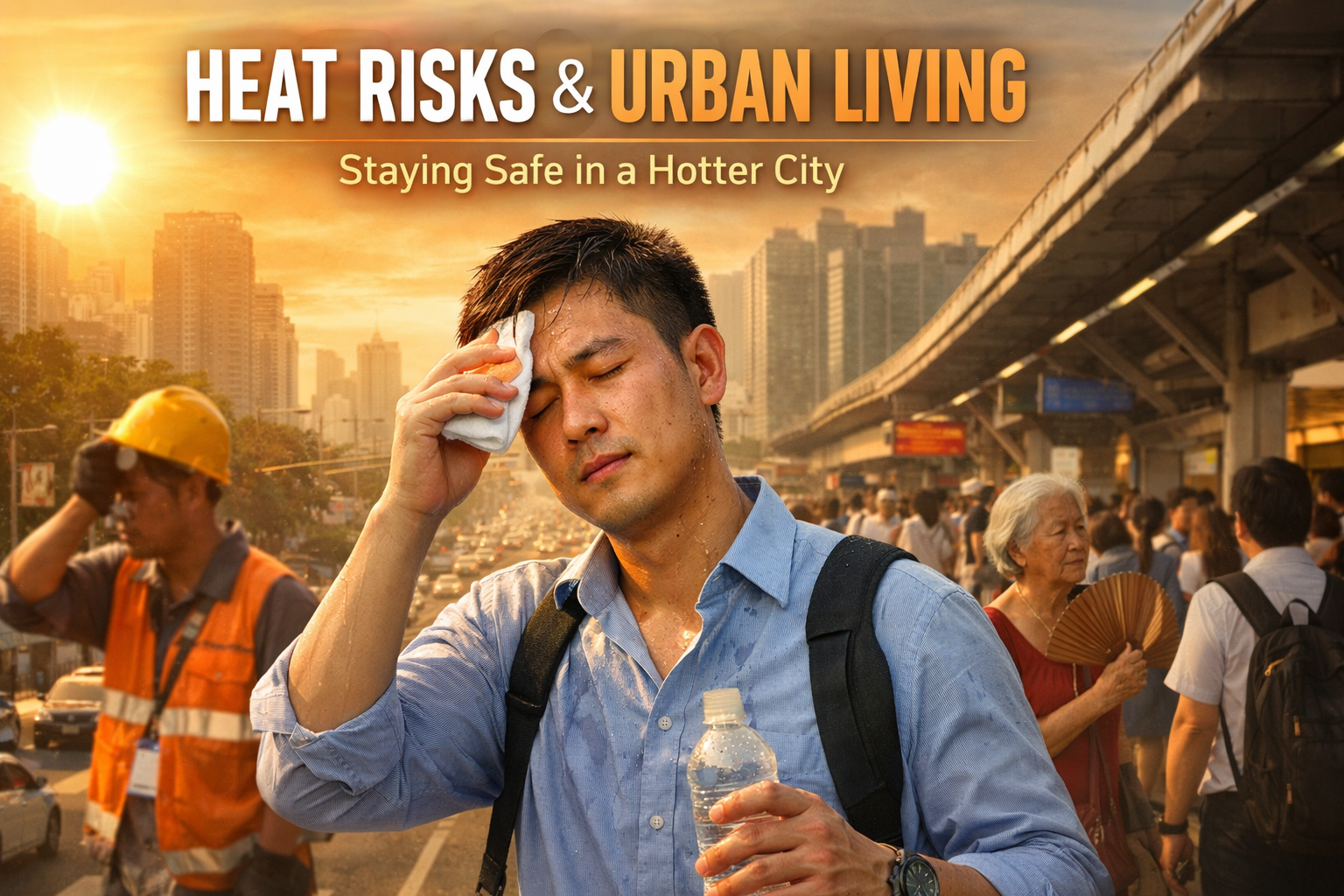
For readers living in increasingly dense and fast-paced urban environments, rising heat levels are no longer a distant climate concern but a daily health risk. Understanding heat-related illness is essential because it directly affects your ability to work, commute, and stay physically well during extreme temperature days. It is important to recognize early warning signs and practical prevention methods, as these can help you avoid serious medical emergencies while improving overall resilience in hot conditions.
As urban temperatures continue to climb, especially in highly built-up areas, the likelihood of heat exhaustion and heat stroke increases. For individuals navigating outdoor commutes, physically demanding work, or limited access to cooling environments, preparation is not optional—it is a practical necessity.
Escalating Urban Heat and Public Health Pressure
Cities such as Metro Manila have experienced rising heat indices due to a combination of climate change, traffic congestion, and reduced green spaces. Concrete-heavy environments trap heat, creating what experts describe as “urban heat islands,” where temperatures feel significantly higher than surrounding rural areas.
Public health observers note that emergency consultations tend to rise during peak hot months. Hospitals report increased cases of dizziness, dehydration, and heat exhaustion, particularly among commuters, construction workers, and elderly residents.
Recognizing Heat-Related Illness Early
Heat-related illness typically develops in stages, beginning with mild symptoms that can escalate quickly if ignored. Early indicators include excessive sweating, fatigue, muscle cramps, and headaches. If untreated, these can progress into heat exhaustion or heat stroke, which requires immediate medical attention.
A health advisory commonly shared by emergency care professionals emphasizes:
“When the body can no longer regulate its temperature, symptoms can escalate rapidly. Immediate cooling and hydration are critical to prevent life-threatening complications.”
While this guidance is widely reflected in hospital emergency protocols, the underlying message remains consistent across health institutions: early intervention saves lives.
Prevention Practices in Daily Urban Life
Preventing heat-related illness relies on consistent and practical habits. Hydration remains the most important factor, particularly for individuals exposed to outdoor heat for extended periods. Wearing light clothing, avoiding direct sunlight during peak hours, and taking regular breaks in shaded or air-conditioned areas significantly reduce risk.
Urban planning experts also highlight the importance of accessible cooling spaces, such as malls, transport terminals, and community centers, which serve as informal refuges during extreme heat conditions. Simple adjustments in routine behavior can significantly lower exposure to dangerous temperature levels.
Workplace and Community Preparedness
Employers and institutions play a critical role in reducing heat-related risks. Adjusted work schedules, provision of drinking water, and shaded rest areas are increasingly being recommended in high-risk sectors such as construction and delivery services.
Community-level awareness campaigns have also become more visible, with local health units encouraging households to monitor vulnerable individuals, particularly children and senior citizens. These coordinated efforts aim to reduce preventable heat-related emergencies.
Expert Insight on Rising Heat Risks
Health professionals continue to stress that prevention is more effective than treatment when it comes to heat stress. Emergency care guidance used in clinical settings notes that rapid cooling—such as moving to a shaded area, applying cool compresses, and rehydrating—can significantly improve outcomes when symptoms appear early.
This reinforces the broader medical consensus that awareness and immediate response are key to reducing severe cases.
Heat Risks and Urban Life Today
Rising temperatures are reshaping how urban residents move, work, and live. Heat-related illness is no longer confined to extreme outdoor exposure but can occur in everyday situations such as commuting or working in poorly ventilated environments. For readers, learning these risks provides a direct advantage: better health protection, improved daily comfort, and reduced likelihood of emergency situations.
As climate patterns continue to shift, preparedness becomes a shared responsibility between individuals, workplaces, and communities.
Read more Stories on Simpol.ph
Love, Family, and ‘Utang na Loob’: How Filipino Values Still Shape Modern Life
Heatwave Hacks: Creative Ways Filipinos Are Beating the Summer Init
PICKUP COFFEE Unveils Summer Fresh Fruit Series for Everyday Refreshment