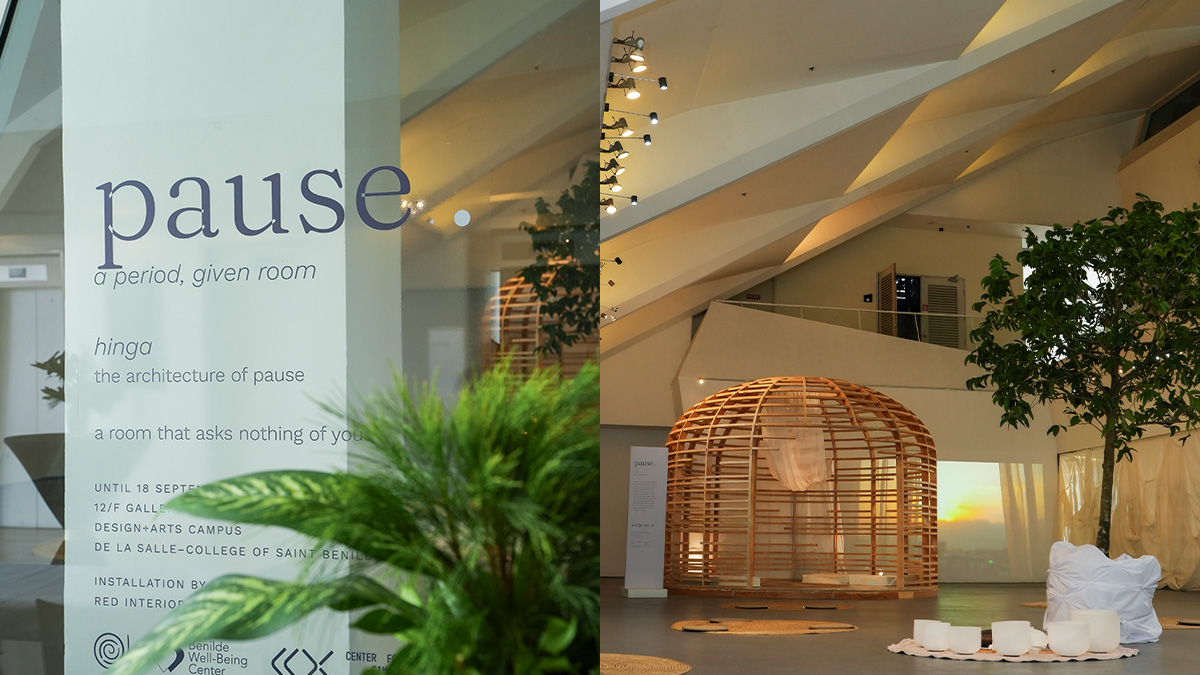
What if you gave yourself a little room to breathe, reflect, and reconnect?
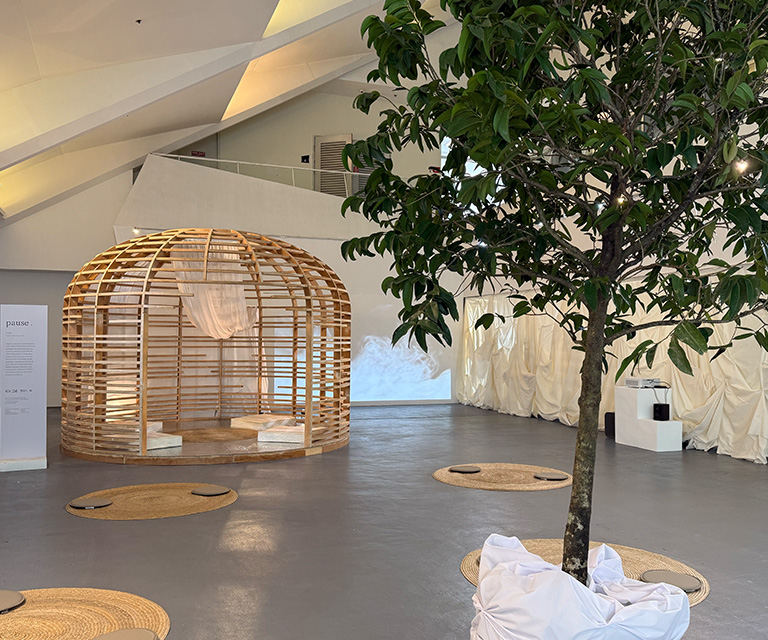
Dr. Cecil P. Ravelas invites us to do just that through an experiential design installation at De La Salle-College of Saint Benilde. Built with raw, simple materials, the dome-like structure demonstrates that healing environments should be accessible to everyone.
A Sanctuary from Breathing Space
Initially, this concept debuted earlier this year at WorldBex under the name HINGA. It emerged from a growing need for spaces dedicated to quiet, stillness, reflection, and restoration. As Ravelas notes,
I have always been interested in how spaces influence how we feel, think and move through the world”
to explain how physical environments shape our inner state.
Soon after its first showing, several institutions expressed strong interest in the project. As a result, the concept expanded beyond a single showcase. Ravelas shares,
It became clear very quickly that people resonated with it. There is a real, felt need to slow down and pause. Recognizing that moved it from a single installation into something larger.
HINGA began as a single structure. It has now evolved into pause., which is less an object and more an invitation.”
Designing for Restoration and Advocacy
Today, the installation occupies a vast space on the 12th floor Gallery of the Design + Arts Campus. This placement directly articulates the university’s initiative to create safe, healing environments for students. Furthermore, Ravelas clarifies that pause. isn’t a static exhibit. Because it features an active schedule of wellness programs.
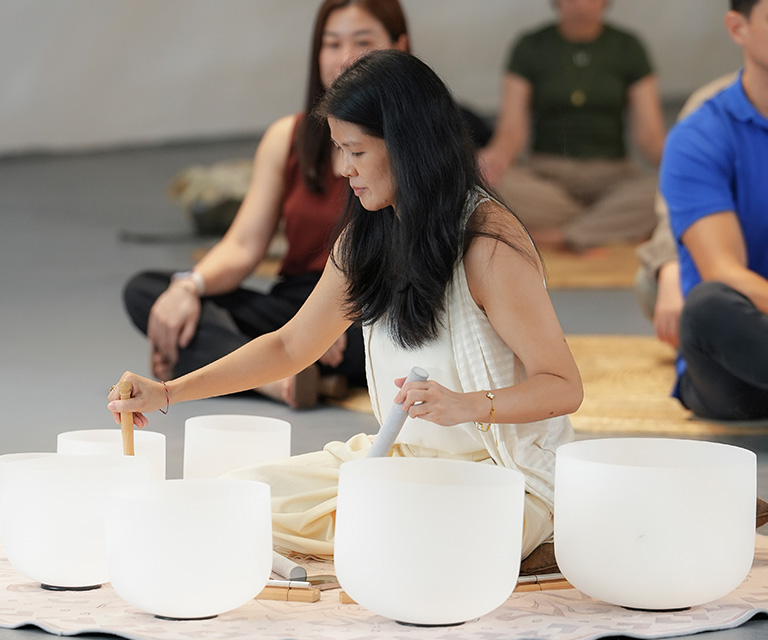
These include sound baths, meditation, and breathwork sessions led by Ces Drilon, Lei Sta. Maria, and Malou Araneta. In her overall approach, Ravelas relies on light, sound, and raw materials rooted in Filipino concepts of maaliwalas, hinga, and ginhawa.
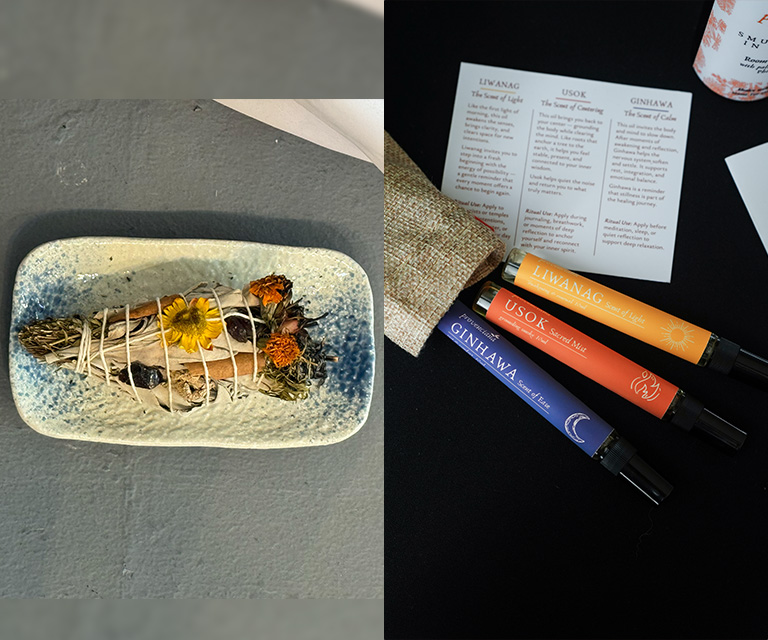
Crucially, the body registers these qualities of space and ease long before the mind processes them. Beyond the campus walls, she aims to promote wellness-centered design across offices, hospitals, and schools. She explains,
It’s a campaign, really, to educate, and to remind everyone to take care of ourselves. Part of that is advocacy, through the lectures and the PIID (Philippine Institute of Interior Designers), so that the conversation on wellbeing becomes part of how designers are trained and how the profession thinks about space.”
In her own practice and the world we currently live in sustainable design has become a word that everyone is embracing. Expanding on this connection, she adds,
Part of sustaining the environment is also taking care of ourselves. It doesn’t make sense to have a future world without healthy people living in it.”
An Evolving Invitation to Pause
Ultimately, Ravelas hopes pause. will inspire similar spaces in everyday settings like workplaces, classrooms, and homes.
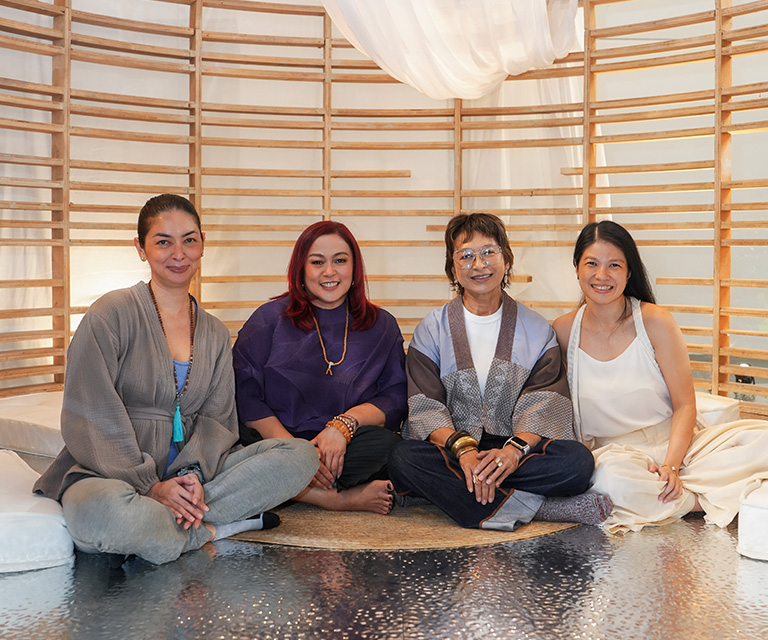
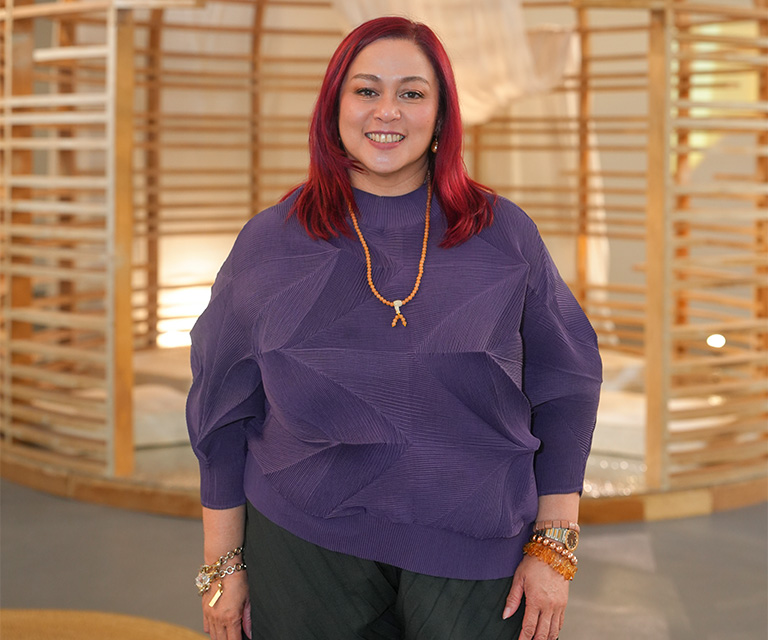
When asked about future plans, she concludes:
I would rather let it evolve than decide on a new shape or form. HINGA began as a structure, and then it became pause. organically, because of how people responded to it. I would like to keep on listening that way.”
Meanwhile, the Benilde Wellbeing Center offers five ways to pause every Thursday from 1:30 to 3:30 PM in room A1201. These free weekly sessions invite the Benilde community to step away from daily routines through reflection, making, writing, or letting go.
In addition, the main pause. exhibit remains open at the gallery through September 30.
Read more Stories on Simpol.ph
The Raging Puddles Of Unsafe Roads: It’s Time For Accountability
WeLive.Media Calls Submission For BULACAN INDEPENDENT FILM FESTIVAL
Restaurant FLOW Reimagines Peruvian Soul Food Through Philippine Craft