As the world hungers for vibrant Filipino yam, a provincial community is fighting to shield its agricultural heritage from imitation.
The Intellectual Property Office of the Philippines (IPOPHL) recently received an application for the geographical indication (GI) registration of the famous Bohol Ubi Kinampay. This strategic move aims to safeguard one of the nation’s most treasured heritage crops. All while positioning the Philippines at the forefront of the global ube phenomenon.
The Provincial Government of Bohol filed the application through the Bohol Economic Development and Investment Promotion Office (BEDIPO). The submission seeks formal recognition for the crop’s unique qualities, reputation, and cultural legacy. Characteristics inherently tied to the province’s distinct geography, soil composition, climate, and time-honored farming traditions.
The Queen of Philippine Yams
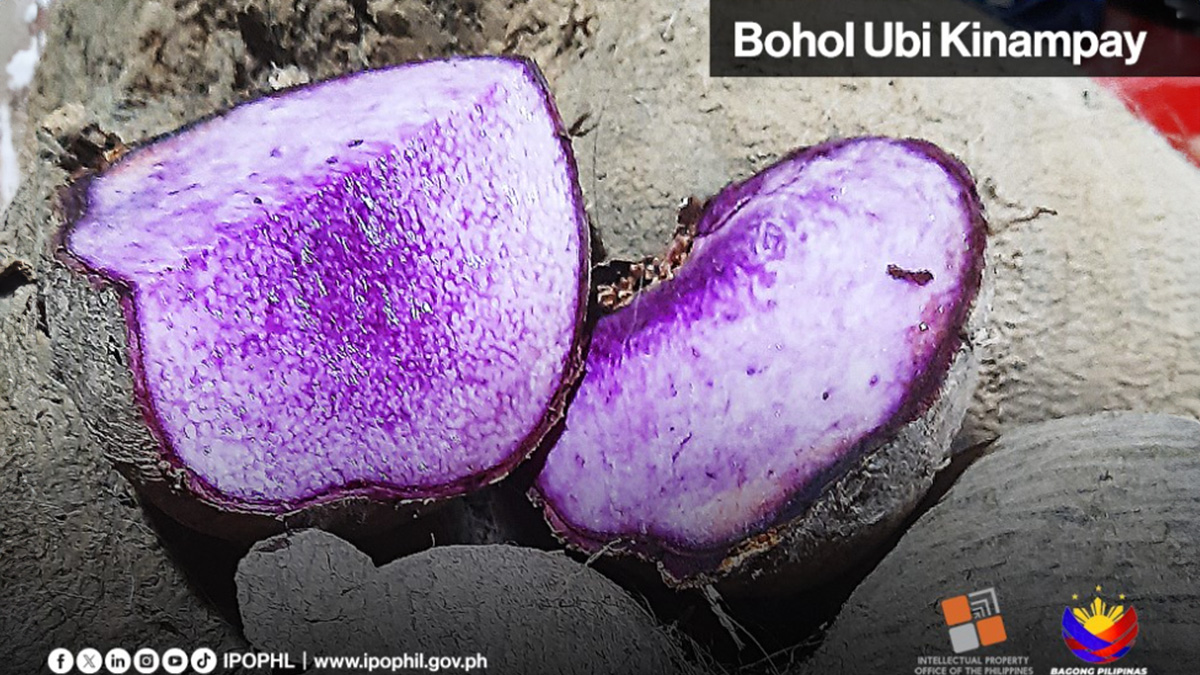
Celebrated for its naturally vibrant violet flesh, earthy aroma, and rich flavor, the Bohol Ubi Kinampay has long worn the crown as the “queen of Philippine yams.” As a result, it has evolved into a highly coveted ingredient across both local and international culinary scenes.
Securing GI status would serve as a vital shield, protecting the Bohol Ubi Kinampay from fraudulent origin claims and unauthorized commercial exploitation. Ultimately, this legal framework should bolster consumer trust and elevate the crop’s market value. Furthermore, the protection will sustain local livelihoods and preserve the traditional, organic agricultural practices. This gives this Boholano variety its signature traits. This defense comes at a critical time, as the rising use of synthetic fertilizers threatens authentic cultivation.
Staking a Claim in the “Purple Gold Rush”
The world is now in the middle of a ‘purple gold rush,’ and GI protection can help the Philippines stake its claim in the growing global demand by strengthening its market identity and position,” stated Teodoro C. Pascua, the IPOPHL director general.
Because the crop is rapidly gaining international fame, ensuring its cultural and geographic traceability has become paramount. Pascua emphasized the stakes:
As ube becomes more global, we must make sure the roots of varieties from the country are not lost. GI protection helps ensure that the true heart of the Bohol Ubi Kinampay—its soil, story and people—remains Boholano and Filipino.”
The Path to Certification
To advance the registration process, IPOPHL will thoroughly review a detailed Manual of Specifications submitted by the applicant. This document covers the product description, designated geographic production boundaries, specific cultivation methods, quality control protocols, standards, and labeling regulations. Additionally, the evaluation will scrutinize the evidence linking the unique traits and stellar reputation of the Bohol Ubi Kinampay. Eventually to Bohol’s natural environment and indigenous agricultural expertise.
This application aligns seamlessly with IPOPHL’s broader campaign. Over the years, the agency has collaborated closely with local government units, agricultural producers, and community organizations. This is to elevate public awareness of GI benefits. For instance, in 2023, the office hosted targeted seminar-workshops for the producers of both the Bohol Ubi Kinampay and the Alburquerque Asin Tibuok. These sessions guided them through the registration pipeline. Demonstrating how intellectual property protection can simultaneously rescue heritage and unlock fresh economic avenues.
If approved, the Bohol Ubi Kinampay will become the second locally protected GI to emerge from Bohol. Following in the footsteps of the Alburquerque Asin Tibuok. At present, the Philippines boasts a total of four officially registered GIs: Guimaras Mangoes, Aklan Piña, Alburquerque Asin Tibuok, and Tau Sebu T’nalak.
Read more Stories on Simpol.ph
Tis the Season for some Ube Goodness