In San Narciso, Zambales, pottery is more than a craft at Clay Avenue. Founded by potter Mia Casal, the studio transforms locally sourced clay and black sand into handmade ceramics while creating livelihood opportunities for members of the community. But beyond its mugs and plates, Clay Avenue is also a reflection of Casal’s personal journey, her faith, and her belief that even the most imperfect things can have a purpose.
Finding Her Calling in Clay
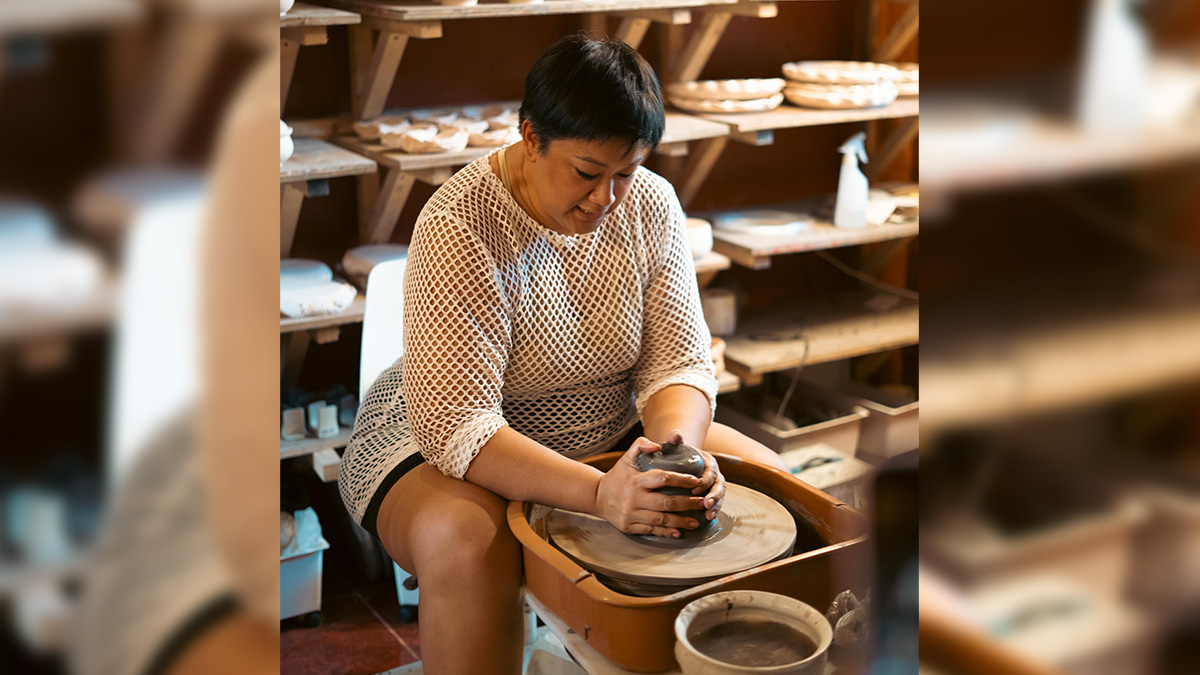
For Casal, pottery began as a search for something that made her happy. In 2002, while working for her family’s textbook printing and publishing business, she realized she wanted a different path. A friend’s suggestion led her to Ugu Bigyan’s Pottery Place in Tiaong, Quezon, where her first experience with a potter’s wheel changed everything.
“As soon as I felt the clay spinning between my hands, you know that feeling when you find something that you’ve been looking for and it just matches, it clicks,” she recalls.
Casal went on to attend pottery workshops and continued developing her skills through independent practice. What began as making pots for her home eventually became a full-time pursuit, taking her to Zambales, New York, and Italy to deepen her craft.
Shaped in Zambales
In 2013, Casal moved to San Narciso, Zambales, her mother’s hometown, and brought Clay Avenue with her. What initially started as pottery workshops in Manila evolved into a studio producing ceramics for restaurants and private collections.
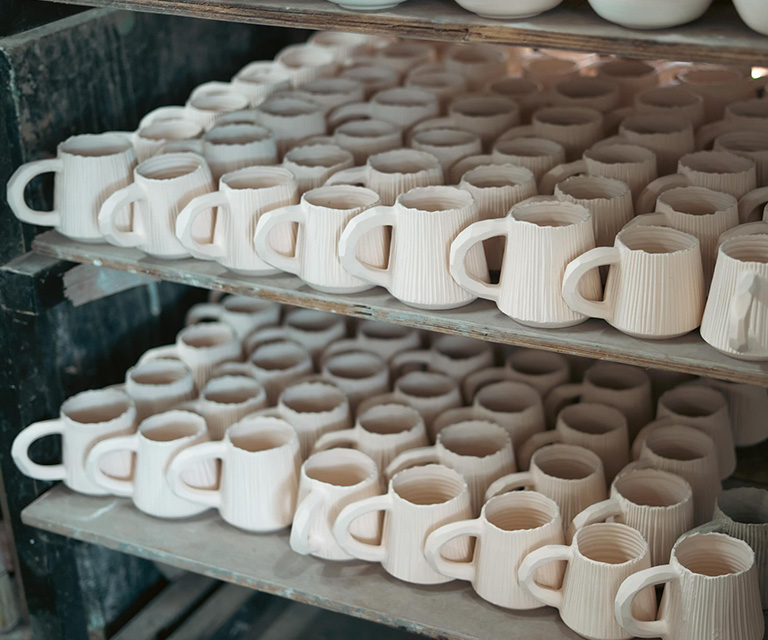
Her work also became an opportunity to build a community. After noticing a group of out-of-school youth spending their days skimboarding by the sea, she invited them to learn pottery, offering them the possibility of developing a skill and earning a living.
Today, four of them remain part of the studio, working across different stages of ceramic production.
Clay Avenue also incorporates locally sourced Zambales black sand into its clay. Added in small amounts, usually around five to 10 percent, the sand gives the material additional strength while leaving distinctive specks on finished pieces.
“We choose the black sand because that represents Zambales to me, to us,” Casal shares.
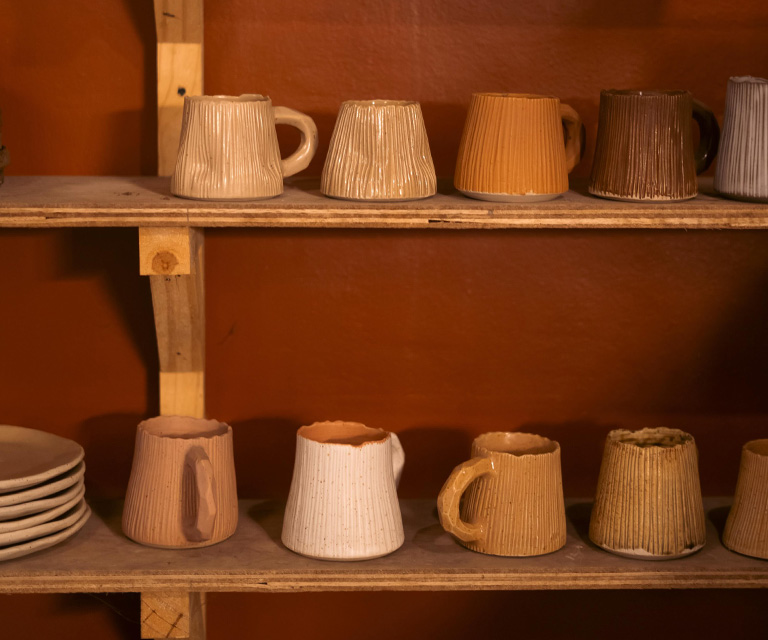
The studio primarily produces handmade mugs and plates, including pieces commissioned by restaurants.
Finding Beauty in Imperfection
For Casal, pottery carries a lesson that extends beyond the craft itself. She draws inspiration from Isaiah 64, which describes God as the potter and people as the clay.
She sees the process of shaping clay as a reflection of how people can be transformed and given purpose.
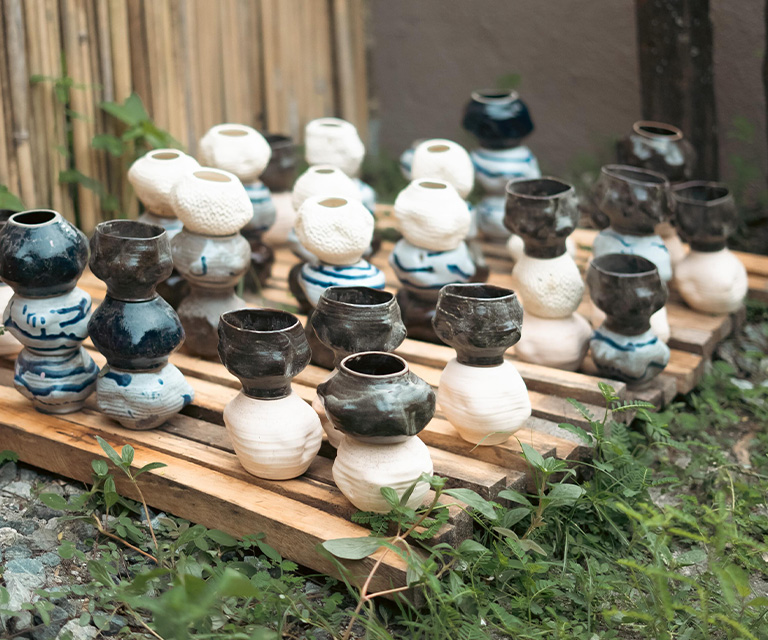
This philosophy also informs how she approaches handmade ceramics. Clay Avenue does not use molds or slip casting. Instead, every piece is shaped by hand on a potter’s wheel.
“The imperfections that are a part of it. It makes it whole. It makes it complete,” she explains.
Even pieces belonging to the same set need not look exactly alike. Much like family members, each has its own character while still belonging together.
A Slower Kind of Experience
Looking ahead, Casal hopes to expand production and provide opportunities for more people in the community. She also envisions Pastolan, a pottery retreat where visitors can create ceramics, write in their journals, and reflect on faith and purpose.
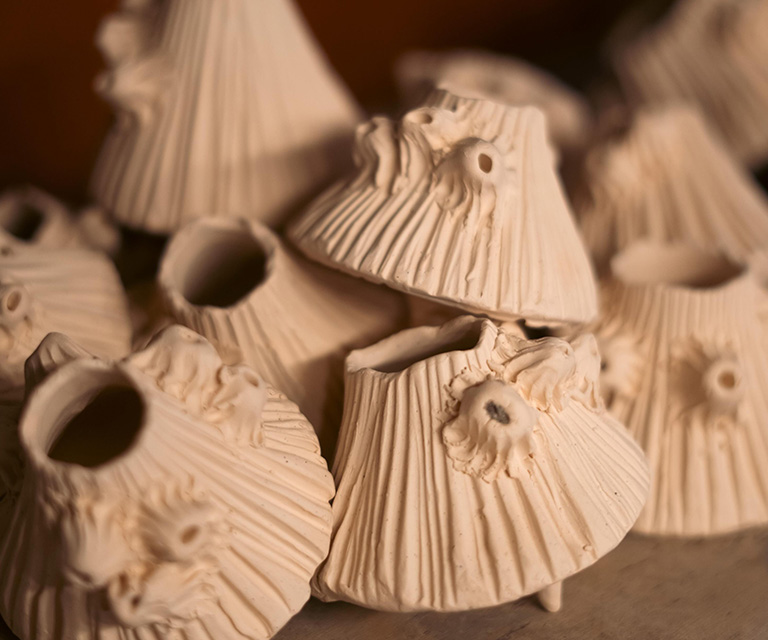
While the retreat is still being developed, visitors can already experience Clay Avenue’s peaceful surroundings in San Narciso.
As Casal puts it, “Everything here is slow. No one’s in a rush.”
At Clay Avenue, making pottery is ultimately about more than creating something beautiful. It is about discovering purpose, embracing imperfections, and finding meaning in the things we make along the way.
Read more stories on Simpol.ph
What Filipino PWDs Need to Know About the New Unified ID System
Cantabria by Chele Gonzalez Celebrates European Pork With a Limited-Time Menu