True devotion to a nation goes beyond nationalistic symbols. It lives in the quiet, persistent dedication to capturing its light, holding its history, and giving one’s life’s work back to its people.
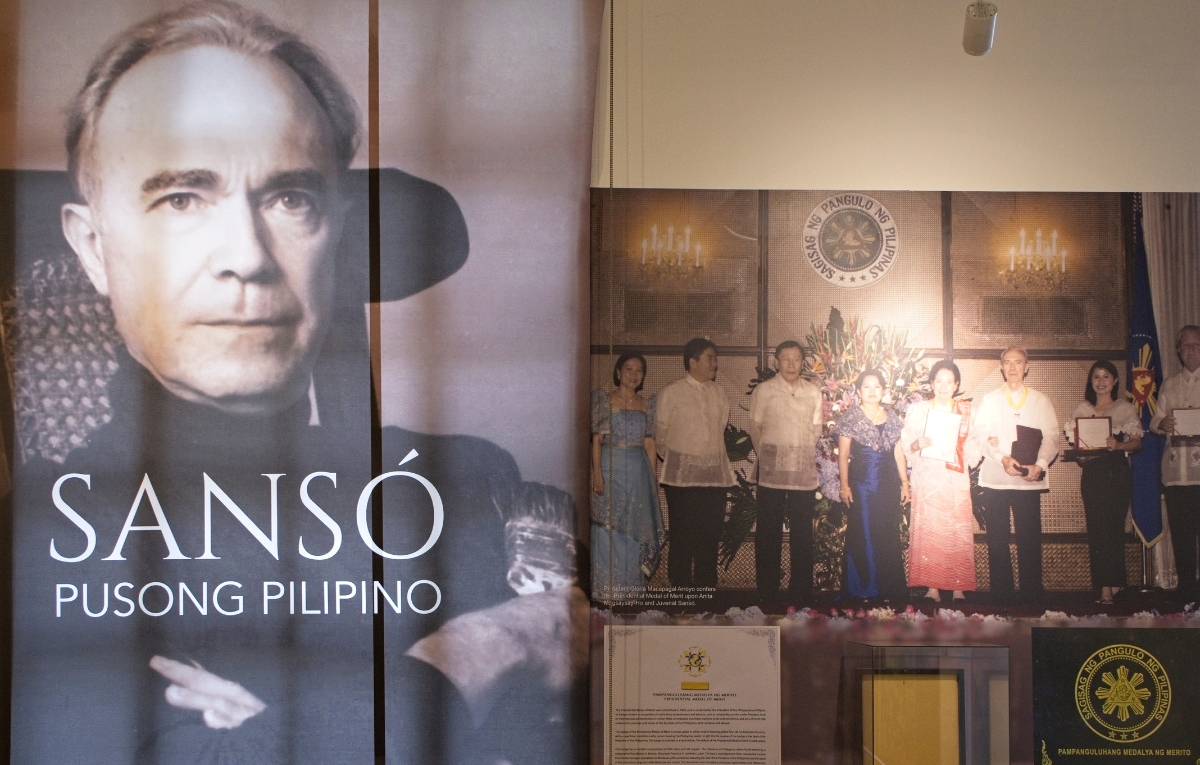
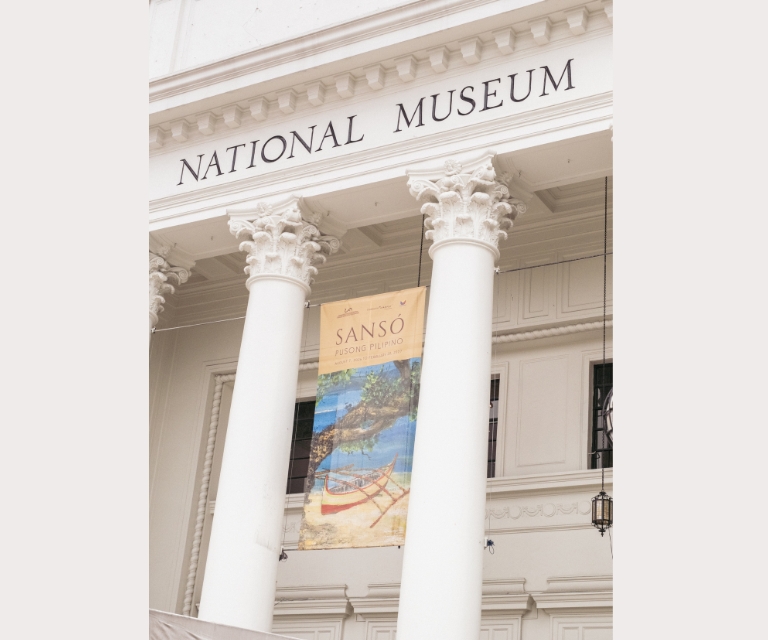
This August, Fundacion Sansó, in collaboration with the National Museum of Fine Arts, presents SANSÓ: Pusong Pilipino. The major exhibition features the works of modernist painter and printmaker Juvenal Sansó, illuminating how his deep affection for his adopted homeland informed a lifetime of creative expression.
Rather than following a standard chronological path, the exhibition explores how Sansó’s artistic identity was molded by the country he chose as his own. Curator and Fundacion Sansó Director Ricky Francisco notes:
Rather than focusing solely on chronology, the exhibition examines the many ways in which Sansó’s artistic identity was shaped by the country he ultimately chose as home, and why he entrusted both his collection and his advocacies to the Filipino people through Fundacion Sansó.”
A Historic Partnership at the National Museum
The idea for SANSÓ: Pusong Pilipino took shape shortly after the master artist’s passing, sparked by a conversation between Francisco and National Museum Director-General Jeremy Barns. Both observed that despite Sansó’s immense contributions to Philippine art, he had never been the subject of a solo exhibition at the National Museum. Francisco recalls asking a fundamental question:
What is the legacy of Juvenal Sansó and why does it matter today?”
Over an active career spanning more than 70 years, Sansó forged deep ties with Filipino audiences, collectors, students, and fellow artists. While Fundacion Sansó has mounted several exhibitions since its founding in San Juan in 2014, this collaboration holds special weight.
This collaboration with the National Museum of the Philippines carries a particular significance,” Francisco reflects.
As the country’s foremost institution for preserving and presenting Philippine artistic heritage, it was the ideal partner for a project of this scale and importance. It represents a definitive recognition of Sansó’s contributions to Philippine art, and affirms his place within the nation’s cultural narrative.”
Seven Decades of Visual Mastery
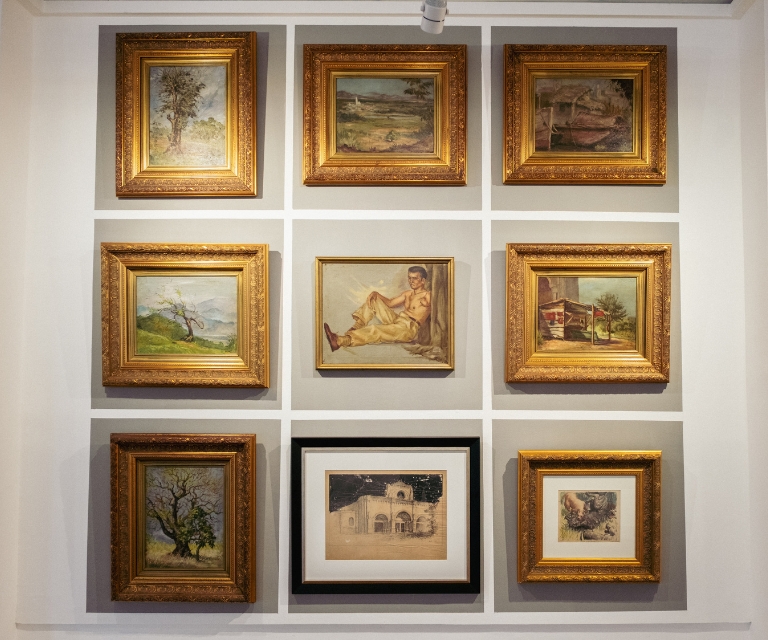
Curating the exhibition required months of sifting through extensive archives, publications, photographs, correspondence, and pieces from six private collections. From this research, Francisco selected nearly 100 works that capture the full scope and dynamism of Sansó’s visual language across various media, including painting, printmaking, textile design, fashion illustration, and costume design.
The selection ranges from 1940s student works to his final Moderno Series from the late 2000s. Visitors can view rare, early landscape paintings created while Sansó was a student at the UP School of Fine Arts alongside his Baklad (Fishtrap) series—the early Philippine precursors to his celebrated Brittany landscapes.
Visitors will encounter important examples from his early figurative period, works produced during and after his years in Europe, celebrated landscapes and seascapes, floral compositions, prints, collagraphs, and later paintings that demonstrate the evolution of his artistic vision,” Francisco details.
Memory, Identity, and Eternal Return
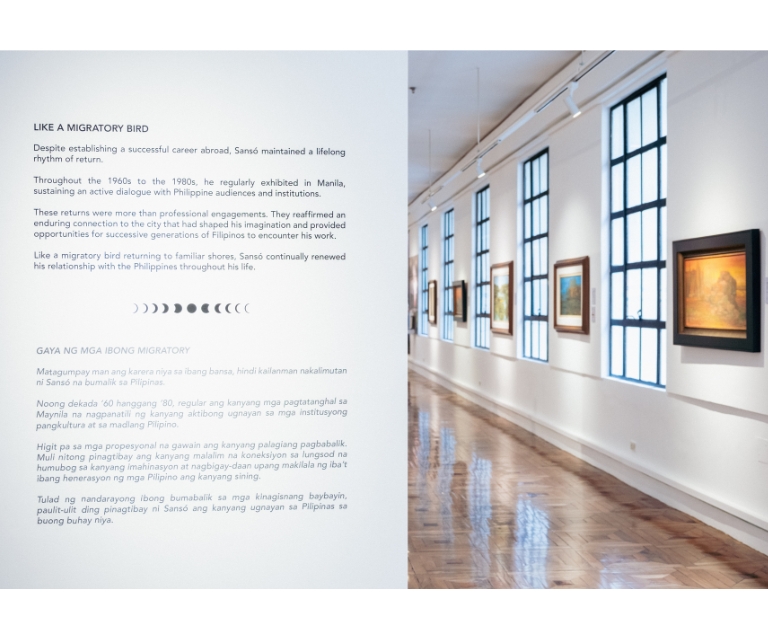
Although born in Spain, Sansó developed his consciousness as an artist in the Philippines. Even as he traveled extensively and achieved international acclaim throughout Europe, he continually returned to his adopted home. Scenes of Paris or Brittany retain a distinctive visual phrasing anchored in his life in the archipelago.
One of the exhibition’s most significant revelations is the extent to which the Philippines remained central to Sansó’s imagination throughout his life,” Francisco shares.
The exhibition demonstrates that many of the emotional, psychological, and visual foundations of his work can be traced back to experiences formed in the Philippines.”
The retrospective traces a narrative that begins with Sansó’s formative years in Manila, moves through the trauma of war and displacement, follows his international travels, and concludes with his final return home.
Sustaining a Generous Legacy
When Sansó returned to Manila permanently in 2008, he focused on ensuring his work and resources would serve future generations. He established Fundacion Sansó in 2015 to preserve his archives, authenticate artworks, and run public programs aligned with his vision.
Beyond art preservation, the foundation maintains initiatives such as the Fine Arts Student Stipend Program, the Art + Design = Empowerment (ADE) Special Exhibition Program, the Scholarship Cafe, and the Initiative for the Continuation of Artist’s Estate (I CAre) Program.
Since 2018, its scholarships, grants, and cultural development programs have assisted dozens of young artists, students, and cultural workers,” Francisco states.
The foundation has also provided travel grants, curatorial grants, and professional development opportunities while maintaining free public access to its museum and exhibitions.”
Ultimately, SANSÓ: Pusong Pilipino honors a lifelong bond between an artist and his chosen home. As Francisco concludes,
It is a tribute to the affection, loyalty, and sense of responsibility that defined his relationship with the Philippines. It is a reflection on legacy—not simply what Sansó left behind as an artist, but what he entrusted to future generations through the foundation that bears his name.”
Read more Stories on Simpol.ph
Light, Flora, and Metamorphosis: Ycoy Sitchon Unveils ‘Heliora’ at Solaire Resort Quezon City