For a long time, Filipino women have been confined to Eurocentric beauty standards — fair skin, tall stature, and a pointy nose are among the markers of what is considered conventionally attractive. These unrealistic standards have long been perpetuated by media portrayals across many platforms, dating from television shows, films, and advertisements that continually conformed to Western ideals; eventually, marketing mestizas as more appealing than women with indigenous features. The rise of the Bebot beauty trend is a significant moment for Filipina representation in beauty.
Yet, through various changes in the media and digital landscape, recent years have witnessed a positive shift towards embracing diversity and inclusivity in beauty standards, manifesting a growing appreciation for traditionally underrepresented features.

What is a ‘bebot’?
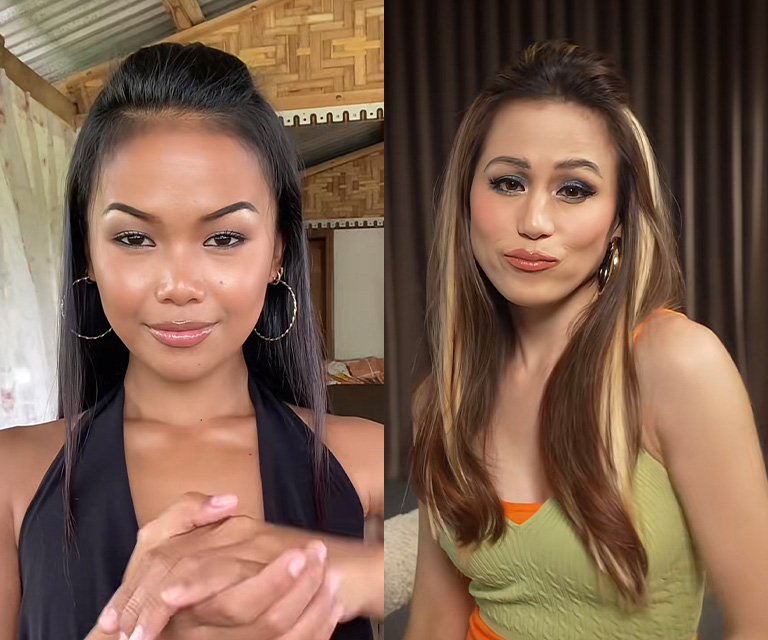
Nearly two decades following its release, global hip-hop group Black Eyed Peas’ hit single Bebot makes its viral comeback on TikTok through a rising makeup trend, which many internet users, influencers, and even celebrities quickly hopped on. Celebrities such as Maris Racal and Toni Gonzaga, as well as content creators Monique Libres (@monique_libres) and Eula Arielle (@eulaarielle_) joined in on the trend with their own takes on the makeup challenge. The trend has emerged across the platform, with women — morenas, especially — participating with clever transitions and makeup transformations into bebot girls. Beyond the Filipino community, the trend has extended to global audiences, with foreign influencers and content creators also hopping on the trend.
But before all that, what exactly is a bebot?
Allan Pineda Lindo, most commonly known by his stage name apl.de.ap, is a Filipino-American musician and is among the founding members of Black Eyed Peas. In a 2020 interview, apl.de.ap, along with his co-members, wil.i.am and Taboo, recalled how the song came to fruition.
“When we say, ‘FILIPINO! FILIPINO!’ on Bebot, we’re not saying it from a foreigner perspective… We started our group in a Filipino community in Los Angeles, and Filipinos should have their anthem as well,” will.i.am. recounted, emphasizing the need for Filipino culture to be represented through music the same way African-Americans, Mexicans, and Latino culture have.
Alongside will.i.am, apl.de.ap wrote the track’s lyrics, boasting about Filipino pride as well as Filipina beauty. Accompanied by its catchy tune and elements of hip-hop and rap, the lyrics are heavily inspired by the Filipino slang word bebot, a Filipino slang term for a “pretty woman” or “hot chick”.
During its year of release, when Filipino representation was minimal, especially in Western pop culture, the song became an unapologetic means of radical representation and appreciation for Filipina beauty, positioning morenas not as secondary, but as appealing and desirable.
Nostalgia Meets Empowerment
The resurgence of Bebot also aligns with a broader nostalgic wave that has been permeating digital culture. However, unlike any other throwback songs revived to accompany aesthetics sonically, the revival of Black Eyed Peas’ hit carries intention.
In the past decades, Filipino women have endured pressures to conform to beauty standards that aren’t inspired by our own. Women were long confined and conditioned to have an excessive fixation with being light-skinned and possessing Eurocentric features, perpetuating the popularity of whitening products and services. Then came the K-Wave that dominated the country’s beauty standards in the late 2010s, which further popularized lightening products and cosmetics that only catered to lighter skin tones and softer features. While there is nothing wrong with taking inspiration from different cultures and experimenting with various makeup looks, many brown-skinned women were underrepresented and overlooked for a long time.
Through the unexpected virality of the song and the beauty trend that emerged with it, it’s safe to say that social media has long allowed Filipina users to take space without waiting for mainstream approval. As more creators hop on the trend, we see various takes and interpretations of the makeup transformation, with most women adorning themselves with thin, dark eyebrows, bold smoky eyes, and glossy lips to mimic the Y2K-inspired look that Filipina celebrities from the early 2000s typically used. Many users, especially women, expressed their enthusiasm in the comment sections under the trend, referencing female celebrities in the 2000s who they dubbed as the “OGs” of the Bebot look, such as Bangs Garcia, Rochelle Pangilinan, and Assunta De Rossi, among others.

Aside from that, many users were also hit with waves of nostalgia while scrolling through the trend. YouTube user @mimiisabell left a comment on content creator @slaybyjess’s take on the makeup trend, expressing her excitement about the makeup style having its viral moment because of how it makes her feel beautiful and proud to be a Filipina.
Another user, @Nickyyy.B, even recalled how the trend is reminiscent of many women’s makeup looks way back in the 2000s. “I had no clue I had a style that could be considered a trend. This was 100% my makeup routine in the early 2000s,” she said, highlighting how these reflections reveal that these types of trends are not merely for the sake of nostalgia, nor cycles of fashion and aesthetic, but also for markers of validation.
That being said, many Filipinas across different generations, not only on TikTok but extending to various digital platforms, have become more vocal on redefining what beauty truly means. In this context, Bebot is not just a novelty track — it is also an anthem and a bold, unapologetic celebration of Filipina women. Before, it felt groundbreaking, but today, it feels necessary.

A Throwback and a Reminder
If 2006’s Bebot was an assertion, then its revival today serves as an affirmation. In its virality and sudden resurgence, the track that birthed the bebot beauty trend proves one thing to be right: representation ages well when it is rooted in authenticity.
For many, this trend feels deeply personal. Many women have shared in comments and posts on the beauty trend that seeing morena representation in music, beauty, and social media — not just limited to visibility, but also extending to appreciation and cultural pride — has finally made them feel seen. Through these shared experiences, empowerment has become collective.
By embracing their natural features, as well as revisiting empowering moments that were once overlooked, Filipino women can actively challenge the unrealistic beauty standards imposed upon them. In reclaiming these socially-constructed ideals, whether through media representation or revived anthems of pride, they transform what was once excluded into something celebrated. Through this collective remembrance and assertive visibility, being beautiful becomes more about authenticity and less about conformity.
Read more Stories on Simpol.ph
Sobrang viral: Why is everyone suddenly ‘sobrang Latina’?
Miss Universe Philippines 2025: Redefining Purpose and Setting a Global Standard
Not Just a Crown: Ahtisa Manalo’s Story of Survival, Sacrifice, and Strength