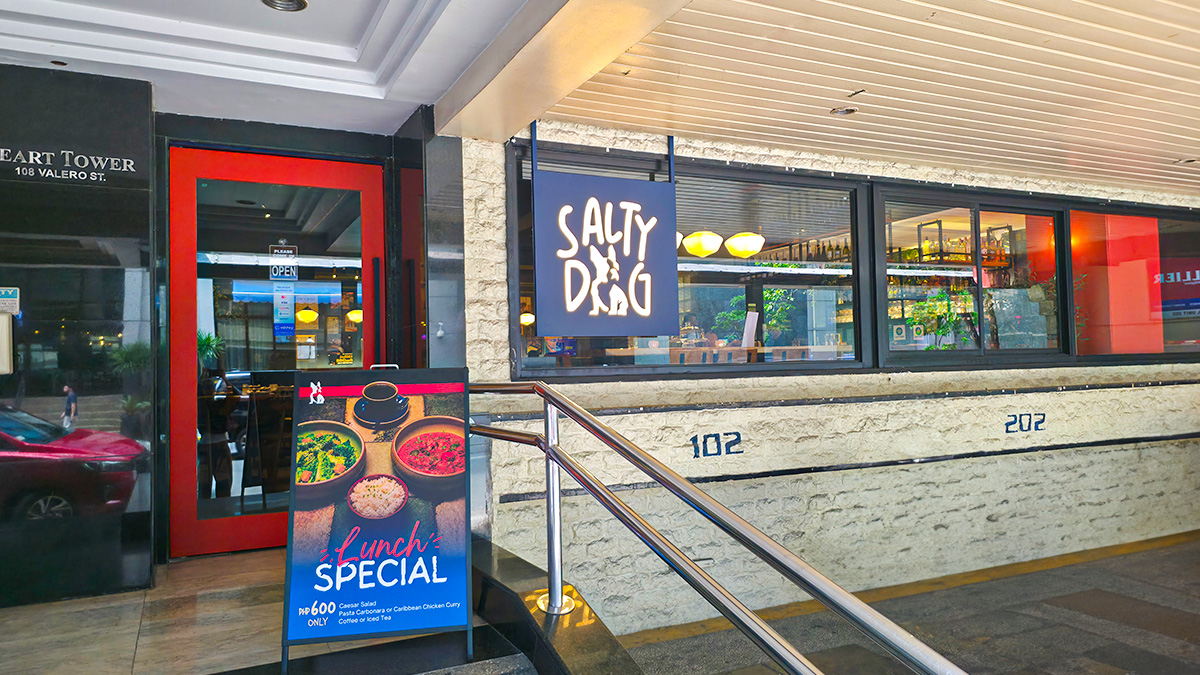
In Makati, where polished restaurants can sometimes blur into one another, Salty Dog is not trying very hard to blend in.
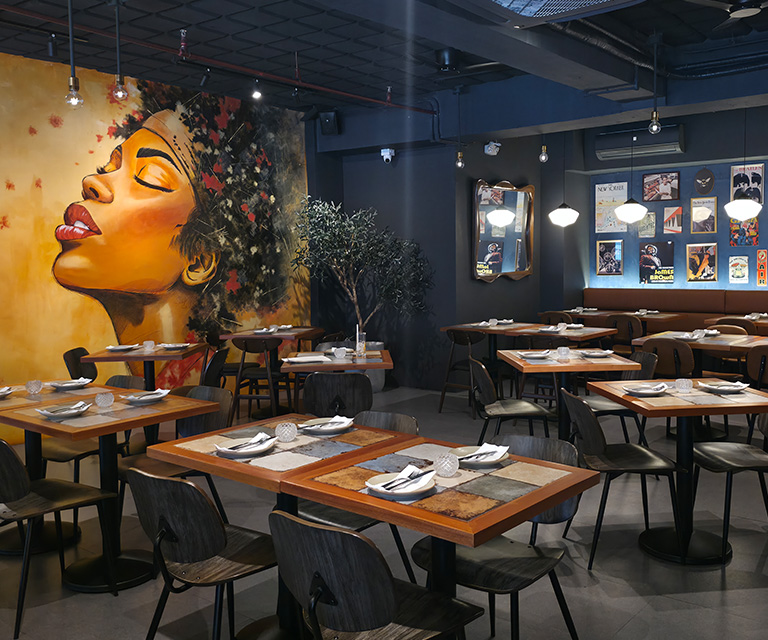
Walk through the door and the first impression is visual: color, paintings, music and design working together rather than sitting quietly in the background. It is the sort of room that asks you to look twice, maybe take a photo before you sit down. The atmosphere feels relaxed but deliberate, with none of the stiffness associated with fine dining. Think less hushed white tablecloth, more good playlist, generous portions and a table you might linger around longer than planned.
For Jeffrey LeBon, the American chef and owner behind the restaurant, that was the point.
Global Roots, Southern Soul
LeBon, who was born in Boston and has spent about two decades in Asia, describes Salty Dog as a soul-food restaurant shaped by the American South. Its influences, however, are not confined to one region. African, Mexican, Caribbean and Midwestern traditions all make appearances, creating a menu that feels familiar without being predictable.
The restaurant itself began, in a sense, at LeBon’s dinner table.
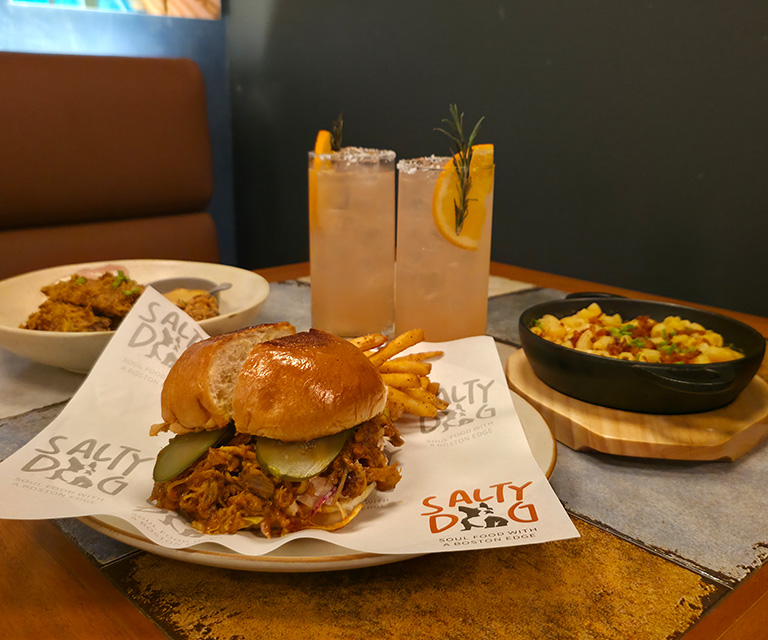
He was cooking for friends when he served two dishes that would eventually become Salty Dog signatures: a pulled pork sandwich and macaroni and cheese. His guests encouraged him to build a restaurant around the food. He was already considering opening a restaurant in Manila, but the dinner gave him a direction.
I just started cooking,” he recalled, and eventually followed what he described as his instincts.
Fine-Dining Discipline Meets Comfort Food
That instinct is evident in the food. Salty Dog’s dishes are not trying to reinvent soul food. LeBon prefers a different kind of ambition: take familiar food and execute it with the discipline of a fine-dining kitchen.
His culinary background helps explain that approach. Early in his career, he worked in Boston and San Francisco restaurants with Michelin-starred sensibilities. The experience left him with a devotion to technique and ingredients that he applies just as seriously to macaroni and cheese as he would to a classical French dish.
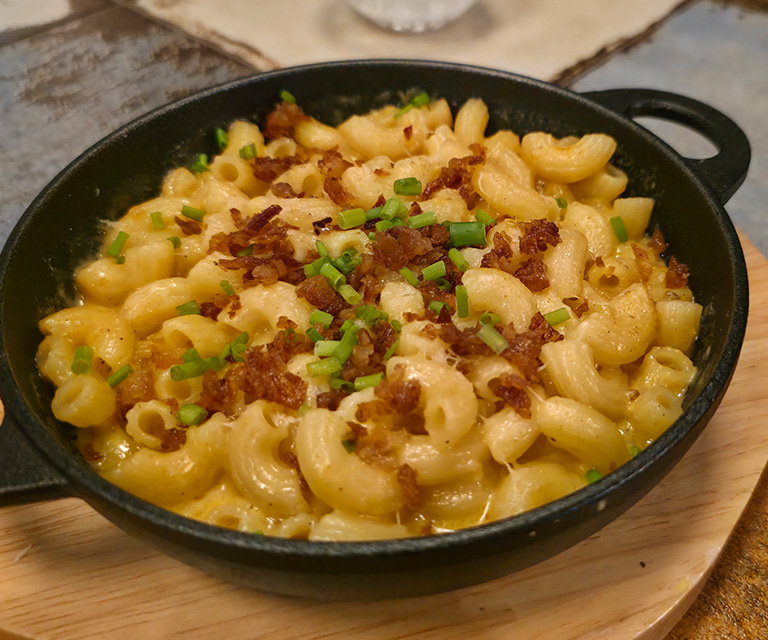
The macaroni and cheese, for instance, is treated with almost suspicious attention to detail. The pasta is cooked in well-seasoned water, while aged sharp cheddar and 35 percent-fat cream provide richness. Dijon mustard adds another layer. Nothing about the dish screams technical achievement. That is precisely why the technique matters.
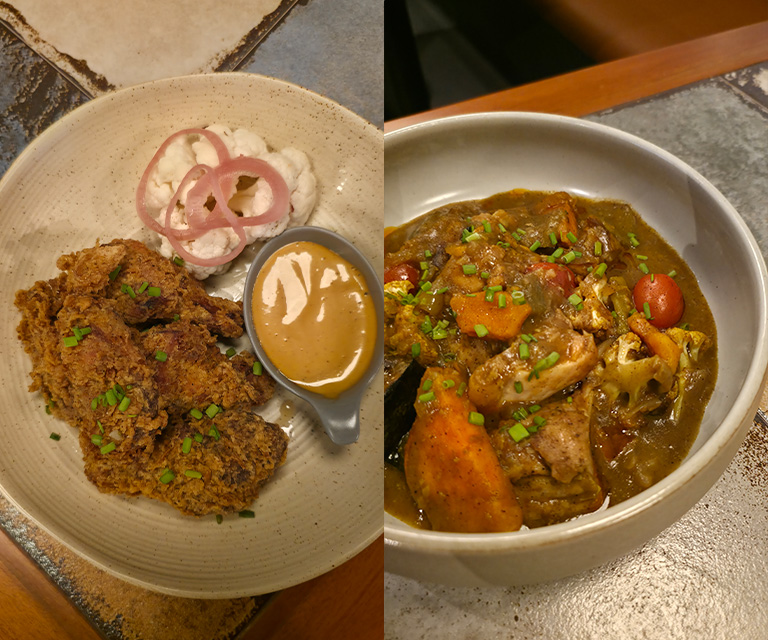
The chicken wings receive the same treatment. LeBon sources them fresh from a local producer, marinates them with spices and fats, coats them in seasoned flour and serves them with house-made pickles and a dipping sauce containing roughly a dozen ingredients.
He calls them “southern fried chicken wings on steroids.”
The pulled pork sandwich follows the same philosophy. The pork is marinated for hours in spices, cooked slowly in the oven, coated with house-made barbecue sauce and tucked into bread baked fresh by a local bakery.
Then there is the Caribbean chicken curry, perhaps the clearest example of Salty Dog’s willingness to wander. Curry is one of LeBon’s favorite foods, but instead of leaning on the familiar flavors of Indian or Southeast Asian curries, he draws from the Caribbean. Fresh thyme, coriander seed, coconut milk and roasted vegetables create something that sits comfortably within the restaurant’s Southern American framework while still feeling unexpected.
The Story Behind the “Salty Dog”
Even the name has a story.
A “salty dog,” LeBon explained, refers to someone who makes a life by the sea. Having lived in Boston, Hong Kong, San Francisco and Manila, he found the phrase strangely fitting. It also suited the restaurant’s personality: casual, a little rough around the edges and deliberately unpretentious.
That spirit extends to the room. LeBon wanted diners to have an experience rather than simply “fill their tummies.” The paintings and designs were chosen to create a sense of place, and he brought in a local artist to contribute work to the restaurant. The goal was not another generic dining room of brown walls and glass. It was something with a pulse.
Permission to Have Fun
There is a useful contradiction at the heart of Salty Dog. The cooking is disciplined, but the restaurant does not feel disciplined. The food is carefully engineered, but the experience feels loose. It is premium without acting precious.
And perhaps that is the accommodation Salty Dog offers best: permission to have fun.
In a city where dining can easily become another item on an itinerary, Salty Dog makes a case for lingering. Come hungry, take a second look around, order the macaroni and cheese, and let the evening unfold.
Read more Stories on Simpol.ph
Hay Diner Brings ’70s Comfort to Camp John Hay
Discovering the Elegance and Energy of BKK Social Club at Four Seasons Bangkok