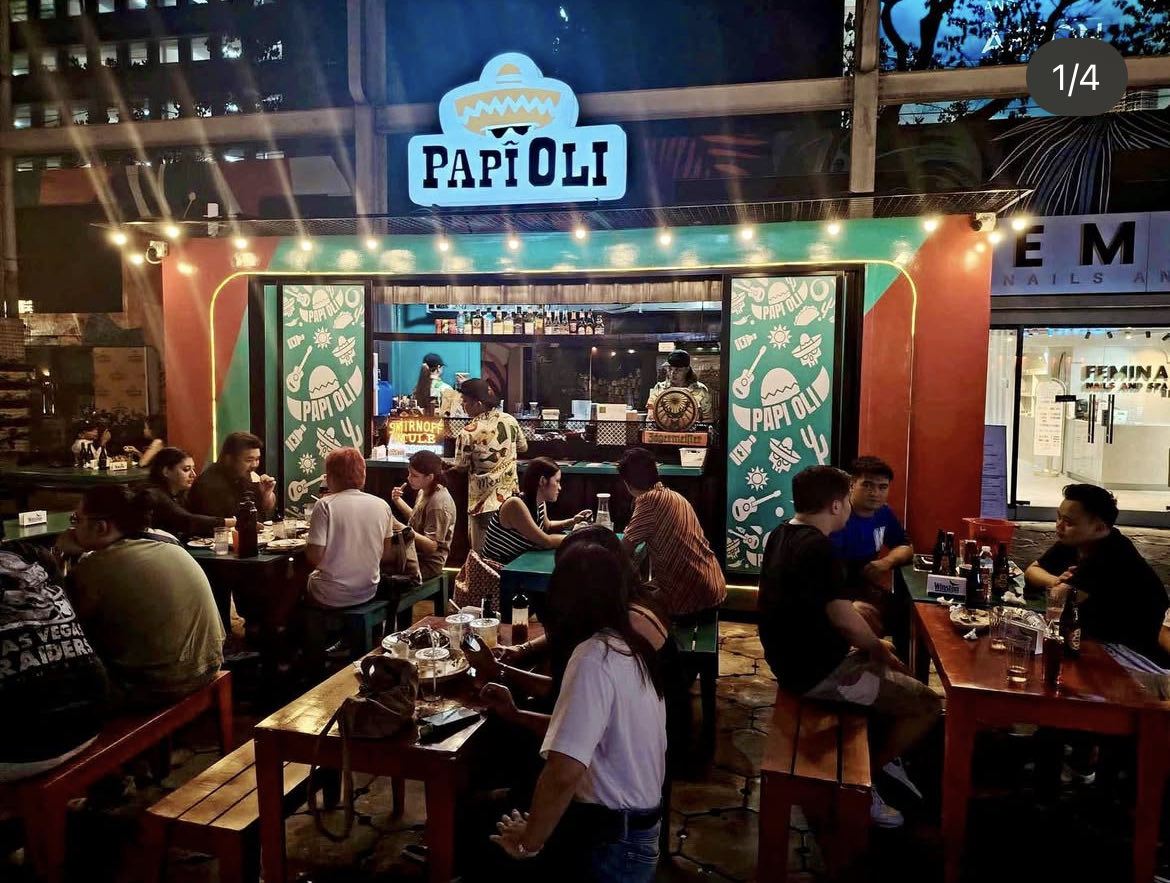
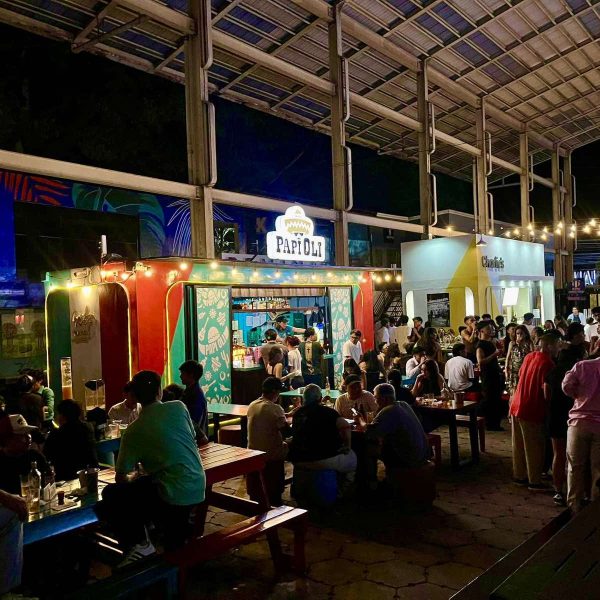
Among Katipunan’s food stalls, one taqueria-style stand has quietly stayed the course, and that is Papi Oli. Tucked inside The Pop-Up, a container-van-based open-air food park along Katipunan Avenue, Papi Oli has become something of a local fixture.
The Pop-Up transforms with the day. In the mornings and afternoons, it serves as a lifestyle hub for the nearby student population. By night, it becomes a lively gathering place, right across from major universities and just a short walk from the Katipunan LRT station.

While other stalls have come and gone, Papi Oli has built a loyal following through consistency, affordability, and bold flavor—served with no frills but plenty of heart.
What started as a pandemic-born venture has turned into one of the longest-standing outlets in the open-air dining hub. According to co-owner Dexter Oliveros, the idea was born out of necessity—a way to build something sustainable, offer work to friends who lost their jobs, and take a chance on a shared dream.
“We started Papi Oli during the early days of our relationship,” Oliveros shares. “It was a way to grow together, earn together, and help friends who lost their jobs.”
The name is personal: a blend of his wife’s term of endearment for him—Papi—and his surname, Oliveros. But what keeps people returning isn’t the backstory. It’s the food.
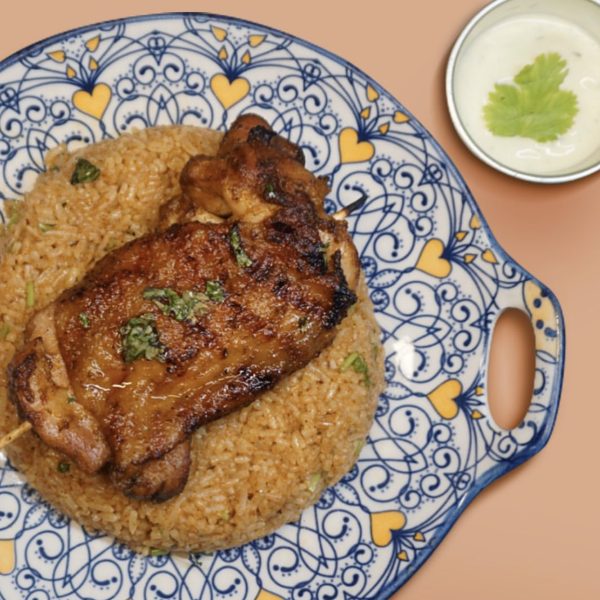
Skewered Goodness, Rice Included
New rice meals with chicken and pork skewers, paired with Mexican rice—a portable, flavorful combo that sticks.
Tacos That Travel Well Across Cultures
The connection runs deeper than taste. Tacos may not be native to Filipino cuisine, but their structure and spirit feel oddly at home, built for sharing and grounded in bold flavor.
This culinary exchange was no accident. Over two centuries of the Manila-Acapulco Galleon Trade created direct ties between the two former Spanish colonies—carrying ingredients like achiote (atsuete), cacao, and cooking methods that shaped dishes such as tamales, menudo, and tsokolate. Even rice cakes and stews echo this Pacific link.
The links don’t stop at history. On the plate, the resonances are immediate. Lumpia shares the burrito’s roll-and-fill logic. Ceviche, with its acid-cured fish, is a close cousin of kinilaw. Both cuisines love the interplay of heat and sourness—using citrus, chili, tamarind, or vinegar to sharpen flavors. And then, of course, there’s the shared obsession with mangoes, ripened sun-sweet and used in everything from salads to sauces.
“When we started researching Mexican food,” Oliveros says, “we found it aligned well with the Filipino palate—big, layered flavors, spices, and fresh ingredients.”
That alignment is what makes Papi Oli work. It doesn’t attempt strict authenticity. Nor does it lean on novelty. The food resonates because it feels familiar in spirit—adaptable, communal, and built around bold flavor.
The Birria That Built the Brand
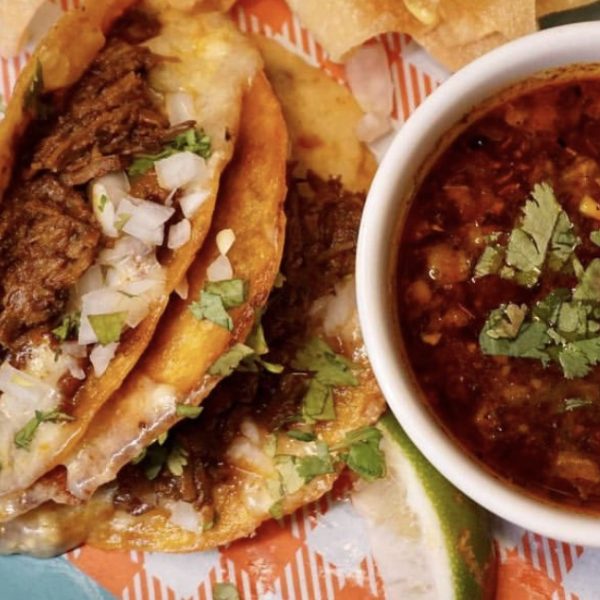
Their signature dish—the Beef Birria Tacos—remains the centerpiece. Slow-braised and folded into a flour tortilla, the beef is served with consommé for dipping. To keep things tidy, each taco is served with an extra tortilla—a small fix with big results. It keeps the meat to tortilla ratio right, generous and thoughtful. They also add tender, silky beef skin—rich in collagen—which brings depth and a soft, almost velvety texture to the meat. It’s a clever way to enrich the dish without adding weight, luxurious but still familiar.
While birria remains the headline act, their chicken tacos deserve their own spotlight. Seasoned just right and juicy even without sauce, each bite is satisfying and flavorful. The spiciness is handled mindfully—balanced enough for those who prefer milder profiles, but with an option to ask for hot sauce or sliced chili for extra kick.
Supporting the main act are the XO Nachos, made with nearly translucent flour chips. Crisp and delicately seasoned, they carry their weight across the meal—not just as a starter, but as a constant presence on the table. Unlike the cheese-drenched versions common elsewhere, these are light, balanced, and intentionally unfussy.
Another standout is the sisig—a sizzling plate of chopped pork, spiked with a splash of lime in place of calamansi. While far from Mexican in origin, it somehow fits the format. The acidity cuts through the richness, and its textural crunch makes it a natural candidate for taco treatment. It’s not yet on the menu as one—but the demand is there.
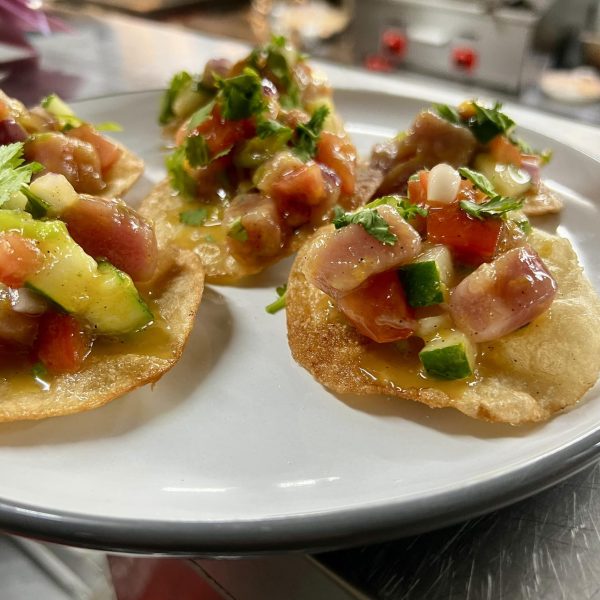
The tuna ceviche, reminiscent of kinilaw, also surprises. Studded with mango and green chili, it arrives on individual tostadas. Visually striking and fresh, the dish risks losing its crunch if left too long. Serving the ceviche and tostadas separately would preserve texture—and could easily extend to the sisig as well.
A Place That’s Stayed the Course
“We’re not trying to be everywhere. We just focus on getting better.” —Dexter Oliveros, co-owner of Papi Oli
Papi Oli never relied on gimmicks or virality. Its following grew quietly, driven by consistent flavor and word of mouth.
“We’re not trying to be everywhere,” Oliveros says. “We just focus on getting better.”
That clarity comes from how they run things as partners in life and business. “We first identify the root cause of the problem,” shares co-owner Wincheska Young-Oliveros. “We listen to the suggestion of our employees and our customers and try to come up with the best solution as soon as possible.”

We make sure that we define our role in the business to reduce conflicts when decisions need to be made. We work separately to each other’s strengths, but at the same time we still value each other’s input.”
That commitment shows. Many of the dishes are built on spice blends developed in-house…
That commitment shows. Many of the dishes are built on spice blends developed in-house. Feedback is encouraged, and even off-menu requests—like a taco without protein—are met with flexibility.
One regular customer, impressed by the food, once asked to franchise the concept in Dumaguete. At the time, the team wasn’t ready. But the gesture sparked something: a sense that the stall had staying power—and room to grow.
Why It Still Matters
Papi Oli isn’t the kind of place that trends on TikTok or offers flashy limited editions. It doesn’t shout. It simply stays.
Its quiet longevity speaks to a broader shift in Filipino dining habits—where authenticity isn’t always about origin, but about intent, flavor, and how well a place fits into everyday life. In a time when hype often overshadows substance, Papi Oli reminds us that consistency, comfort, and community still matter.
Open daily from 4:00 PM to as late as 5:00 AM on weekends, it’s the kind of spot where people show up in pambahay or post-party clothes—and stay awhile. For those staying in, delivery is available on GrabFood and FoodPanda, bringing birria and nachos straight to your doorstep.
Its quiet presence has become part of the rhythm of Katipunan—unfussy, reliable, and always worth returning to.
For anyone craving something a little different, a little deeper, Papi Oli Katipunan tacos remain one of Quezon City’s most reliable—and most quietly loved—late-night meals.
Location: The Pop-Up Katipunan, 273 Katipunan Avenue, Quezon City
Instagram: @papioli.ph