Cartimar has always been more than a marketplace. It is a labyrinth of memory, commerce, and surprise. But its story begins in 1957, when Cartimar—named after Carlos Cuyugan, his wife Timotea Lichaoco, and their daughter Margarita C. Oppen—first opened its gates. Some recall whispers of 1956, but consensus leans toward 1957 as the year it took root.
Far from being a mere commercial venture, Cartimar was envisioned as a modern shopping hub at a time when Pasay was growing into a lively urban district. Over the years, the Oppen family has continued to shepherd its legacy. Through changing times, they have kept Cartimar not only alive but relevant—still bustling with aquariums, bicycles, specialty grocers, and the flavors of Manila’s cosmopolitan table.
Today, Cartimar is both market and memory: a living testament to how one family’s vision can anchor itself in the city’s daily life, generation after generation.

At the time, Cartimar catered to Manila’s elite. Imported bicycles, rare pantry goods, and luxury items filled its stalls, making it the city’s first true shopping center. Over the decades, it evolved—democratizing into a space where homemakers, students, chefs, and collectors all found something of value. That blend of aspiration and accessibility still defines Cartimar Market Manila today.
Tucked in Pasay, its lanes brim with aquariums, bicycles, and pet shops. For the food lover, however, it is a cornucopia that rivals the city’s grander markets. Walk its narrow aisles and you’ll find a different Manila, one where global flavors and local abundance collide.

An Atlas of the Pantry
At the Japanese, Korean, and Chinese stores, shelves groan with miso pastes, seasoning powders, condiments, and pickle jars that could inspire a hundred home experiments. For someone like me, who has always believed the pantry is a map of the world, Cartimar offers an atlas in bottles and packets.
It was here I first discovered tubs of gochujang, long before they became supermarket staples—a reminder of how Filipino pantries keep evolving, much like in our feature on Northern Mindanao kinilaw and its global influences. Japanese rice vinegar sits shoulder to shoulder with bagoong from Pangasinan.
“For someone who believes the pantry is a map of the world, Cartimar offers an atlas in bottles and packets.”
Seafood and Greens in Abundance
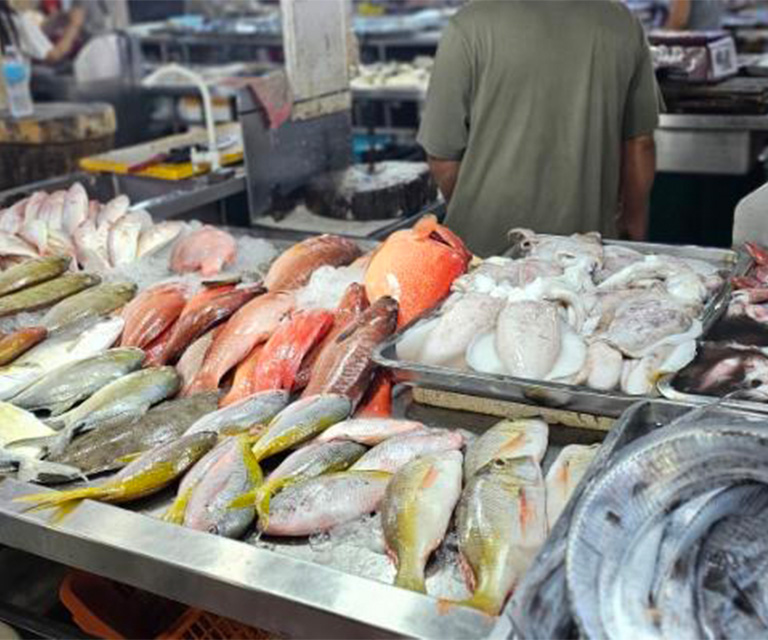
Step into the wet market and you are greeted with gleaming seafood. Live crabs, clams spitting saltwater, tuna steaks cut thick for grilling, clear-eyed lapu-lapu perfect for steaming.
Vegetables appear in dizzying variety, from alugbati and talbos ng kamote to imported produce like asparagus, mushrooms, even fresh wasabi root on rare days. One can plan a humble sinigang or a full-on Japanese hotpot without leaving the compound—echoing the abundance we saw in Iloilo City’s markets, now recognized as a UNESCO Creative City of Gastronomy.
Eateries Hidden in the Lanes
The joy of Cartimar does not end in shopping bags. Hidden among its alleys are eateries that have quietly fed generations.
-
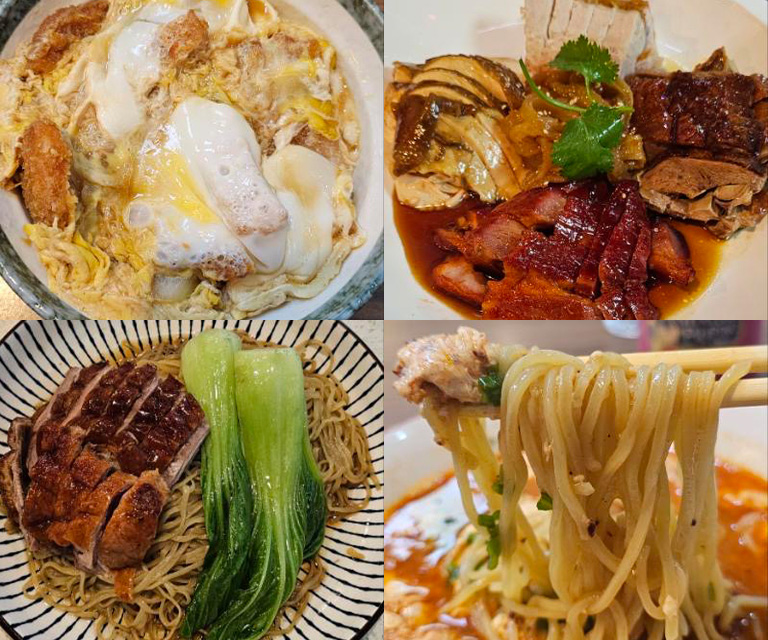
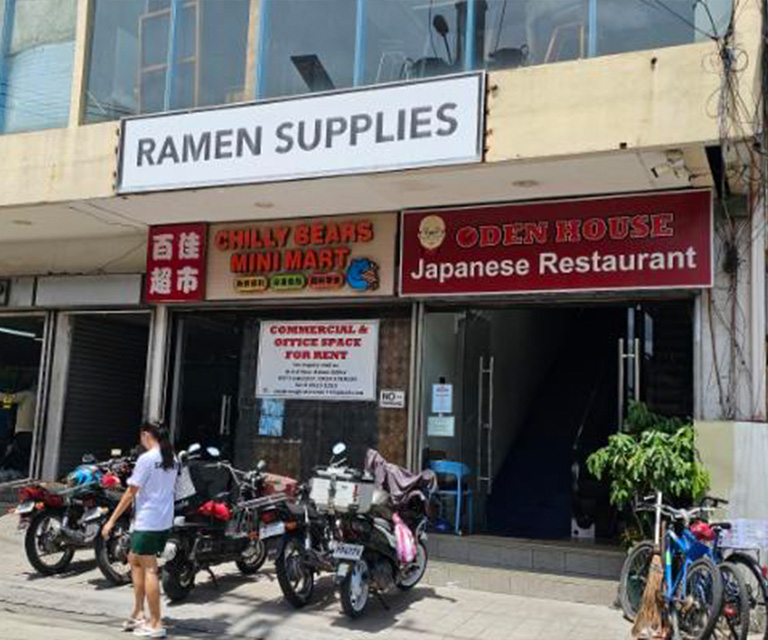
Oden Noodle House: Steaming bowls of shoyu, miso ramen, or simple oden broth prove that good food need not be expensive. A meal under two hundred pesos feels like a secret in a city where ramen often carries a four-digit bill.
-
Onn Kee Roast Duck: Glazed ducks hang in the window, their lacquered skin ready to crackle. Roast duck or char siu over rice is comfort food at its richest.
-
Tiong Hwa Soy Bean Center: A cult favorite for taho lovers. Their soy pudding is impossibly fresh and silky, offered with arnibal and sago or playful toppings like peanut crunch, chewy barley, ube jelly, even mochi.
-
Zhang Ji Noodle House: For spice seekers, bowls of Sichuan noodles burn and tingle in equal measure. The broth is bold with peppercorns, chili oil, and beefy depth, while hand-pulled noodles carry the heat beautifully.
Scattered stalls add more curiosities: kimbap, sashimi, fried bangus. Eating here feels like wandering through Manila’s own hawker center—informal, democratic, endlessly delicious.
A Resource for Home Cooks and Restaurateurs
Cartimar is not just for the home cook—it is a resource for budding restaurateurs. Specialty shops sell ramen noodles, chashu, broths, and toppings in bulk, letting anyone with vision (and a good broth recipe) start a ramen stall almost overnight.
Walk further and you’ll find kitchen suppliers with burners, stockpots, and sushi cases. For collectors, there are jars of Mindoro honey, bottles of sukang Iloko, dried seafood recalling coastal towns, Laguna cheese, duck eggs for balut, even foie gras if you know where to ask.
It is this dance between the ordinary and the unexpected that makes Cartimar enduring.
Why Cartimar Market Manila Still Matters
Unlike the polished aisles of malls, Cartimar is unapologetically chaotic. The floors are wet, the alleys cramped, the signage faded—but therein lies its charm. It is not curated, but lived-in. Here, you bargain, you banter, you taste. Here, food is not simply bought; it is discovered.
“Here, food is not simply bought; it is discovered.”
Yet markets like Cartimar are increasingly under threat. Across the country, community markets have been razed or redeveloped into sterile complexes. In the process, something precious is lost—not only affordable food, but also the relationships, stories, and serendipities that thrive in these spaces.
When a place like Cartimar disappears, it is not just stalls and vendors that vanish. It is an entire ecosystem of knowledge, tradition, and possibility.
Protecting markets is not nostalgia. It is about preserving democratic spaces where ordinary Filipinos shop, eat, and connect—spaces we also explored in our story on Laguna’s ancestral restaurants, where foodways thrive in lived-in markets.
Cartimar has survived supermarkets, specialty stores, and online shopping because it offers what they cannot: the thrill of serendipity, the joy of community, and the proof that food is not just a commodity but a conversation.
For chefs and home cooks alike, Cartimar Market Manila remains a sanctuary—proof that Manila’s appetite for the curious and the diverse still finds its heart in the market.
“Protecting markets is not nostalgia—it is about keeping the democratic spaces where Filipinos shop, eat, and connect.”
Read more on Simpol.ph
-
Kinilaw in Northern Mindanao: Tracing the ancestral roots of a Filipino classic.
-
Iloilo City: UNESCO Creative Gastronomy Hub: How a Visayan capital became a global food destination.
-
Laguna’s Fight To Keep Traditions Alive: Where tradition, family, and flavor continue to thrive.