In a city where adobo and sisig crowd the menus, Chef Miguel “Miggy” Cabel Moreno makes room for smoke-charred chicken from Zamboanga—and now, for a storybook princess too. Whether in the kitchen or on the page, his mission is the same: to make sure Tausug voices are never erased. Mindanao’s Tausug food in Manila is gaining recognition thanks to his efforts.
At Palm Grill in Quezon City, Miggy has introduced Manila to the bold, coconut-simmered flavors of Southern Mindanao. Through books like Si Migoy, Ang Batang Tausug and Ang Kuwento ni Putli Mandi, he brings those same traditions into story form—giving the next generation not just food to taste, but stories in which they can see themselves.
A Childhood of Smoke and Soul
Miggy grew up in Zamboanga, where Sundays smelled of burnt coconut. His lola never called it pyanggang—to her, it was simply chicken, blackened and smoky, cooked with coconut and love.
“We didn’t call it cuisine,” Miggy says. “We just called it food. But it had soul.”
That soul traveled with him to Manila. But here, he noticed a silence. While adobo and sinigang dominated the menus, few had heard of tiula itum, siyagul kambing, or kulma kambing. Some didn’t even realize the Tausug were Filipino. What others dismissed as oversight, Miggy felt as erasure. Mindanao’s Tausug food in Manila was being overlooked.

Palm Grill and Mindanao’s Tausug Food in Manila
In 2017, Miggy opened Palm Grill in Quezon City—the first restaurant in Luzon dedicated to Tausug and Southern Mindanao cuisine, proudly bringing Mindanao’s Tausug food to Manila’s culinary scene.
“I didn’t open it to follow trends,” he says. “I opened it to tell the truth.”
The menu became a manifesto: pyanggang manok, kuning rice, tiula itum. Every plate carried memory. Every bite carried identity. Today, Palm Grill has two branches, in Tomas Morato and Araneta City, and continues to thrive with memory-driven creations.
Even in the pandemic, when many restaurants shuttered, Palm Grill stayed open. Some nights, only three or four orders came in. One of them—a nurse from Tawi-Tawi—tasted tiula itum and broke down in tears. For Miggy, that moment said everything: food was not just sustenance. It was belonging.
From Tausug Kitchen to Children’s Books
The same conviction drives his work in children’s literature. Si Migoy, Ang Batang Tausug, his first book, introduced young readers to the world he knew, and has since reached audiences at international fairs in Dubai, Bologna, and soon Frankfurt. Its global reception proved what Miggy already knew: Mindanao’s culture resonates far beyond its shores. Mindanao’s Tausug food in Manila is part of that cultural reach.
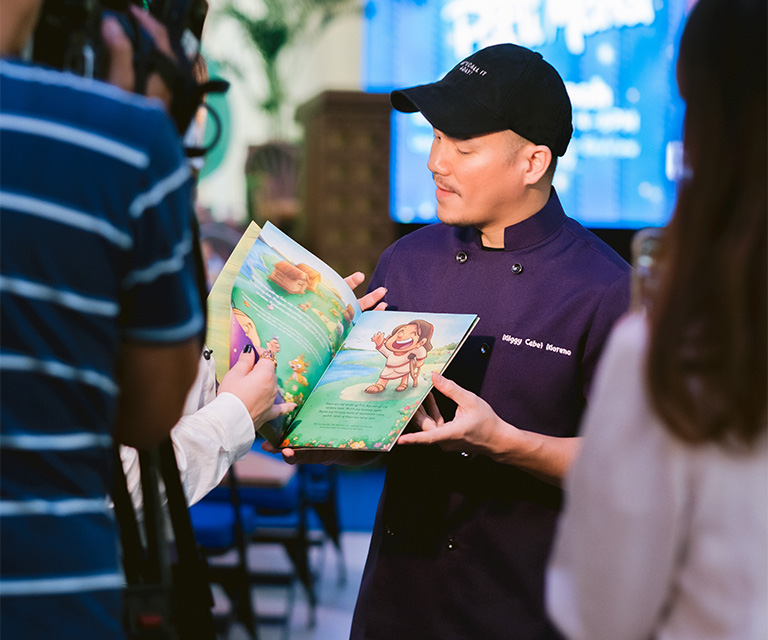
His second book, Ang Kuwento ni Putli Mandi, tells the story of a Tausug princess born with a clubfoot. For children with the same condition, it is a rare chance to see themselves represented in a story. The book is written in Tagalog with English translation, and holds the distinction of including a Bahasa Sug version by Dr. Sharifa Pearlsia Ali-Dans—returning the tale to the language of the Tausug people.
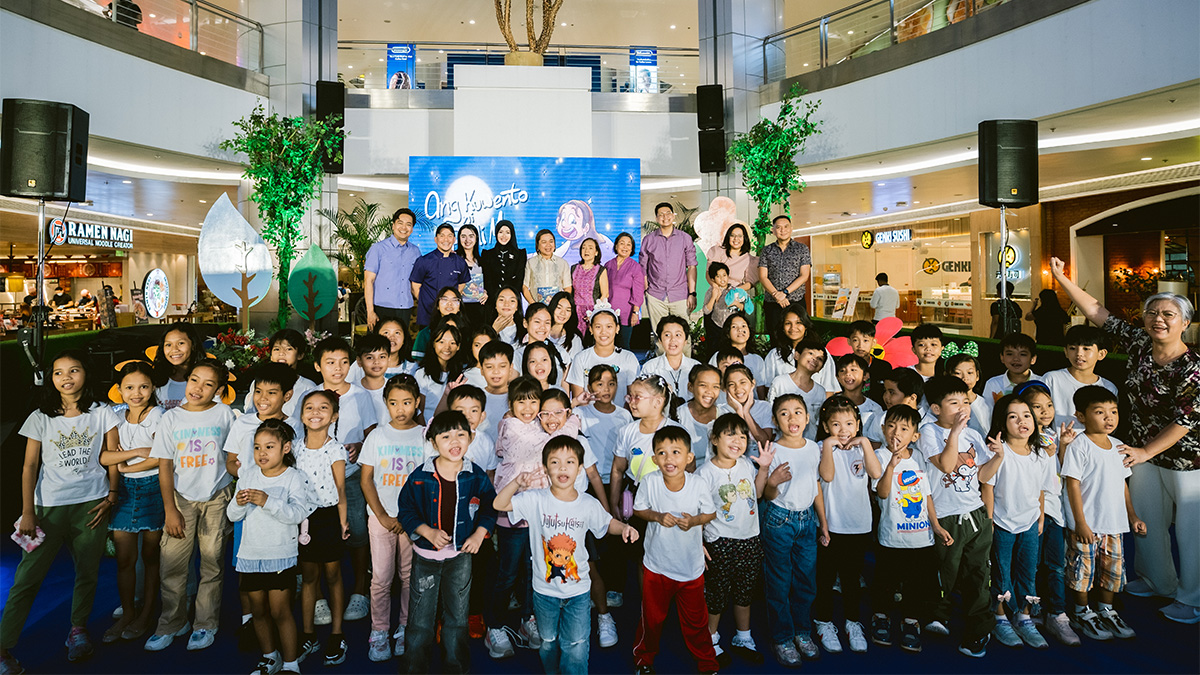
At one reading, Pia Arcangel-Halili, Miggy’s former GMA colleague and beloved Art Angel host, brought Putli Mandi to life as children sat cross-legged, leaning in close. Some giggled at the princess’s adventures; others grew still with wonder. When Miggy followed with a live cooking demo of the putli mandi rice cake, the room filled with the sweet scent of coconut and sugar. Children reached out eagerly, hands sticky with dessert, laughter echoing long after the story ended. In that moment, food and storytelling became one.
Planting Seeds for the Future
Both books have been commended by Bangsamoro leaders for preserving heritage and instilling pride. But for Miggy, they are more than milestones. They are part of the same continuum as his cooking—a way of ensuring that Tausug identity is never forgotten, and that the next generation grows up knowing they belong.
“Every recipe, every story is a seed,” he says. “So the next generation knows—our food matters. We matter.”
This is why he continues to serve smoky pyanggang at Palm Grill. This is why he writes of a princess who walks differently. In both, he is clearing a path that once seemed closed.
“Whether it’s chicken charred in coconut or a storybook princess,” Miggy says, “I cook for the kid who thinks his food doesn’t belong. Because I was that kid. And with every recipe, every story, I want them to know—they belong.” Mindanao’s Tausug food in Manila is a testament to this belief.
Discover more stories, read more:
The Enduring Legacy of Tinapayan Festival: How One Man’s Dream Nourished a Nation’s Soul
What It Really Takes to Become a Chef in the Philippines
Terra Madre Asia Pacific 2025: The Philippines Welcomes the World to Bacolod