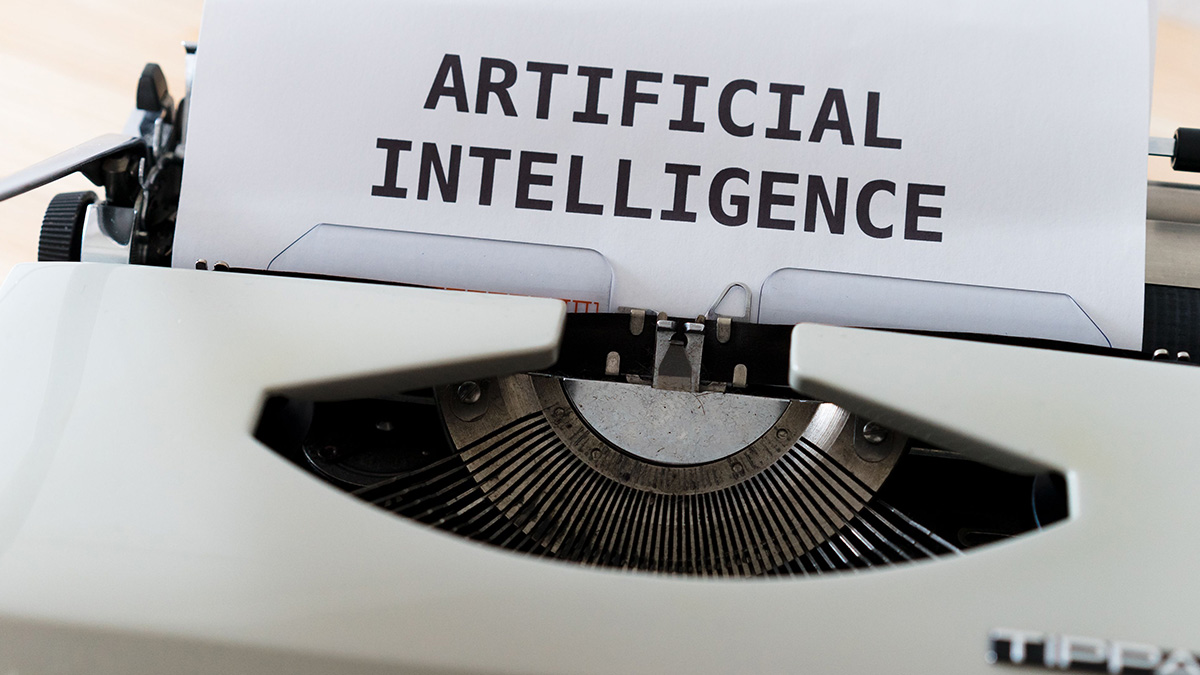
In 2024, Anthropic began buying books by the millions. Through Project Panama, physical volumes were shipped into an industrial process: bindings removed, pages cut loose, text scanned, and the books themselves discarded. Court records later exposed the scale of the operation.
Then, in August 2026, investigators followed a shipment of roughly a thousand secondhand books to an Amazon facility in Las Vegas, where workers reportedly carried out a similar process. Amazon confirmed that it purchases books through commercial channels to help develop and improve its products and services, although it did not say whether the scans were being used to train artificial intelligence. The reports made an abstract debate about AI training suddenly physical. These were not files scraped from the internet or passages copied from a database. They were books—bought, shipped, cut apart, scanned, and destroyed so that whatever was useful inside them could be extracted. For machines, literally.
Portable Memory
Writing was one of humanity’s most consequential technologies. Before it, knowledge depended largely on speech, memory, imitation, ritual, and apprenticeship. Writing allowed information to survive beyond individual minds and lifetimes. Laws, genealogies, observations, stories, and beliefs could be stored outside the human body and carried across generations.
Printing transformed that possibility again. Movable type and expanding publishing networks made written material easier to reproduce, circulate, compare, and preserve. Books became central to education, scientific exchange, religious debate, political movements, and the growth of literate publics. Human cultural evolution changed because knowledge could accumulate with greater fidelity across time, allowing generations to build on records left by people they had never met. The printed page became both a technology of communication and a material record through which societies remembered themselves.
Because books came to embody accumulated knowledge, destroying them acquired enormous symbolic force. Libraries were destroyed in conquest and war. Religious authorities prohibited heretical texts. The Nazi book burnings of 1933 publicly consigned works by Jewish, Marxist, pacifist, and other disfavored writers to flames. In the Philippines, Spanish colonial authorities banned José Rizal’s Noli Me Tangere and El Filibusterismo as subversive works that exposed abuses of colonial rule.
During Martial Law, the University of the Philippines Main Library quietly protected materials that could endanger those possessing them. Manifestos, underground publications, speeches, and documents associated with opposition movements were collected and hidden for decades, later becoming part of the Philippine Radical Papers. In each case the logic held: control the physical carrier and you control access to the ideas it contained. Books could be burned, banned, confiscated, or hidden because what mattered was whether someone, somewhere, might still read them. For much of history, destroying a book belonged to the politics of forgetting; preserving one could become an act of resistance.
Book Becomes Data
The new biblioclasm operates on an inverse logic: books are no longer destroyed to extinguish their ideas, but to consume them.
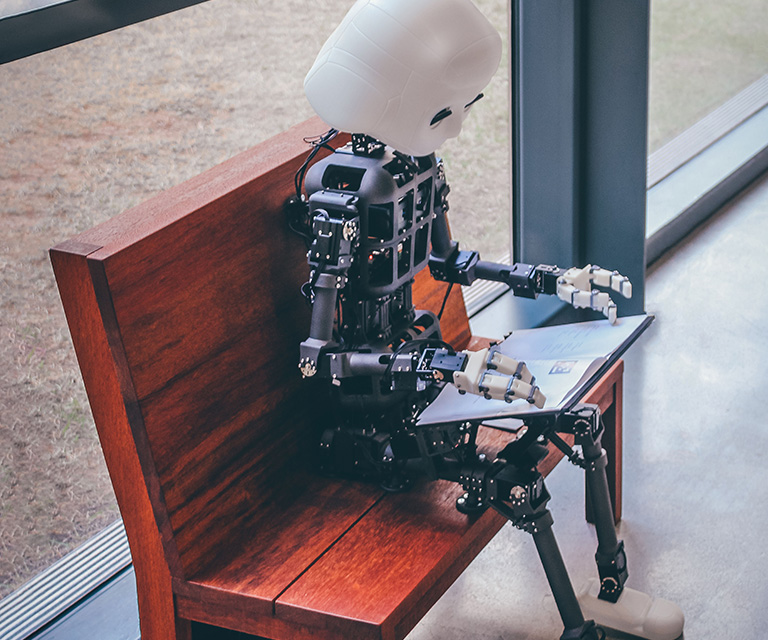
That reversal changes the cultural meaning of destruction. For an AI company, a printed volume is treated as a high-density natural resource—a source of language, concepts, styles, factual material, and patterns of human expression. The physical copy is useful only because it contains raw material that can be extracted. Once extraction is complete, the physical shell becomes operational waste.
This forces a difficult question: what does a book become in the Intelligence Age?
A book has always been several things at once—an intellectual work, a physical artifact, a commodity, a technology of memory, and a personal possession carrying its own biography. Two copies of the same novel contain the same printed words but hold entirely different histories through inscriptions, annotations, wear, rarity, or emotional association. Artificial intelligence introduces another identity: the book as training data. Its contents are detached from the object, converted into machine-readable text, broken into tokens, and absorbed into statistical models. What matters operationally is no longer the volume, but the extractable patterns it contains.
That distinction separates reading from ingestion. Human readers encounter books within lives, memories, places, and relationships. AI systems process text as data. The same words survive, but the mode of encounter changes completely.
Perhaps this is the defining transformation. In the Intelligence Age, the book does not disappear, but its cultural identity splits. It becomes not only something through which humans learn, but something from which machines extract. And that shift asks whether preserving a book’s abstract information is really the same as preserving the human memory embodied in the book itself.
Not Just Books
On August 21, 2026, organizations asked the US Federal Trade Commission to investigate whether AI companies’ acquisition and destruction of physical books could harm competition by permanently removing scarce source material from circulation. The complaint turns a technical practice into an urgent question of public access and cultural power.
The Information Age once seemed likely to make physical books and libraries obsolete. It did not, perhaps because books are never merely text delivery devices. They are companions on journeys, friends while waiting in airports, gifts, heirlooms, keepsakes, and physical anchors to specific periods of our lives. Libraries are not data-storage facilities; they are guardians of living cultural memory.
I look at my own bookshelf and see Love in the Time of Cholera, The Catcher in the Rye, and The Remains of the Day. Their texts can be digitized, tokenized, and used to shape model weights, but the artifacts themselves—and the human contexts bound up in their pages—cannot. To reduce a book to its extractable code is to forget that the medium was never just a container for data. It was the place where we left traces of ourselves.