Heart disease has long been seen as a condition of age—something that arrives in one’s 50s, after years of stress, smoking, or poor diet. But according to Dr. Myla Supe, a cardiologist at the Philippine Heart Center, this assumption is being shattered. “We’re seeing heart attacks in people in their 20s and 30s. Even teens aren’t spared,” she says. “It’s a silent emergency.”
Across the Philippines, more and more young people—some still in their teens—are suffering from conditions once thought exclusive to older adults. In fact, a national study by the Philippine Heart Association found that 5% of Filipinos aged 12 to 18 already have hypertension. Meanwhile, the Philippine Statistics Authority confirms that ischemic heart disease remains the country’s leading cause of death, responsible for over 65,000 deaths in the first half of 2023 alone.
“We’re seeing heart attacks in people in their 20s and 30s. Even teens aren’t spared,” said Dr. Myla Supe, cardiologist at the Philippine Heart Center. “It’s a silent emergency.”

A Teen’s Collapse Reveals a Hidden Crisis
At just 17, Marco collapsed during P.E. class. It wasn’t a sprain or asthma—it was a mild heart attack. His parents were stunned. They had no idea he’d been silently battling high blood pressure for over a year.
This isn’t an isolated case. In communities across the country, barangay health workers are increasingly reporting younger patients with elevated blood pressure, obesity, and early signs of cardiovascular distress.
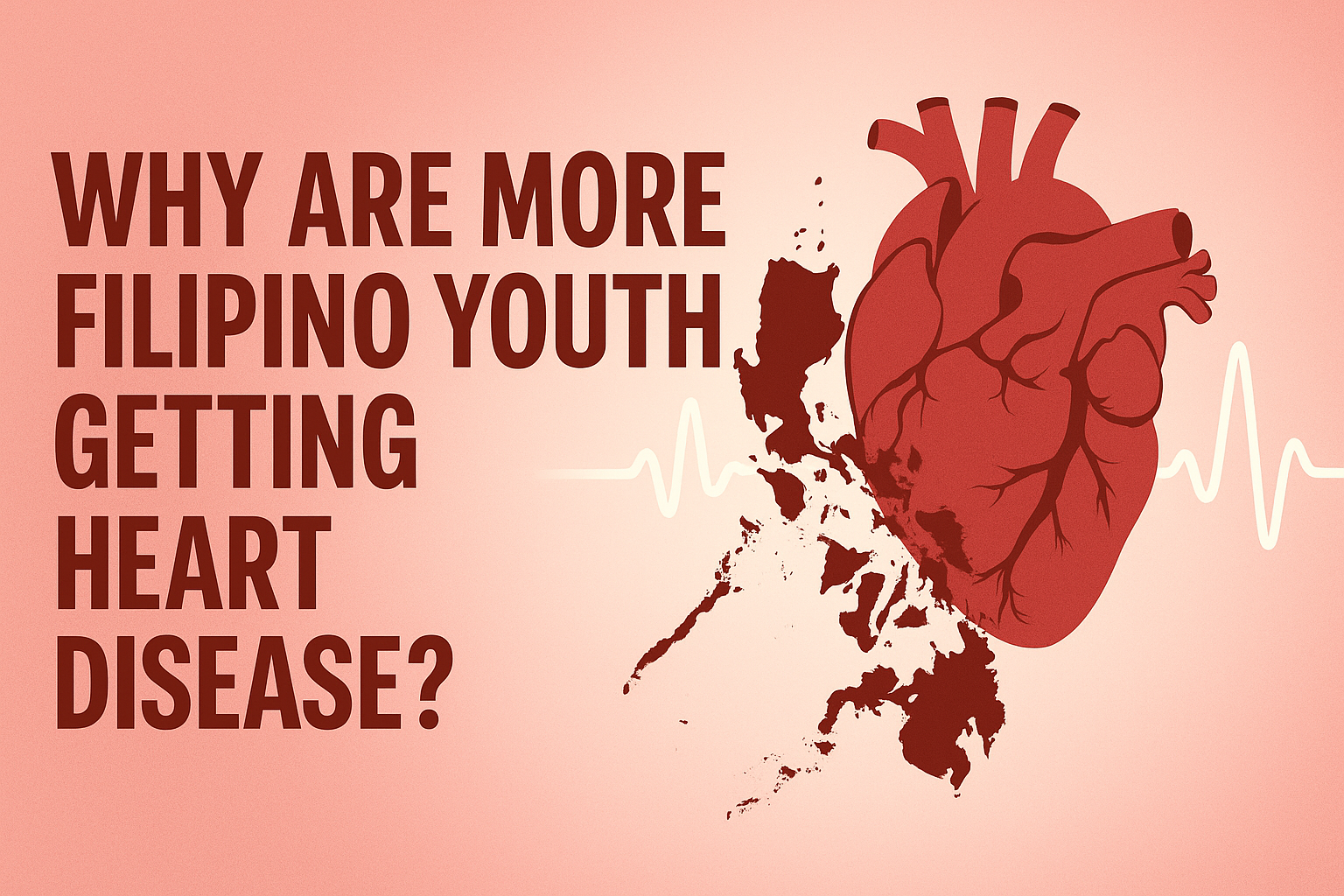
Why Are More Filipino Youth Getting Heart Disease?
Many young Filipinos believe they’re safe from heart disease as long as they don’t smoke. But today’s lifestyle tells a different story.
Instead of playing outside, kids and teens now spend hours in front of screens. Meals often come from fast food chains or instant noodle packs. Sleep is irregular. And stress—from school, work, or social media—is a constant part of life.
According to Dr. Supe, this lifestyle is damaging young hearts. Vaping, often seen as a safer alternative to smoking, can also harm cardiovascular health. Add a sedentary routine and a diet high in salt, sugar, and processed foods, and the risks multiply.
“Too much salt and sugar. Not enough movement. Poor sleep,” she said. “That’s a recipe for heart disease.”
Conditions like Type 2 diabetes, obesity, and hypertension—once seen mostly in middle-aged adults—are now being detected in patients as young as 15, as highlighted by the PHA’s PRESYON 4 study.
Warning Signs: How to Spot Early Symptoms of Heart Disease in Young People
Heart disease doesn’t always announce itself with chest pain. In fact, early signs can be subtle and easy to miss.
Young people may experience pressure in the chest, shortness of breath during light activity, or unusual fatigue. These symptoms are often dismissed—or worse, normalized.
Even stroke symptoms can appear quietly: numbness on one side of the body, slurred speech, confusion, or trouble walking may seem minor but are actually red flags.
“Recognizing the signs early can save lives,” said Dr. Supe. “Don’t wait for it to become serious.”
How Childhood Habits Increase Heart Disease Risk in the Philippines
Heart disease starts earlier than most people think. Plaque buildup in arteries can begin as early as age six.
In many Filipino households, kids grow up snacking on sugary drinks, salty chips, and fried foods. These habits may seem harmless, but over time they create real health problems. Add screen time, lack of exercise, and poor sleep, and the risk only increases.
Dr. Supe emphasizes that heart health begins in childhood—with what’s in the lunchbox, how often children play outside, and when they go to bed.
How to Prevent Heart Disease in Filipino Youth
The good news? Most heart disease is preventable. And it doesn’t require expensive treatments or drastic changes.
At home, families can start with the Pinggang Pinoy model promoted by the Department of Health: fill half the plate with vegetables, then add a quarter for lean protein and another quarter for rice or other carbohydrates. It’s an easy, visual guide that helps promote balanced eating from a young age.
Read more about how daily choices—from the food we share to the habits we build—shape our well-being. Click to explore the full Filipino Heart Health Guide: How Love, Food, and Daily Habits Shape Us.
Home-cooked meals also give families better control over salt and sugar levels. And while gyms aren’t necessary, regular daily movement—like a 15-minute walk or dance session—can have a big impact. Seven to eight hours of sleep each night and steering clear of smoking or vaping complete the foundation of daily heart care.
Simple, consistent practices like these are at the heart of the PHA’s “Fit Heart Minute” campaign, which encourages small, sustainable steps to build lifelong habits.
Don’t Wait for Symptoms: Prevention Is Better Than a Heart Attack
Many Filipinos only seek medical help after a heart attack or stroke. But by then, the damage is often serious—or permanent.
Silent conditions like high blood pressure and high cholesterol don’t always show symptoms, which is why routine checkups are vital—even if you feel “normal.” According to the Philippine Statistics Authority, heart disease consistently tops the list of causes of death in the country. The takeaway: we’re catching risks too late.
“We need to stop waiting for a crisis,” said Dr. Supe. “Most of our patients come to us only after irreversible damage has occurred.”
Building a Filipino Heart Health Strategy That Works
Heart risk tools developed in other countries don’t always match Filipino genetics, eating patterns, or cultural practices. That’s why researchers and doctors are now working to develop a localized heart risk calculator specifically designed for the Filipino population.
Meanwhile, organizations like the Philippine Heart Association and Philippine Heart Center continue to expand public health education in barangays, schools, and workplaces.
“Awareness is the first step,” Dr. Supe explained. “But awareness must lead to action—especially in our youth.”
Final Thoughts: Protecting the Filipino Heart Starts Now
Your heart has been with you since day one. It works hard every day—even when you don’t notice.
It’s time to care for it in return. Walk more. Cook at home. Get enough sleep. Say no to habits that hurt.
“We’re not Superman,” said Dr. Supe. “Take care of your health while you still can.”
Small changes, made every day, can protect your heart for years to come. Start now. Your future self will thank you.