

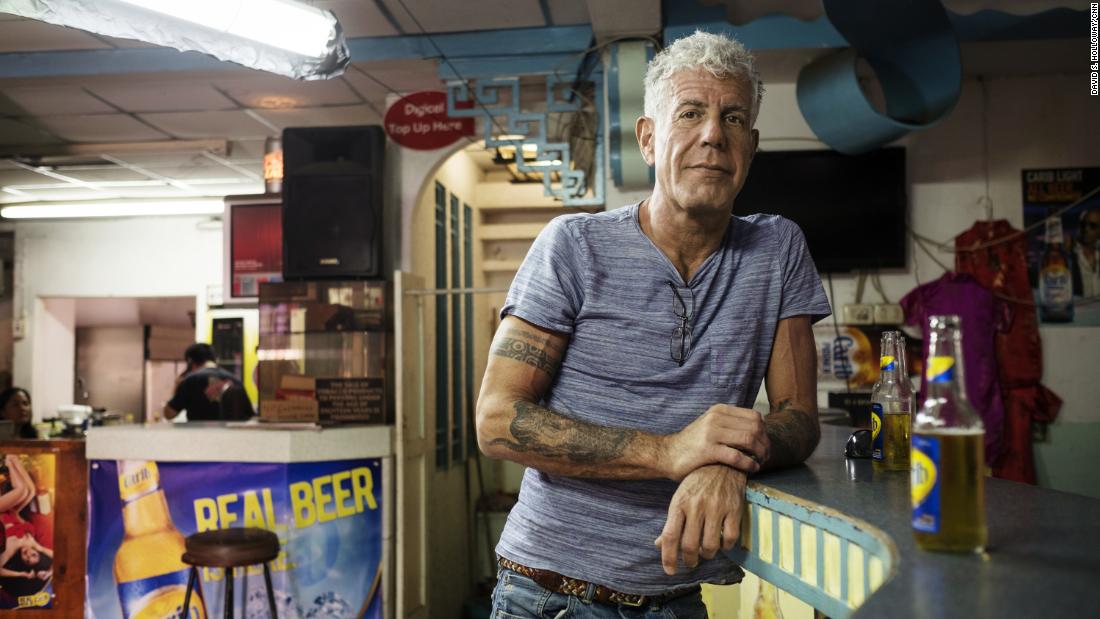
Seven years ago, Anthony Bourdain checked into a luxury hotel in France and never checked out. The world grieved. But here in the Philippines, among many Filipino men, something deeper stirred—a familiar silence.
In kitchens, offices, barangay courts, and construction sites, we’ve long learned to bottle it up. Aches become jokes. Loneliness becomes beer. Vulnerability gets buried under the expectation to be matatag. We grow up with fathers who speak in hard stares and brothers who shrug off pain like dust. No wonder, then, that Filipino men’s mental health often exists in the background—rarely named, rarely tended to.
When a man says, “Pagod na ako,” it’s easy to assume he’s tired from work or traffic. But sometimes, it’s a lifeline. Sometimes, it’s the only way he knows how to say he’s breaking.
We’re Taught Not to Feel
From a young age, boys are told to stop crying, to “man up,” to brush it off. This conditioning calcifies into adulthood, where expressing pain is often mocked—or worse, ignored. Even men like Bourdain—brilliant, beloved, and successful—struggled silently. Depression doesn’t always look like weakness. It can wear a smile, cook a perfect meal, deliver a joke, and still ache deeply behind closed doors.
What the Numbers Say (and Don’t Say)
According to the Department of Health, nearly 75% of recorded suicides in the Philippines involve men. That number should startle us. But it rarely makes headlines. Mental health campaigns often target women and children. Men, meanwhile, slip through the cracks.
Many Filipino men are dying from silence—not from lack of strength, but from the absence of safe spaces to speak.
“Pagod na Ako”: A Cry, Not a Phrase
Sometimes, the words come quietly:
- Pagod na ako.
- Di ko na kaya.
- Okay lang ako, pero hindi talaga.
We brush these off, thinking they’re passing remarks. But to someone on the edge, these may be the only words they can muster. If someone says this to you, listen. Don’t rush to fix it. Don’t dismiss it.
Say instead:
- “Gusto mo ba ng kausap?”
- “Tara, usap lang tayo. Walang judgment.”
- “Thank you for telling me. Di mo kailangan itago.”
Sometimes, being heard—without being corrected or shamed—is already medicine.
A Viral Confession and 40,000 People Who Understood
In January 2025, a young Filipino man shared a deeply personal post about his battle with depression and anxiety. It wasn’t meant to go viral. But it resonated—40,000 people shared his story. He wrote of racing thoughts, sleepless nights, the exhaustion of simply surviving. He detailed therapy, medication, relapse, and recovery.
But what made the post powerful wasn’t just the pain—it was the hope. He credits God, his family, and the kindness of others for his healing. And now, medication-free and still healing, he offers this to others:
“This isn’t a post asking for pity… this is me choosing to speak out.”
His honesty reminds us:
- You are not alone.
- It is not your fault.
- People may not understand—but you don’t have to explain.
- Rest is necessary.
- Family is our first home.
The Quiet Signs of Struggle
These situations aren’t rare. They’re happening around us: in cities and provinces, well-off homes and struggling ones. But we treat them as isolated tragedies. In our silence, we fail to act.
Often, the clues are there—a withdrawal, a change in tone, a shift in someone’s energy. They’re easy to miss. But paying attention could be the first step in helping someone hold on.
When someone ends their life, it’s not just grief that follows. It’s stigma, discomfort, and silence. We soften the words. Avoid the topic. Behind every statistic is a person. And too often, they were struggling alone while the rest of us looked away, unsure of what to say.
Talking about suicide doesn’t cause it. Silence does.
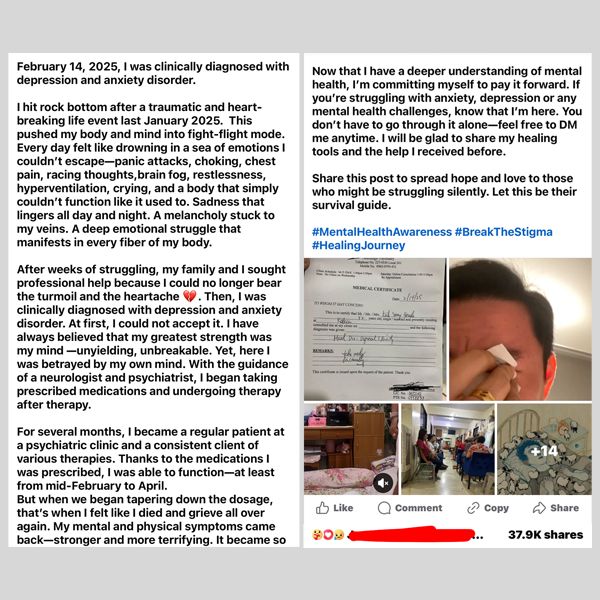
Read the full post February 14, 2025, I was clinically diagnosed with depression and anxiety disorder.
When Small Business Owners Break Down Too
One reader, a small business owner, wrote:
“Depression is real—and it’s often undiagnosed. Behind open store signs are sleepless nights, slowing sales, long hours of work with few profits. We keep it to ourselves until one day, it breaks us.”
It’s a mirror. A reminder that this crisis cuts across professions and social class. That the pressures on Filipino men—to succeed, to stay strong, to provide—are breaking points we don’t talk about enough. For more on the toll of hustle culture, stay tuned for our upcoming story on burnout among small business owners.
Let the Quiet Be a Safe Place, Not a Burial Ground
This article isn’t just about Anthony Bourdain. It’s about all the men we’ve lost because no one saw their pain. About friends who make us laugh but never speak their truth. About fathers and brothers and sons who deserve to grow up knowing that tenderness is part of strength.
Maybe we can’t solve everything. But maybe we can notice more. Pay attention. Stay present. Like Bourdain once said, “You learn a lot about someone when you share a meal with them.”
So let’s also learn to ask more. To normalize checking in. Because the fight for Filipino men’s mental health doesn’t begin in clinics. It begins at home, in group chats, in late-night drives, in simple moments of care.
When someone says, “Pagod na ako,” may we be the one to say:
Sabayan kita.
- National Center for Mental Health Crisis Hotline (24/7): 1553 | 0966-351-4518
- Hopeline PH: 0917-558-4673 or (02) 804-4673
- InTouch Crisis Line: (02) 8893-7603
Let’s also learn to ask more. Let’s normalize asking how someone really is. Because the fight for men’s mental health in the Philippines doesn’t start in hospitals or headlines—it starts at home, in kitchens, around tables. And when someone says, “Pagod na ako,” may we be the one to answer, “Sabayan kita.”. To listen better. And when someone says, “Pagod na ako,” may we be the one to answer, “Sabayan kita.”
When We Listen, We See More
The stories we often overlook—the quiet fatigue of small business owners, the inner battles of young professionals, the exhaustion of simply trying to stay afloat—deserve space too.
One reader puts it plainly:
“Depression is real—and it’s often undiagnosed.”
Small business owners struggle so much, especially in these tough business conditions. Faced with a more diverse market of online sellers, street vendors, delivery platforms, pop-up stores, and traditional eateries, competition is tooth and nail in a shrinking market. Many customers also are unforgiving and have unrealistic expectations. The bar is high, and many small establishments close as quickly as new ones open.Behind open store signs are untold stories of sleepless nights, slowing sales, long hours of work, with few profits to show and mounting obligations. So yes, depression is real, and is often undiagnosed. We keep it to ourselves until one day, it breaks us.
— Patio Lyn’s House
This isn’t just a comment—it’s a mirror. A reminder that the fight for men’s mental health in the Philippines won’t be won through silence. It begins in recognition, presence, and shared truth.
So the next time someone says, “Pagod na ako,” may we be the one to answer:
“Sabayan kita.”
If you or someone you know is struggling, please reach out.
📞 National Center for Mental Health Crisis Hotline (24/7): 1553 | 0966-351-4518
A Final Word: Let the Quiet Be a Safe Place, Not a Burial Ground
This article isn’t just about Anthony Bourdain. It’s about all the men we’ve lost because no one saw their pain. It’s about the friends who make us laugh but never say what’s really going on. It’s about our fathers and brothers and sons who deserve to grow up knowing that real strength includes tenderness.
And it’s about you, reading this now.
If you’re tired, we hear you. If you’re scared, we’re here. Let the quiet be a place to rest—not a place to disappear.
Also read: “Ate, Andito Lang Kami”: How Digital Sisterhoods Are Transforming Filipina Mental Health Support



















2 Comments. Leave new
I don’t understand this article. Filipino men are the most desirable, strongest men I know. Every time I am with one they immediately show their ability to possess me before even letting me enter their parents home. I find that the secret is to get myself to blackout so they can experiment and boost their confidence without being intimated by a perceived strong black woman. It’s a once in a lifetime experience and I know that my job is complete when they feel the confidence to cheat on me. Then, onto the next!!
That’s a very interesting perspective.