Before playlists and algorithms, there were cassette tapes, scratchy boom boxes—and the Eraserheads.
This tribute begins in 1995, inside a dorm room at UP Diliman, where four friends sat cross-legged on the floor, locked in debate over a band that sounded like nothing they’d heard before. One swore by the cheeky brilliance of “Toyang,” another clung to the dreamy defiance of “Alapaap.” The lyrics felt like inside jokes—but the emotions beneath them, from confusion to quiet rebellion, hit something universal. This Eraserheads tribute isn’t just about their music. It’s about what they meant.
From classrooms to carinderias, rallies to radio countdowns, the Eraserheads weren’t just a band—they were a feeling, a cultural flashpoint. The moment “Pare Ko” cracked through the static of late-night FM radio, a generation didn’t just hear it. They saw themselves in it.

A Mirror of the ’90s Philippines
The early ’90s were turbulent. Post-EDSA optimism clashed with growing disillusionment. President Ramos’ reforms promised growth, but many were left behind. Activists split ideologically as the Communist Party fractured. Protests filled the streets. On campus, students debated philosophy with bottles of Red Horse. It was a generation of ideas and expression.
The Eraserheads fit right in. Their music wasn’t overtly political, but it spoke to the times—restless, ironic, questioning. In songs like “Alapaap” and “Minsan,” they voiced our contradictions. They refused to lip-sync on TV, wore jeans instead of sequins, and sang not with polish, but with heart. That authenticity felt revolutionary.
The Role of Campus and Community
The Eraserheads didn’t just influence how we thought—they shaped how we dressed. Their grungy, unkempt, college-boy aesthetic resonated with students who saw themselves not in glittering pop idols, but in worn jeans, faded band shirts, and thrift-shop jackets. It was the uniform of the “Iskolar ng Bayan”: modest, rumpled, and proud. That look, grounded in practicality and defiance, became a cultural signal—an anti-fashion statement that mirrored their ethos. It was less about rebellion for its own sake and more about showing allegiance to authenticity, self-reliance, and a debt of gratitude to “Inang Bayan.”
Before record deals, the Eraserheads were underground legends. The Philippine Collegian gave them early exposure. Student activists and organizations like League of Filipino Students (LFS) and College Editors Guild of the Philippines (CEGP) played their songs during forums and rallies. “Minsan” became an anthem of solidarity. Their lyrics echoed the youth’s frustrations, even if the band didn’t wave placards.
Jessica Zafra called their music “the sound of the middle class in meltdown.” In zines and cultural nights, their tracks were dissected like political texts—raw, real, and relatable.

Radio and the Rise of the Eheads
MTV, MYX, and the Visual Era
MTV Philippines launched in 1992, ushering in a new era of music television that brought global and local artists directly into Filipino living rooms. It became a cultural force, shaping the tastes of young viewers through slick production, music video rotation, and countdown shows. MYX followed in 2000, with a more youth-centric and Filipino-focused approach. By the time “Ang Huling El Bimbo” rose to prominence, music television had become a crucial part of how bands built mystique and gained nationwide reach.
The music video for “El Bimbo,” with its narrative weight and cinematic direction by Auraeus Solito, gained heavy rotation on MTV and later on MYX. These platforms didn’t just play videos—they curated musical identities. For the Eraserheads, whose songs were already anthemic, this visibility helped turn their work into visual folklore. Young people didn’t just hear the tragedy of “El Bimbo”—they saw it unfold on screen, embedding it even deeper into cultural memory.
These video-driven channels helped shape the Eraserheads’ cult status, reinforcing their cool, subversive image while making them more accessible to provinces and homes beyond Manila. This shift from a purely radio-driven audience to one shaped by visual storytelling allowed songs to transcend audio alone. Music videos gave faces to the voices, transforming turntable hits into recognizable personas.
Gone were the days when a song could top the charts yet leave the artist anonymous—MTV and MYX made sure that the image stuck just as strongly as the sound.
Mixtapes were the currency of fandom. Kids waited by radios, ready to hit record when their favorite song came on. Radio stations like NU 107 and RX 93.1 gave the Eheads their national breakthrough. “Pare Ko”—censored but unstoppable—put them on the map. Soon, “Ligaya,” “Toyang,” and “Ang Huling El Bimbo” ruled the charts.
NU 107, known as “The Home of New Rock,” was a pioneering alternative rock station that launched in 1987. Based in Ortigas, it championed original Filipino rock at a time when FM airwaves were saturated with ballads and foreign hits. The station’s famed programs like In the Raw introduced countless unsigned bands to wider audiences. When NU 107 shut down in 2010, it marked the end of an era—but its legacy continues to pulse in the DNA of OPM.
Joey Dizon, longtime music journalist and editor of PULP, once described the Eheads as “the unlikely heroes of a lost and questioning generation.” He added, “They weren’t just musicians; they were mirrors. They didn’t have the cleanest sound, but they had the truest voice.”
The Eraserheads went viral before the internet. FM radio, cassette tapes, and campus chatter turned their songs into anthems.
TV Rebellion: The Lip-Sync Ban
When the Eraserheads appeared on Sa Linggo nAPO Sila in 1993, they were told to lip-sync “Ligaya.” In protest, they clowned around and sang off-beat. It got them banned from the show, but it made them icons to the youth. In a polished world, they chose honesty. It wasn’t funny—it was punk.
An Accidental Debut
I met Ely Buendia a few times. Quiet, aloof—he had a quiet genius. He once worked as an A&R assistant under Vic Valenciano at BMG’s Cubao office, tucked above the bustle of Aurora Boulevard, where unsigned artists would hand in demo tapes on the off chance someone important might listen. The Eraserheads’ demo, Pop-U!, caught a “Pwede” from the execs. They were told to take barkada-style photos at Ali Mall a walking distance from their office. Those photos became the Ultraelectromagneticpop! cover. The rest was history.
From 1993’s Ultraelectromagneticpop! to 2003’s Carbon Stereoxide, they released seven studio albums. “Pare Ko” broke rules. “Ligaya” captured joy. “Minsan” held back tears. Each song felt like a diary entry.
When the Band Took a Stand
While the Eraserheads often shied away from overt political declarations, their ethos—rebellious, thoughtful, and unfiltered—resonated deeply in a politically awakened generation. They were never activists in the traditional sense, but their refusal to conform was in itself a quiet form of protest. Refusing to lip-sync on national television, questioning authority in their lyrics, and working with boundary-pushing artists like Francis M were decisions anchored in principle.
Their collaborations reflected this subtle stance. “Superproxy” wasn’t just a catchy experiment—it was a statement about bridging genres, cultures, and the underground with the mainstream. They were genre-defiant and industry-resistant. Ely Buendia, when asked about his political stance, once said in an interview, “We never saw ourselves as political, but we knew we didn’t want to be used.”
During the height of their popularity, the band was also vocal in declining endorsements from corporations or political entities they didn’t align with. That reticence, that desire to preserve artistic independence, was a stance that many of their fans—especially from the activist youth—deeply respected. In a time when slogans were currency and ideologies clashed, the Eraserheads offered a different form of resistance: creative freedom.
Lyrics with Lasting Impact
The Eraserheads’ lyrics were crisp, visual, and emotionally charged. They built tension, then delivered payoffs that felt like plot twists. In “Magazine,” the voyeuristic setup becomes a reflection on loneliness and longing. In “Overdrive,” a comedic road trip fantasy becomes a meditation on escape. And in “Torpedo,” a ballad of unrequited love, the band builds tension through repetition, letting the ache simmer until it lands with quiet devastation.
“Alapaap” sparked a Senate hearing over alleged drug references. The band denied it. Ely said it was about freedom. It became a symbol—dreamy and defiant.
“Spoliarium” inspired urban legends, with some believing it referenced the Pepsi Paloma case. Ely never confirmed nor denied the rumor. That ambiguity only deepened the mystique.
Their lyrics weren’t classically poetic, but they hit hard. With every “Huwag Mo Nang Itanong” or “With a Smile,” listeners found truth.
Cutterpillow and Cultural Peak
In 1995, the Eraserheads released Cutterpillow, their most iconic and best-selling album. It went multi-platinum and produced timeless hits like “Overdrive,” “Huwag Mo Nang Itanong,” “Torpedo,” “Poorman’s Grave,” and “Superproxy”—a genre-bending collaboration with Francis M. But the crown jewel was “Ang Huling El Bimbo.”
That song showcased the band’s storytelling power and emotional grit. Its tragic arc, paired with haunting melody and evocative lyrics, felt more like a short film than a pop song. The accompanying music video, directed by Auraeus Solito, cemented its place in OPM history. It became the anthem of a generation—powerful then, powerful now.
Fruitcake and Fracture
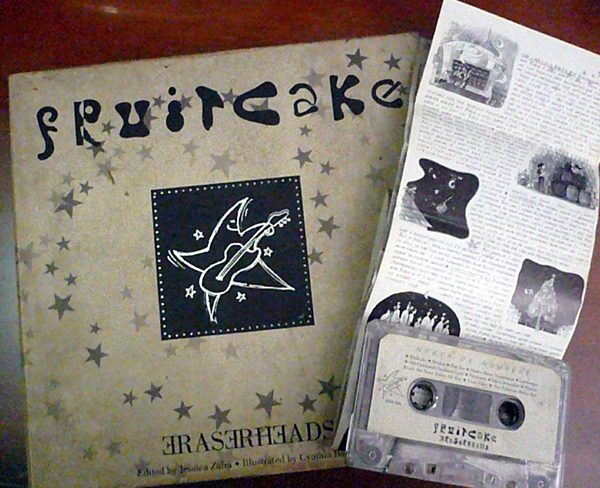
Fruitcake (1996) confused some fans. The song’s chorus—“There’s a fruitcake for everybody”—felt silly. But I loved it. I hunted down the rare Fruitcake book at National Bookstore. It wasn’t a hit like Cutterpillow, but it showed growth.
As time passed, the band drifted. Ely once said, “We were never close. We were never friends.” Albums like Sticker Happy and Natin99 felt less cohesive. The spark dimmed.
The Breakup
In 2002, Ely emailed their manager: he was done. No farewell tour. No statement. Just silence. Fans mourned online. Writers speculated. It wasn’t just a breakup—it was a cultural wound.
Rivermaya vs. Eraserheads
They weren’t enemies, but the media loved the rivalry. Ely vs. Bamboo. “Huling El Bimbo” vs. “214.” Eheads were cheeky; Rivermaya was anthemic. Fans took sides.
But behind the scenes, there was respect. Raimund Marasigan said they pushed each other. Rico Blanco called them “the reason we were heard.” Years later, they collaborated. In fact both bands were given the green light by the same execs at BMG.
Enduring Legacy
The Eheads influenced everyone. From Parokya ni Edgar to Ben&Ben, their DNA runs deep in OPM. Their reunion shows filled arenas. Their songs live on through TikToks, karaoke, and tribute albums.
They weren’t polished. Ely’s voice wasn’t perfect. But it was real. And that realness made them legends.
We sang their songs with arms raised. I bought Cutterpillow with my allowance and played it until the tape hissed. I joined rallies, shouted slogans, and still found comfort in their music.
Their songs live on because they captured something timeless. Joy. Pain. Memory. They made us feel seen—and understood.
As Ely once sang, “Walang nagbago.”
Also read Cutterpillow Star-Studded Tribute Album Celebrates 30 Years of Eraserheads Legacy