In the scorching heat of the month of May, there is a vibrance that never goes out of style. From ancient times, to the present, the celebration has always been a part of the community’s story shaping the Filipino spirit in every aspect possible. Whether in a small rural village or a bustling city center, the tradition remains a testament to the Filipino’s ability to blend solemnity with pageantry, creating a unique cultural legacy that is both sacred and celebratory.
A Tale as old as Time: Flores de Mayo and Santacruzan
Flores de Mayo, or “Flowers of May,” is a vibrant fusion of religious devotion, Spanish colonial influence, and indigenous agricultural traditions. Its origins in the Philippines date back to the mid-19th century, following the proclamation of the dogma of the Immaculate Conception in 1854 and the publication of Mariano Sevilla’s devotional book, Flores de Maria, in 1867.
The festival initially centered on the “Flores” tradition, where children and devotees would gather daily at local churches throughout the month of May to offer flowers to the Virgin Mary. This practice was deeply tied to the end of the dry season, as May marks the arrival of the first rains in the Philippines, signaling the blooming of flowers and the start of the planting season.
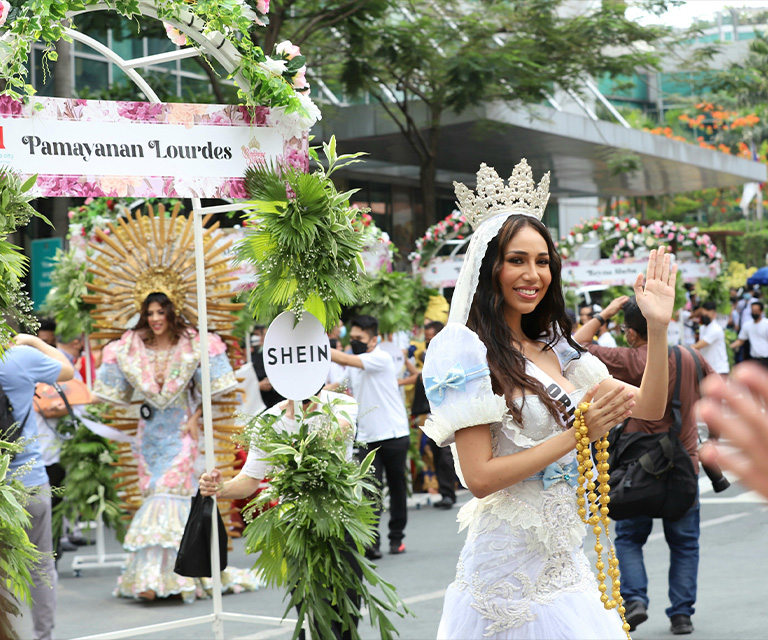
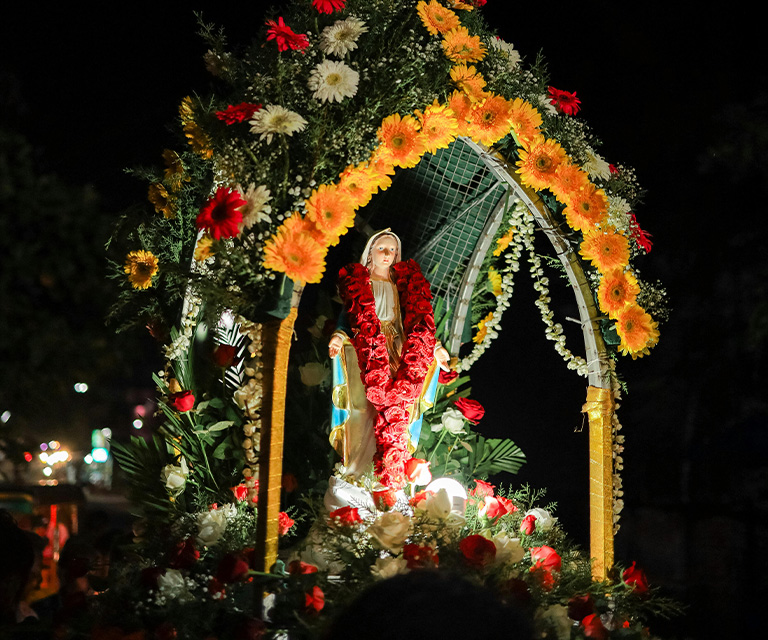
Over time, the religious observance evolved to include the Santacruzan, which serves as the ritual pageant that concludes the month-long festival. The Santacruzan commemorates the search for the Holy Cross by Queen Helena, mother of Constantine the Great. According to tradition, three crosses were found, and the true cross was identified through a miraculous healing. The event concludes with a celebration marking the success of their sacred quest.
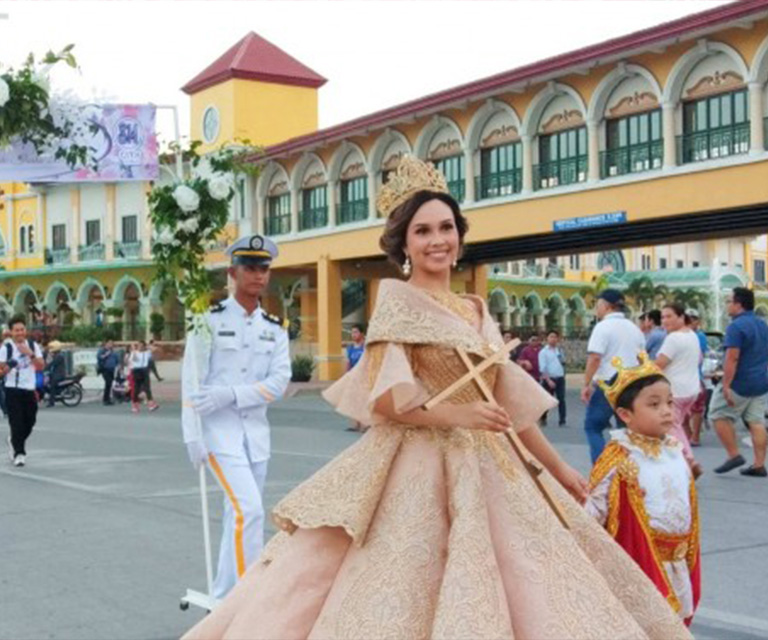
In contemporary Philippine culture, the Santacruzan has transformed into a grand procession featuring various “reinas” or queens, each representing different titles of the Virgin Mary or historical and allegorical figures. The most prominent figure is the Reyna Elena, who carries a crucifix to represent the discovery of the cross. While the event remains a religious cornerstone, it has also become a showcase for local artistry, traditional Filipino attire, and community celebration across both rural towns and urban centers.
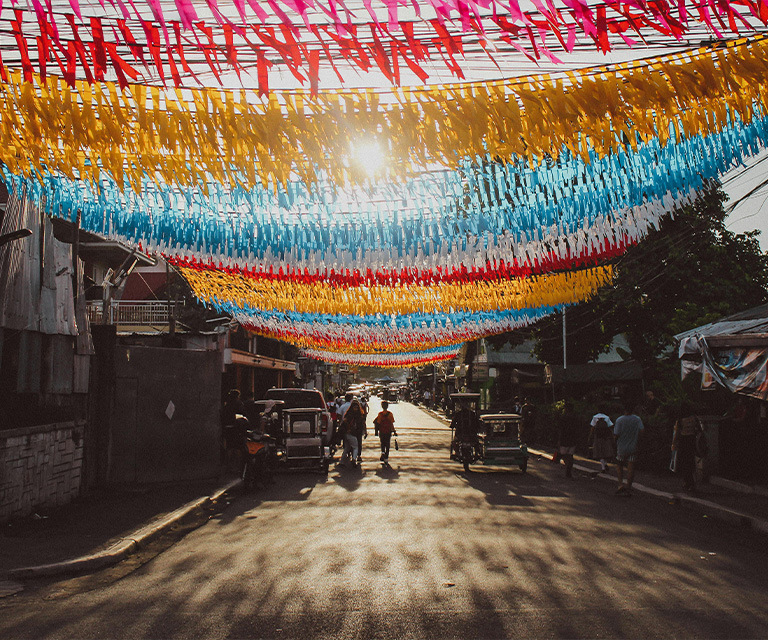
The Filipino Love for Fiestas, Koronas, and Banderitas
Beyond its historical and religious roots, Flores de Mayo serves as a profound expression of the Filipino spirit of “bayanihan” and communal identity. It functions as a cultural bridge that connects spiritual devotion with the country’s agricultural heritage, specifically celebrating the abundance that follows the arrival of the May rains.
The festival acts as a primary vehicle for the preservation of traditional Filipino craftsmanship and artistry. The Santacruzan procession, in particular, is a showcase for “Filipiniana” attire, where local designers and artisans display intricate beadwork, embroidery, and weaving techniques. Adding to this is by creating “arko” and floats used by every “reina” in the procession. Some use local materials that are abundant in a specific district, and some use recyclable materials and their creativity to create something beautiful out of it.
Furthermore, Flores de Mayo reinforces social cohesion by bringing together different generations within a barangay or parish. The preparation involved—from constructing bamboo arches to organizing the community feast that heavily relies on volunteerism and shared labor. This strengthens the “kapwa” among neighbors, making the festival less about individual piety and more about a collective celebration of heritage.
Beyond the Glamour, Crown, and Colors
Through the decades of parades across the streets, beyond the vibrant pageantry and the intricate beadwork of the gowns, the true core of Flores de Mayo and Santacruzan lies in the concept of “panata” or a sacred vow. The vow that Filipinos have always been committed to. Through practicing traditions such as Flores de Mayo, it teaches that heritage belongs to everyone, regardless of social standing.
Flores de Mayo is the Philippines is a blend of sacred devotion, artistic brilliance, and an unbreakable communal bond. It proves that our culture is not just something we remember, but something we wear, we breathe, and we grow.
Ultimately, it is far more than a colorful relic of the past or a curated display of fashion. It is a mirror reflecting the enduring soul of the Filipinos—who find reasons to bloom even in the harshest of droughts. It stands as a vibrant promise that as long as the rains return and the “bayanihan” spirit survives, the Filipino heritage will never wither, it will simply find new, more powerful ways to blossom all over again.
Read more Stories on Simpol.ph
The Celebration of Semana Santa Amidst an Energy Crisis
Kakanin: Memory, Ritual, and the Sweetness of Being Filipino
Fiestas Through Time: Signature Dishes That Define Every Celebration