On a busy roadside in Paco, Manila, across from the Toyota dealership, the smell of garlic, spice, and frying chicken–the aroma, unmistakably Chicken Fandian fills the air.
It’s crisp, familiar, and unmistakably rooted in Binondo. But more than anything, this isn’t just food—it’s a memory on a plate. This is Chicken Fandian Paco, a beloved Chinese-Filipino restaurant serving generations of comfort and tradition.
Welcome to Chicken Fandian.
The name may sound unfamiliar at first, but in Mandarin, fàndiàn simply means restaurant. For the Uy family, however, it represents more than just a place to eat. It’s a declaration of identity.
“We wanted to be true to our roots as a Chinese fried chicken house,” says Albert Uy, the owner.
Originally, the restaurant was called The Original Binondo Fried Chicken House. However, they eventually changed the name to avoid confusion with a similarly named establishment. What came next was a quieter, more personal tribute to their heritage—one rooted not in branding, but in authenticity.
For over 30 years, Chicken Fandian has been serving Chinese-Filipino comfort food that resonates across generations. What began in a modest Binondo kitchen has since grown into a beloved, family-run institution. It’s a business built on tradition, love, and unmistakable flavor.
A Familiar Setting
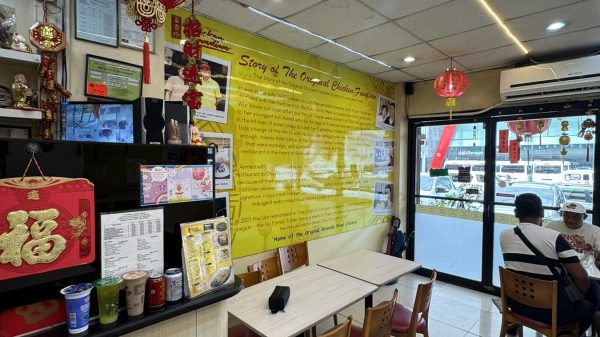
Step inside Chicken Fandian and you’re greeted by the comforting aesthetic of a classic Chinese eatery. There are red and gold accents, a quiet altar keeping watch, and bold calligraphy lining the walls. Near the cashier, a small shrine of luck sits proudly: figurines, pa-bwenas (luck charm) and bobbing cats, often placed in businesses to attract prosperity and the occasional Chinese lanterns.
It’s a little nostalgic, a little kitschy—and for many, it feels like home.
From Binondo to Paco: A Family Recipe
The story begins in post-war Binondo, where chicken was both affordable and filling. For Uy Lim Bee, the family matriarch, it became the heart of everyday meals. Her son, Albert, learned by watching, tasting, and eventually mastering the process.
“We come from a long line of Chinese cooks,” Albert says. “Back then, kids helped in the business. It taught us discipline, pride, and purpose.”
That legacy continues today. Everyone in the family pitches in—whether it’s in the kitchen, at the market, or behind the counter.
“This is our livelihood,” Albert says. “We cherish it. We care for it like family.”
Their signature dish is the classic Chinese-style battered chicken: leg quarters marinated in a closely guarded family recipe. While the flavors originated in China, they evolved over generations in the Philippines. Each piece is still marinated by hand.
“It’s manual work,” Albert says. “But it’s our love language.”
There’s a certain aroma and flavor to their chicken that, if you know it, is unmistakably Binondo. Bold, nostalgic, and steeped in history.
In time, Chicken Fandian also earned a reputation beyond poultry—particularly for its seafood. Among the standouts: the crabs.
The Morning Market Ritual
Each morning before dawn, Albert makes his way to Aranque Market. Even now, he insists on choosing the seafood himself.
“Some vendors inject brine to make crabs heavier,” he explains. “Check the joints near the claws. If the shell’s firm, not hollow, that’s a good crab.”
That kind of care defines dishes like the Crab Sotanghon: briny crab, glass noodles, and just a few aromatics. The result is quiet, refined, and deeply satisfying.
Some dishes shout. This one hums.
Another house favorite is the Oyster Cake. Made with a chewy, tikoy-like batter, fresh oysters, and fluffy scrambled egg, it’s golden, rich, and comforting.
“You taste the oyster,” a regular says. “You taste everything.”

Most dishes are still made the way they’ve always been.
The siomai? Chunky and meaty. The kiampong, a sticky rice dish garnished with peanuts, offers a deeply comforting bite.
“We chop the pork manually with a cleaver,” Albert says. “We don’t use machine-ground meat. That chew? That’s tradition.”
There are no shortcuts. No frills. Just honest food made with muscle, memory, and pride.
Still, tradition doesn’t mean staying stuck in the past.
“We’re not afraid of innovation,” Albert adds. “But we never forget our roots.”
This isn’t food styled for photos. Instead, it’s food that brings you back—to fuller flavors, honest textures, and meals that stay with you long after the last bite–that’s what you get at Chicken Fandian in Paco.
For Albert, it’s more than just cooking.
“Binondo was my mother’s kitchen,” he says. “That’s where we learned to cook Chinese food the Filipino way.”
As the years passed, their flavors—garlicky, gently spiced, and just sweet enough—carried that heritage forward. In turn, the menu evolved, reflecting not just tradition but also the local palate.
“We’re Chinese, but we’re also Filipino-Chinese. Our food mirrors that.”
At the core of everything they do, one thing remains constant: they want diners to feel like family.
“That’s always been the goal,” Albert says. “To serve food like we do at home.”
Facing the Struggles
Naturally, running a family restaurant isn’t easy.
“We’ve had our share of struggles,” Albert says. There were slow days, rising costs, and moments of doubt.
“We thought good food would be enough. But it takes grit, patience, and faith.”
Sometimes, staying true to their vision was the hardest part.
“We were tempted to change just to survive,” he admits. “But we held on to why we started—to share the flavors we grew up with.”
So what kept them going? Loyal customers. And each other.
“It’s not always easy. But we love what we do.”
Now, it’s about more than daily service. It’s about the future.
“We’re building something for the next generation,” he says. “This is more than a business. It’s our legacy.”
A New Crowd in Paco
Today, Chicken Fandian has found a second home in Paco. Simple, delicious, and affordable, it has become an extension kitchen for many households. The place to call when a feast is needed fast, but flavor can’t be compromised.
Over time, what began as distinctly Chinese food now feels naturally Filipino.
More importantly, the restaurant has become a neighborhood go-to for takeout—birthdays, office lunches, community events.
It’s comfort food for meaningful moments, just like it always was back in Binondo.
2135 Paz Mendoza Guazon St, Paco, Manila (02) 8254 0535
Now also open at Palenque, Gateway Mall 2, Araneta City — bringing Binondo flavors even closer to the heart of Quezon City