

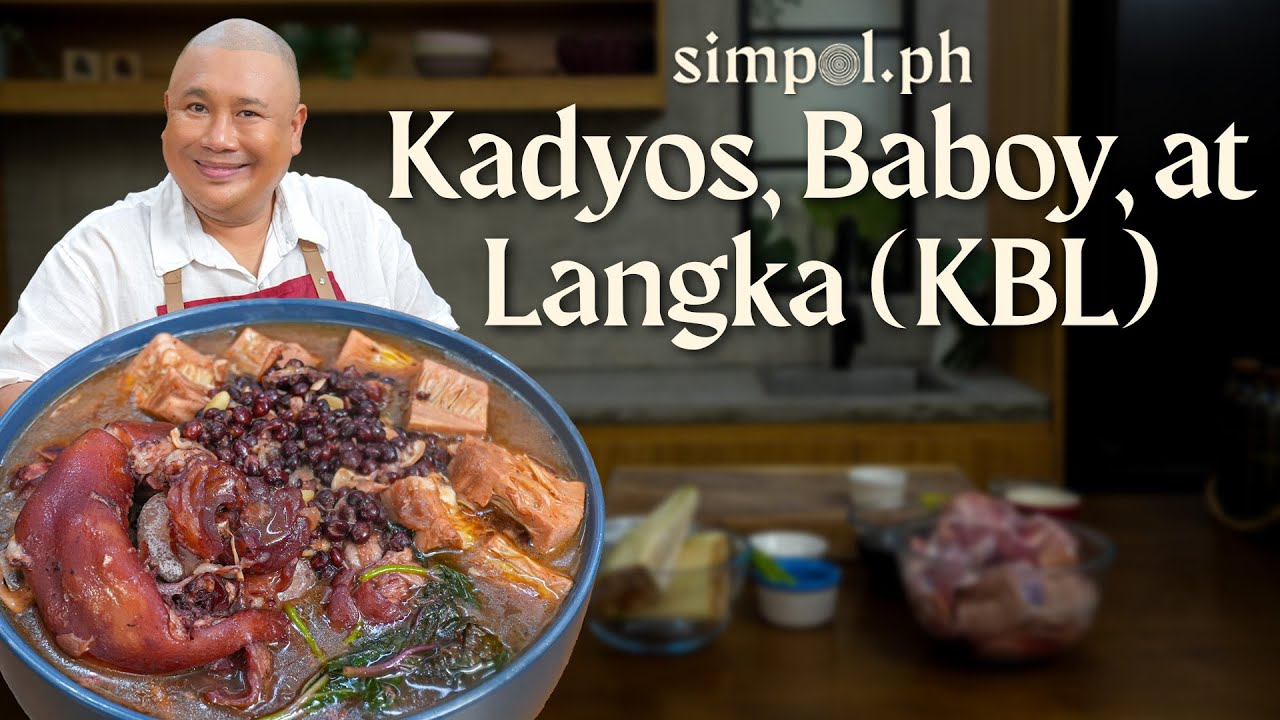
KBL: A Dish That Brings Iloilo to Your Kitchen
In many Ilonggo homes, Kadyos, Baboy, Langka—or simply KBL—is more than just food. It’s a taste of home, of tradition, and of the kind of Filipino cooking that doesn’t rely on shortcuts, but on patience, balance, and heart.
The ingredients are simple: kadyos (pigeon peas), baboy (pork hock), and langka (unripe jackfruit). But the flavors are rich, earthy, and tangy—all simmered into a stew that’s both comforting and soulful.
Originally from Iloilo, KBL traditionally uses batwan, a native souring fruit that gives the broth its signature fruity tang. But when you’re far from home—or from Iloilo—you learn to make do. And that’s exactly what we’re doing here today. No batwan? No problem. We’ll use sinigang powder as our souring agent. Not traditional, but it works.
This is a dish that’s made to nourish and bring people together. And with an Instant Pot or pressure cooker, you can enjoy it in under an hour.
Kadyos Baboy Langka (KBL) Recipe
Ingredients
Set A: Pressure Cook Ingredients
- 1 kg pork pata pork hock, cut into pieces
- 1 cup kadyos pigeon peas, rinsed
- 1 whole garlic bulb peeled but left whole
- 1 large red onion quartered
- 6 cups water or enough to cover 2/3 of the pot
- 1 pack sinigang mix or adjust to taste
- 2 sachets all-in-one seasoning mix like Magic Sarap or garlic-chicken powder
Set B: After Pressure Cooking
- 2 tbsp oil for sautéing
- 1 medium onion chopped
- 3 cloves garlic minced
- 2 cups unripe jackfruit langka, peeled and diced
- 1 –2 tbsp fish sauce
- 1 tsp soy sauce optional, for color
- Black pepper to taste
- 2 –3 pcs green chili siling haba
- 1 cup kamote tops or other leafy greens optional
Instructions
Set A: Pressure Cook the Pork and Beans
- In your Instant Pot or pressure cooker, place the pork pata, rinsed kadyos, whole garlic, and quartered onion.
- Add water—just enough to cover about two-thirds of the pot’s depth.
- Add the seasoning mix (Magic Sarap or equivalent) and a portion of your sinigang mix for a light tang.
- Cover and pressure cook for 20 minutes or until both the pork and beans are fork-tender.
- While waiting, prepare your langka—peel and dice into manageable chunks.
Set B: Finish the Dish
- Once the pressure has safely released, open the pot. You’ll notice the broth has a purplish tint from the kadyos—that’s how you know it’s authentic.
- In a separate pan, sauté chopped onions and minced garlic in oil until golden brown.
- Pour this sautéed mixture into your stew pot.
- Add the diced jackfruit (langka) into the stew. Simmer without pressure until the langka softens—around 10 minutes.
- Season with fish sauce, black pepper, and a bit of soy sauce for color if desired.
- Add siling haba and adjust the sourness with more sinigang powder, depending on your taste.
- Lastly, stir in the kamote tops (if using), and let it cook just until wilted.
Simpol Cooking Notes
- No Batwan? No Worries. Batwan is a unique fruit from the Visayas and gives KBL its authentic fruity sourness. But if it’s unavailable, sinigang powder or fresh sampalok makes a great alternative.
- Instant Pot = Shortcut to Sarap: Pressure cooking drastically cuts down on cooking time. But if you’re doing it the traditional way, simmer everything low and slow until tender.
- Don’t Overcook the Langka: Add the langka only after the pata and beans are tender. If cooked too long, it can turn mushy and disappear into the soup.
- Layer the Flavors: Start with whole garlic and onions in the broth, then add sautéed aromatics later. This gives your stew deep flavor with very little effort.
- Balanced Asim: Traditional KBL isn’t as sour as sinigang. Aim for a mild, fruity tang—just enough to cut through the richness of the pata.
Why This Dish Matters
In Simpol cooking, we don’t aim for perfection—we aim for authenticity and resourcefulness. Cooking with what you have, adjusting flavors, and finding joy in the process—that’s the spirit of Filipino home cooking.
KBL may be a regional dish, but it deserves a spot in every Filipino kitchen. It’s rich, earthy, tangy, and completely satisfying. Whether you grew up with it or it’s your first time cooking it, this is comfort food with soul.
















+|+Chef+Tatung’s+Hearty+Filipino+Comfort+Food)