Every August, we celebrate Buwan ng Wika by honoring our language through songs, poetry, and school exhibits. But if you ask any Pinoy, the truest way we express our culture is through our kitchens. English has words like delicious, savor, or crispy, but our mother tongue goes so much deeper.
We have entire concepts dedicated to sensory food cravings, dining habits, and kitchen techniques that simply cannot be translated with a single English word. These unique expressions prove that our language was made by—and for—certified food lovers. There is a deep, emotional wisdom woven into the way we name our food, reflecting a culture that values connection, warmth, and intuitive comfort over strict, clinical culinary rules.
Ulam
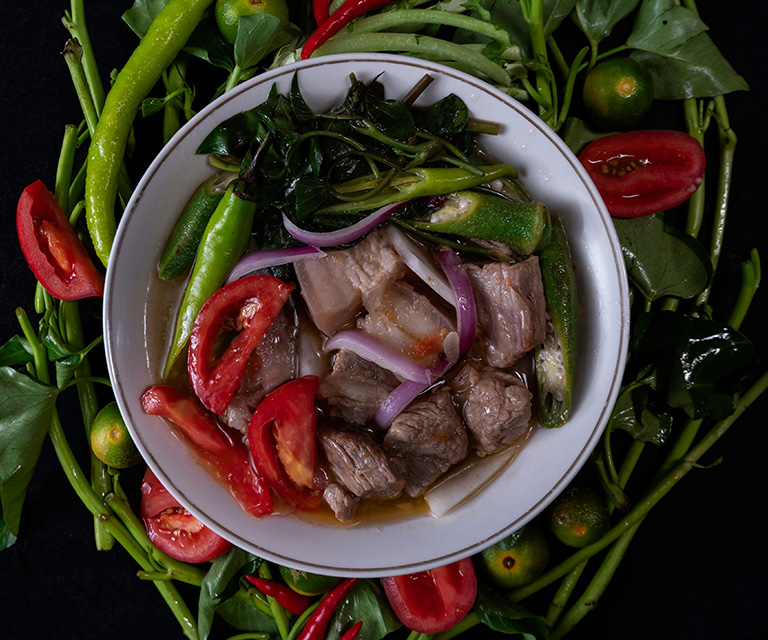
Calling ulam a simple “viand” feels way too formal and emotionally detached for something so foundational to our daily lives. In Filipino culture, rice isn’t a mere side dish—it’s the main canvas of an entire table. Ulam is anything that gives savory, salty, sour, or sweet contrast to a steaming plate of white rice, whether it’s a rich Beef Mechado or a humble piece of Pritong Tilapia.
Without rice, it’s not a complete meal; without ulam, rice is just waiting for its perfect partner. This dynamic carries a lovely sentiment of companionship. It reminds us that in a Pinoy home, balance is everything.
No single dish stands alone, and true satisfaction comes from how two simple things complete each other at the table.”
Gisa
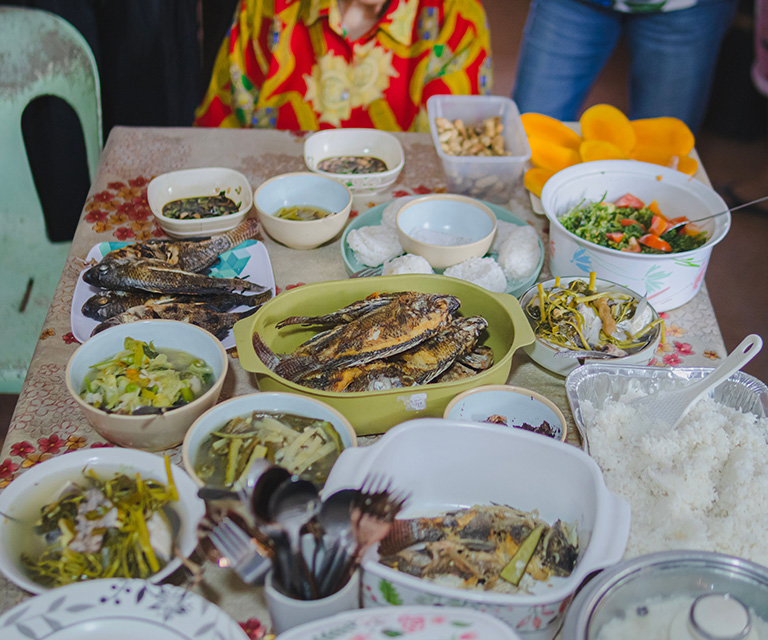
Sure, gisa comes from the Spanish word guisar, but the way Filipinos gisa is a soul-warming ritual of its own. It is the unmistakable, comforting fragrance of minced garlic, chopped onions, and ripe tomatoes sizzled in hot oil until soft and jammy. This aromatic step serves as the heart and soul of almost every home-cooked soup, stew, and stir-fry. If your kitchen doesn’t smell like garlic and onions softening in the pan, dinner hasn’t truly started yet.
That scent holds the ultimate sentiment of a house coming alive.”
It’s the universal Pinoy signal that someone who loves you is in the kitchen, carefully building flavor from scratch to feed the family.
Umay
Ever notice how you can’t finish a massive bowl of ultra-rich pasta or heavy deep-fried meat without needing a cold drink, a bite of atsara, or a quick dip in suka? That feeling is umay. It isn’t that the food tastes bad—it’s that your palate is completely overwhelmed by fat or sweetness, desperately craving acidity or spice to cut through the richness and reset your taste buds. There is a funny, very relatable honesty in this word. It highlights how attuned we are to flavor balance, proving that eating in our culture isn’t about mindless indulgence, but about looking for that perfect, harmonious rhythm that keeps us coming back for more.
Paksiw and Kilawin
In Western cooking, dishes are usually named after the main protein, like roast beef or chicken soup. In Filipino culinary language, we name entire cooking techniques directly after the taste transformation itself. Paksiw captures anything lovingly simmered in vinegar and garlic to extend its life and give it that signature tang, while Kilawin relies on fresh meat or seafood cured directly in natural fruit acids without any heat. We define the dish by the bold flavor experience it creates. This reflects a practical yet deeply passionate attitude toward food. It shows an ancestral ingenuity where preservation techniques weren’t just utility—they were transformed into distinct, beloved culinary identities.
Nakatatakam
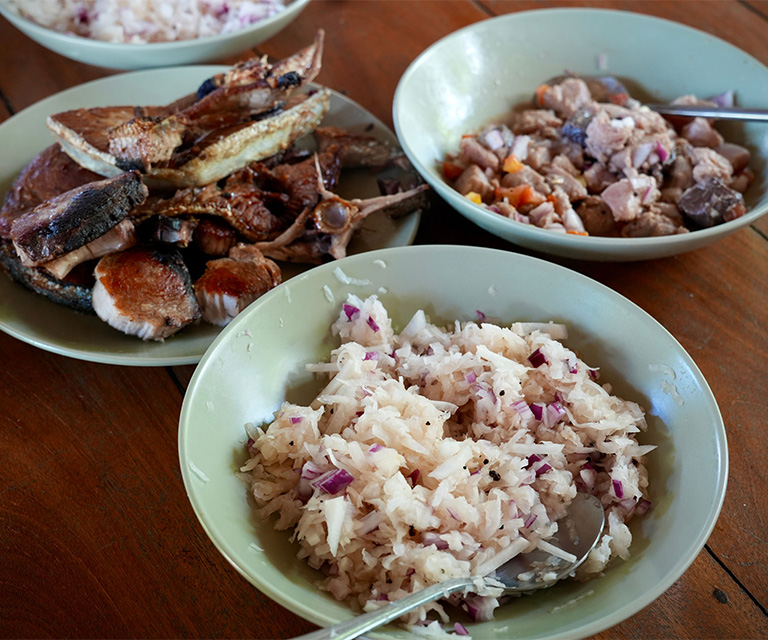
Calling a plate “appetizing” feels a bit too polite and distant for how we feel about good food. Nakatatakam is purely visceral, capturing an overwhelming urge that hits you right in the gut. It’s the visual and aromatic trigger that physically makes your mouth water in instant anticipation.
It’s the sight of glistening pork belly skin cracking under a knife, or the sour, savory aroma of Sinigang wafting through the house on a rainy afternoon that makes you immediately reach for a plate.
“It carries a joyful a celebration of how food constantly excites our senses and brings pure, unfiltered delight before we even take our very first bite.”
Bahaw
Calling it mere “leftover rice” completely ignores its culinary magic in the Pinoy home. Bahaw is the holy grail of cozy weekend mornings. Because day-old cooked rice loses its excess surface moisture overnight, the individual grains separate easily, making it the irreplaceable foundation for a fragrant garlic sinangag or a warm, comforting bowl of chocolate champorado.
There is a sentimental warmth to bahaw rooted in resourcefulness and nostalgia. It reminds us that nothing in a Filipino kitchen goes to waste, and that yesterday’s modest leftovers can easily become today’s favorite family comfort meal with just a little love and dishkarte.
Kamayan
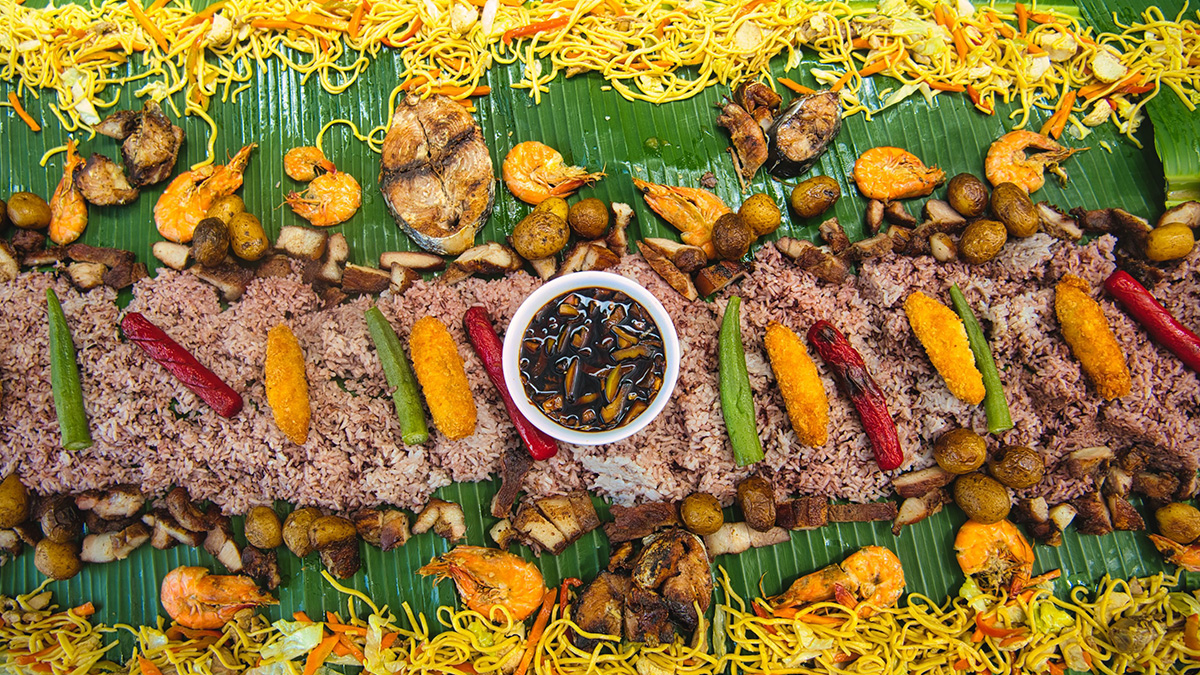
Kamayan isn’t just about ditching the spoon and fork; it’s a communal act of love, grounding, and togetherness. Gathering around fresh banana leaves, shaping a small mound of rice with your fingertips, and pairing it with a piece of crispy grilled chicken connects you directly to the meal in a way utensils never could.
It turns eating into a tactile, shared experience that strips away formality and nourishes the heart just as much as the body. The true sentiment behind kamayan is radical hospitality.
“When we eat with our hands side-by-side, everyone at the table is equal, connected, and treated like family.”
Our food language reminds us that cooking in the Philippines isn’t just about filling our stomachs—it’s about balance, community, and home. Every word we use carries generations of care, laughter, and shared memories around the dining table. This month, as we celebrate our national language, let’s take a moment to appreciate the warm, expressive words that make our kitchen culture feel so uniquely and proudly ours.