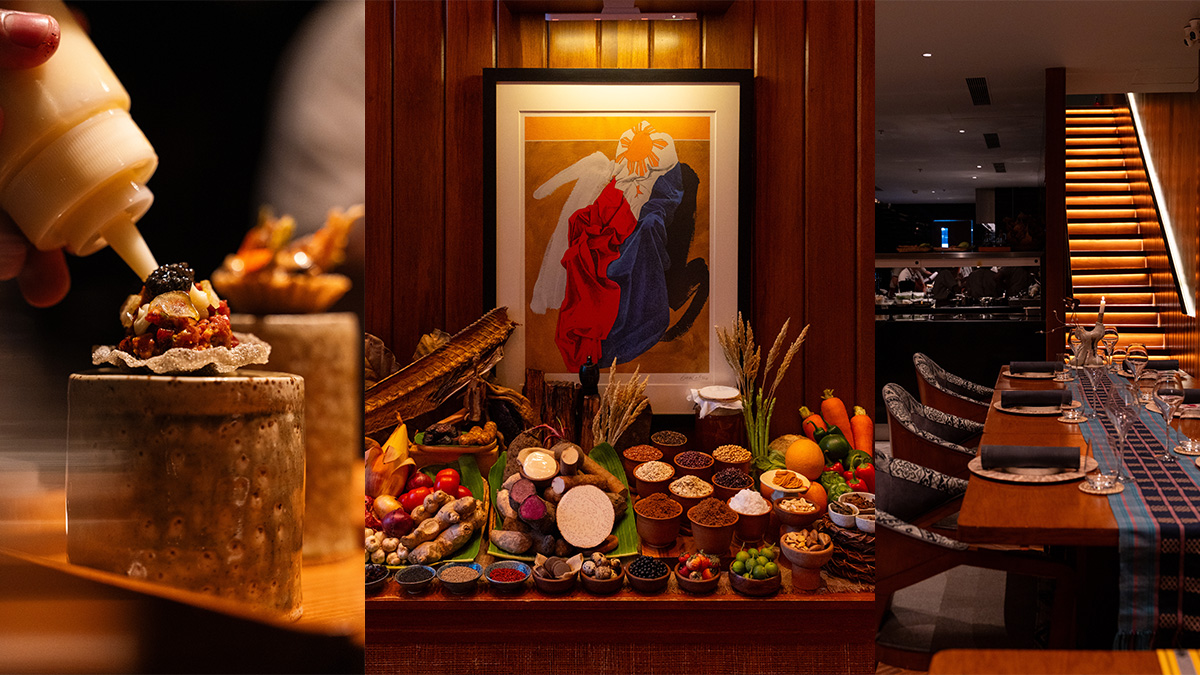
In the misty, sun-drenched peaks of Northern Luzon lies the Cordilleras. A region where ancestral agriculture, smoke-cured traditions, and sacred rice rituals have quietly preserved one of the most profound. Yet, largely untold culinary heritages of the Philippines.
It is this very landscape that Hapag seeks to honor with its newly unveiled tasting menu, “Cordilleras.” Serving as an immersive exploration of these ancestral food ways. The menu was born from an extensive research expedition spanning Ifugao, Mountain Province, Kalinga, and Baguio City.
Through this, the Hapag team sought to deepen their understanding of a region that is frequently overlooked in mainstream conversations about Filipino gastronomy. Ultimately, uncovering a rich tapestry of culinary practices deeply shaped by geography, tight-knit communities, and generations of local ingenuity.

Confronting the Unknown
For the chefs, the journey was an eye-opening confrontation with their own limited preconceptions.
For me, the Cordilleras remain largely unknown and undiscovered,” explained Kevin Navoa, chef and partner at Hapag.
It’s a place you need to experience firsthand to truly understand. You can read about it online, but being there is completely different.” he added.
Similarly, Thirdy Dolatre, also a chef and partner at Hapag. Admitted that his knowledge of the region’s food was once confined to a single popular destination.
Most of what I knew about the region was centered around Baguio,” Dolatre shared.
But once we traveled through Ifugao, Mountain Province, and Kalinga, we discovered a much deeper and more diverse food culture. Every province has its own ingredients, techniques, and traditions.” he added.
From Ancestral Hearth to Modern Plate
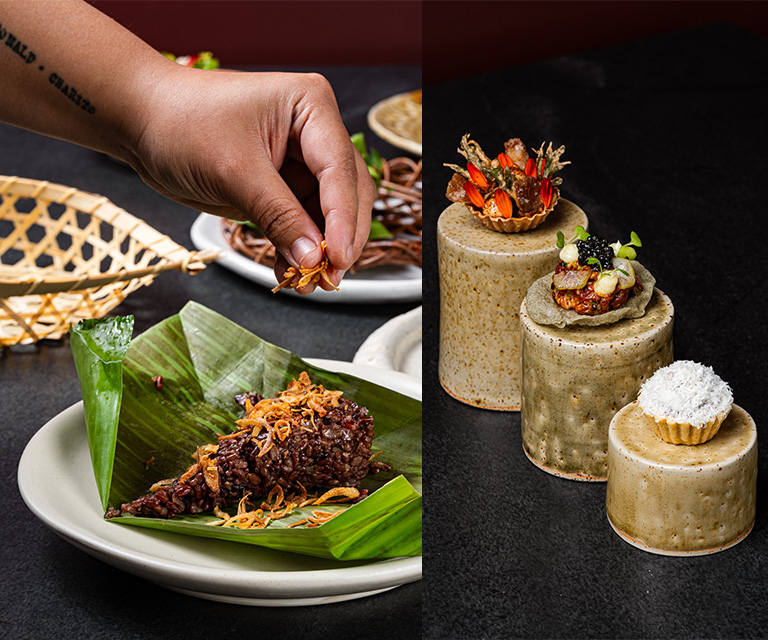
Consequently, the resulting tasting menu draws direct inspiration from the individuals, communities, and culinary customs the team encountered along the way. The dining experience commences with Duck Lini’ku. A dish inspired by the Cordilleran method of cooking poultry over an open flame. From there, guests progress through courses that delve into preservation, fermentation, and communal dining heritage.
Among the standout highlights is Etaglaw. Which represents a harmonious meeting of etag (cured meat) and kinilaw (raw seafood salad). Additionally, the menu features Pansit a la Pogi, a dish influenced by the neighboring culinary styles of the Cagayan Valley.
The sense of community is further emphasized during the Salu-Salo course. A family-style presentation inspired by a memorable breakfast prepared by Irene and Ruel Bimuyag at Farmer’s Daughter. As well as a communal dinner hosted at the GAFA Agri-Tourism Farm in Mountain Province.
The Pillars of Smoke, Ferment, and Grain
Throughout the entire culinary narrative, smoking, fermentation, and preservation stand out as defining thematic influences. Rice, in particular, serves as the vital cornerstone of highland life.
Rice was probably the most important ingredient we encountered,” Dolatre noted.
You quickly realize how central it is to everyday life in the Cordilleras. We were also repeatedly introduced to inandila, a traditional rice delicacy that many communities are actively working to preserve.” he added.
Because of this significance, rice appears dynamically across the menu. It takes center stage during the final dessert course. Which highlights traditional delicacies and preparations that honor the region’s enduring gastronomic legacy.
Furthermore, the grain plays a pivotal role in the Buro course. Which features Pan de Kalinga. This is Hapag’s signature sourdough bread crafted with fermented black rice sourced directly from Kalinga. This specific course highlights the menu’s macro-focus on the highland traditions of fermentation and preservation.
Through this curation, the culinary team seeks to honor rather than merely replicate.
This menu feels more intentional,” Navoa added.
Rather than recreating traditional dishes, we’re expressing our own cooking through the lens of the Cordilleras. It reflects what we learned there and how our cooking has evolved over the years.” he noted.

A Network of Gratitude
Crucially, the extensive research that shaped the Cordilleras menu would have been impossible without the hospitality. Also, the guidance, and generosity of the numerous individuals who welcomed the Hapag team into their farms, homes, cultural spaces, and workshops.
Hapag expresses its deep gratitude to the Pasil Slow Food Community. With special recognition extended to Local Community Leader Rowena Gonnay, as well as Irene and Ruel Bimuyag of Kalinga Weaving. Hailing from the Mabilong Weaving Village in Lubuagan, Kalinga.
They also extend their appreciation to the GAFA Agri-Tourism Farm in Mountain Province, Detchie Enkiwe. The Municipal Tourism Officer of Mayoyao, Ifugao, and Apo Whang-od Oggay of Buscalan Village, Tinglayan, Kalinga.
Finally, the team credits the countless farmers, artisans, cultural workers, local tourism advocates. Also the community members across the region whose shared stories and wisdom molded the menu.
Curated Pairings and Shared Horizons
To complement these complex flavors, the beverage program mirrors the same spirit of intentional exploration. The wine pairing program features predominantly French selections. Which were meticulously chosen to balance the distinct profiles of the food. Meanwhile, the non-alcoholic pairing focuses heavily on ferments, teas, and other custom beverages.
The goal of the pairings is to provide a familiar framework for guests while allowing the flavors of the Cordilleras to shine,” explained Erin Ganuelas-Recto, head sommelier and partner at Hapag.
For the non-alcoholic pairing, we focused on flavor interaction, using ingredients such as roasted teas to highlight characteristics like smokiness and fermentation that appear throughout the menu,” he expressed.
Additionally, guests can opt for a curated coffee pairing that showcases beans harvested by Cordilleran farming communities dedicated to preserving traditional cultivation methods.
Ultimately, the Cordilleras menu advances Hapag’s overarching mission to examine the profound diversity of regional Filipino cuisine through firsthand travel, research, and storytelling.
The more we explore regional Filipino cuisine, the more we realize how diverse it truly is,” Dolatre concluded.
We’re still only scratching the surface. If this menu inspires people to learn more about these regions, visit them, and appreciate their food cultures, then we’ve succeeded.” he noted.
Reservations and Pricing
The Cordilleras tasting menu is currently available at ₱7,500+ per person. Guests may enhance the experience with a wine pairing for ₱3,000+ per person. You can select the non-alcoholic beverage pairing for ₱2,200+ per person. The optional highland-sourced coffee pairing is also available upon request.
Reservations can be secured directly through the official Hapag website.
Read more Stories on Simpol.ph
Beyond the Final Whistle: World Cup Nights at Quezon Bar
Restaurant Idalia Makes a Quiet Case for Modern Dining at The Balmori Suites
A Sky-High Toast to National Tequila Day at Solaire Resort Quezon City