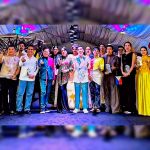
The Department of Health (DOH), with support from United Nations Children’s Fund (Unicef) and the World Health Organization (WHO), unveiled key strategies and best practices aimed at achieving 95 percent immunization coverage for children in the Philippines during the 2nd National Immunization Summit. These strategies highlight DOH Unicef WHO unveil strategies for 95% child immunization in the PH, ensuring better health outcomes.
The summit brought together national and local government agencies, United Nations partners, donors, civil society organizations, medical associations, the private sector, and youth advocates to discuss vaccination efforts and commit to concrete actions. This year’s event, supported by the United States Agency for International Development and the Australian government, focused on strengthening coalition efforts to help DOH monitor and sustain immunization programs.
As part of the National Immunization Acceleration Plan for 2024-25, several initiatives have already been launched to improve immunization strategies: DOH Unicef WHO unveil strategies for 95% child immunization in the PH includes these significant initiatives.
Region 12 secured P70 million (about USD 1.25 million) in investments for vaccination.
Region 3 implemented the Reaching Every Purok strategy, expanding immunization access to remote areas.
Santiago City, Cagayan Valley, strengthened cold chain management to ensure vaccine quality and efficacy.
General Mariano Trias, Cavite, developed the Bakuna Enumerator Application (BenApp) to enhance vaccination data management.
Youth-led advocacy groups, such as Galing LNC Youth in Cavite and Youth Advocates Through Theater Arts in Dumaguete, Negros Island, have played a crucial role in increasing vaccine demand.
Muslim religious leaders in Special Geographic Areas of the Bangsamoro Autonomous Region in Muslim Mindanao have actively promoted immunization within their communities.
“Unicef supports the Philippines’ efforts to integrate immunization into its broader health strategy so that every adolescent, mother, newborn, and child benefits from the power of vaccines. We can create a stronger foundation for primary health care, especially in the most vulnerable areas. This continued collaboration among stakeholders gives us hope that all children will grow up happy and healthy,” said Unicef Acting Representative Behzad Noubary. More importantly, DOH Unicef WHO strategies unveiled aim to achieve 95% child immunization in the PH.
As of Jan. 20, 2025, partial data from the Field Health Services Information System shows that 61 percent — or 1,459,353 out of 2,392,392 eligible children — are fully immunized. This includes one dose of the BCG vaccine, three doses of the pentavalent vaccine, three doses of the oral polio vaccine, and two doses of a measles-containing vaccine by 12 months old. However, 933,039 children have yet to complete their vaccines. Children vaccinated in private health facilities remain unaccounted for, leaving a gap that puts vulnerable populations at continued risk of vaccine-preventable diseases (VPDs) such as pertussis, diphtheria, and measles.
“The WHO, through the Immunization Agenda 2030 (IA2030), works closely with the DOH to maintain immunization gains and continue protecting Filipinos from VPDs. Together, let us enhance our strategies and aim for efficient coordination with frontline health service providers, communities, private partners, and stakeholders. Importantly, let us commit to ensuring a sustainable vaccine supply so that no one is left behind,” said WHO Representative to the Philippines Dr. Rui Paulo de Jesus.
The Philippines has made significant progress in immunization. According to WHO-UNICEF Estimates of National Immunization Coverage, the country is no longer among the top 20 nations with the highest number of zero-dose children — reducing cases from 1 million in 2021 to 163,000 in 2023. Remarkably, DOH Unicef WHO unveil strategies for 95% child immunization in the PH have significantly contributed to these achievements.
In 2024, the DOH reinstated Bakuna Eskwela, a school-based immunization program offering vaccines for measles, rubella, tetanus, diphtheria, and HPV.
“Throughout this summit, we have celebrated significant milestones — achieving higher vaccination coverage, implementing innovative delivery systems, and expanding access to vaccines across communities. The vision we share is of a Philippines where every individual, regardless of circumstance, has equitable access to vaccines — a vision rooted in equity and resilience,” said Health Secretary Teodoro Herbosa. — WHO