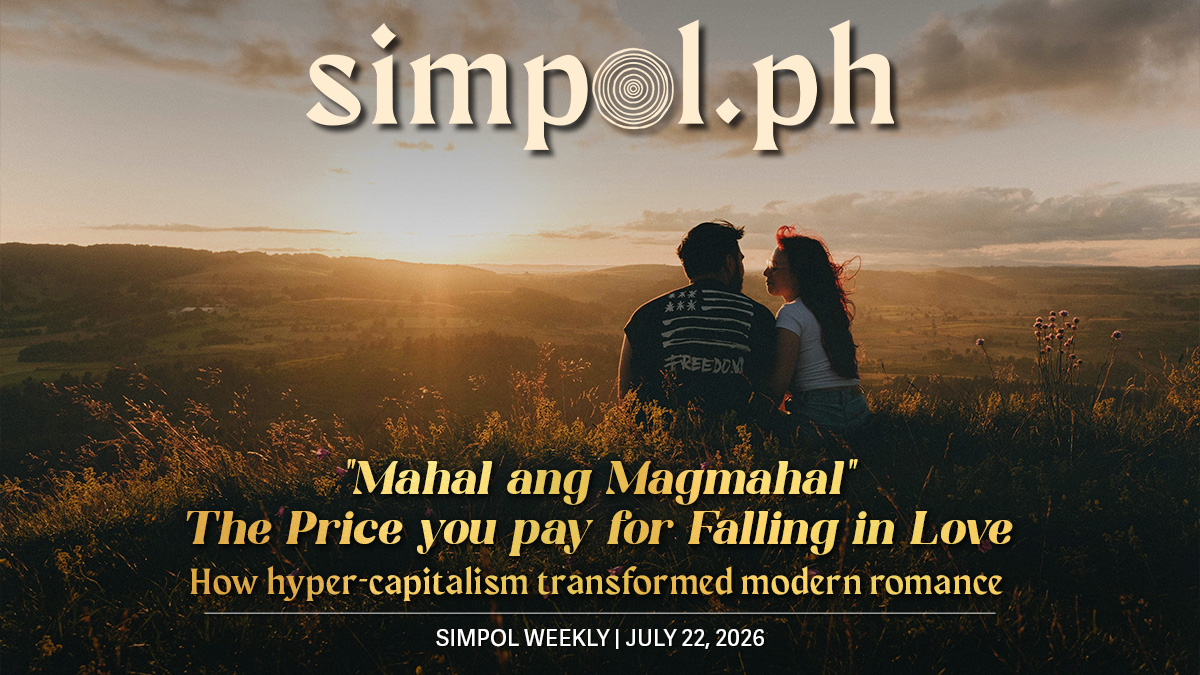
Capitalism will take everything from you, even the ability to love.
In this era, everything seems like it has a price. Every move you make, it’ll cost you something. Merely existing has become excruciatingly expensive, let alone inviting someone else to exist alongside you for a Friday night date.
For a generation raised on a steady diet of K-dramas, Hollywood rom-coms, and curated TikTok “date-vlogs,” the blueprint for romance seems simple enough. Buy a bouquet of flowers, grab dinner at a cozy bistro, talk over an organic, fat-free oat milk latte, and catch a two-hour indie film.
Back then, loving someone simply meant having a good time. But nowadays, loving someone primarily means spending a good dime.

Mahal ang Magmahal
The word mahal carries a double life. It is your tenderest endearment (“Aking mahal”) and your loudest complaint at the grocery store (“Ang mahal naman!”). In the Philippines, to love, (magmahal) has always carried a dual meaning. But for 21st-century Filipinos, particularly Gen Zs, that overlap is no longer a funny cultural coincidence. It is an everyday financial struggle.
The indie band Esremborak captures this exact socio-economic agitation in their track “Mahal Magmahal,” turning clever Tagalog wordplay into a sharp anthem for modern survival. As the song juxtaposes romantic longing with the skyrocketing cost of daily staples like bigas and sardinas, it lays bare a pragmatic truth that older, idealized narratives of love are often ignored.
I find it funny and saddening kasi I’m not really sure if I’m just convincing myself na ayoko ng partner dahil ayoko ng commitment, or maybe because I can’t afford it.” said AJ, a 23-year-old BPO employee.
Affection does not exempt a couple from the cost of living. In a world where even standard dates feel like financial gambles, “Mahal Magmahal” serves as both a sigh and a straight up reflection of a generation forced to ask whether their wallets can truly keep up with their hearts.

The cost of love AKA “The Dating Tax”
Why has romance become so pricey? Look around. The modern Filipinos are highly starved of public “third places”. Local parks, open plazas, and walkable spaces where people can simply sit and exist without buying anything.
If you want to spend three uninterrupted hours talking to someone you like, you are almost forced into privatized spaces. You buy a P220 iced coffee to earn a seat at a cafe table. You drop P1,500 on dinner because the park bench down the street is actually a traffic island surrounded by cars. Add a ride-share fare to dodge the heat, a couple of cinema tickets, and a decent-looking bouquet. The standard weekend date easily racks up a P3,000 to P4,000 price tag.
For an entry-level worker or a fresh grad navigating a harsh job market, a single afternoon of courtship can swallow an entire week’s hard-earned income. Effort, under modern consumer culture, has been systematically monetized and capitalized.
Emotional austerity and the rise of the “situationships“
When surviving devours your bank account, affection gets priced out. The economic weight of romance has given rise to a unique kind of emotional austerity. Young adults are increasingly finding themselves in non-committal “situationships“. Not always because they fear commitment, but because they fear the upkeep of intimacy.
Formal dating implies an itinerary, and an itinerary implies a price. When a simple text asking “Kain tayo sa labas?” translates to expense, staying home or keeping things vague suddenly feels like a sensible financial plan.
All of a sudden, a voice starts talking in your head;
If I can barely afford my rent and TNVS fares, do I even have the financial capacity to fall in love?”

Reclaiming love from the price tag
Despite the economic challenges, Gen Zs remain stubbornly romantic. The pushback against hyper-capitalist dating is already happening, spark by spark.
Maybe, Jessie J isn’t that correct about it all, not everybody has a price.
Because at the end of the day, capitalism can price out the venues, the lattes, and the cinema tickets. But it hasn’t quite figured out how to monetize genuine human warmth and connection.
To love in the 21st-century Philippines is an act of financial bravery. But choosing to love simply, authentically, and without the price tag? That might just be the ultimate act of love.
Ang magmahal will always be worth it.
Read more Stories on Simpol.ph
Why Gen Zs and Millennials are Opting for No Kids Lifestyle