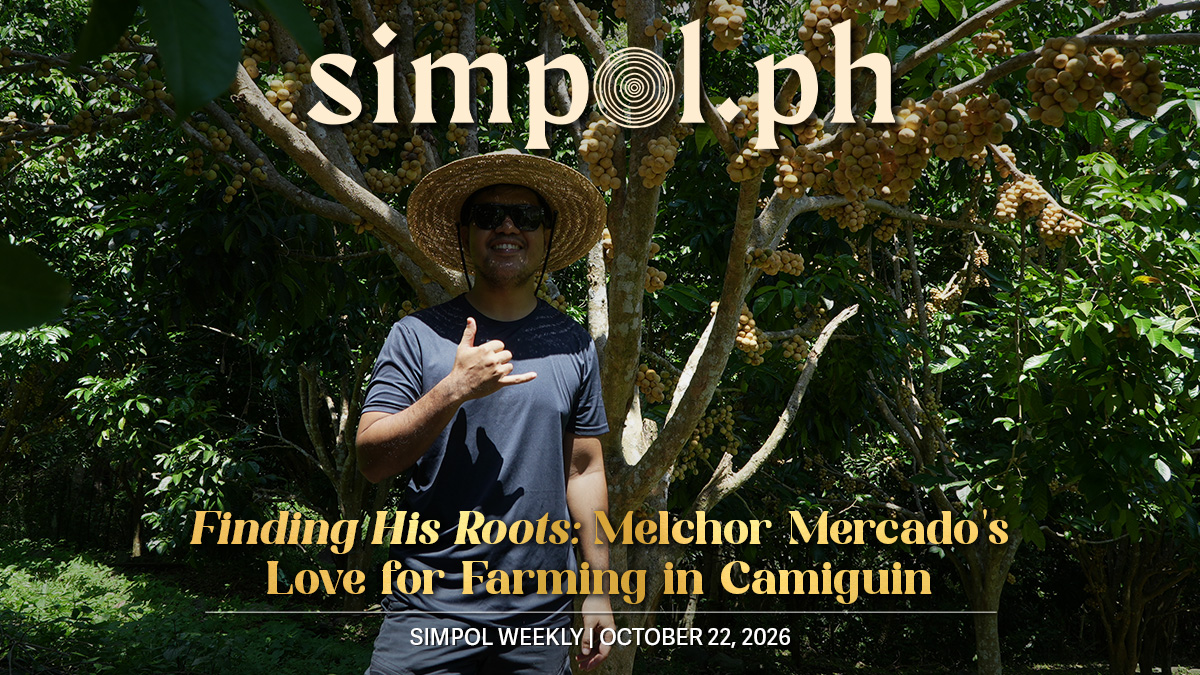
Over two decades ago, Melchor Mercado’s parents established a farm on the island of Camiguin, focusing primarily on longkong lanzones. Back then, Mercado lived in Manila and visited only a few times a year with his parents and brothers.
He never imagined that this island retreat would one day become his permanent home.
“I was looking at some old photos from 2008,” Mercado recalls. “I was visiting with my parents and my brothers. Sabi ko, parang dati parang pasyalan ko lang dito eh.”
Gradually, those occasional trips became more frequent. Then came the pandemic, which gave Mercado and his wife the opportunity to move to the island full-time.
“We moved during the most critically locked down time,” he says. The transition was challenging, but looking back, the decision proved worthwhile.
Finding Meaning in the Soil
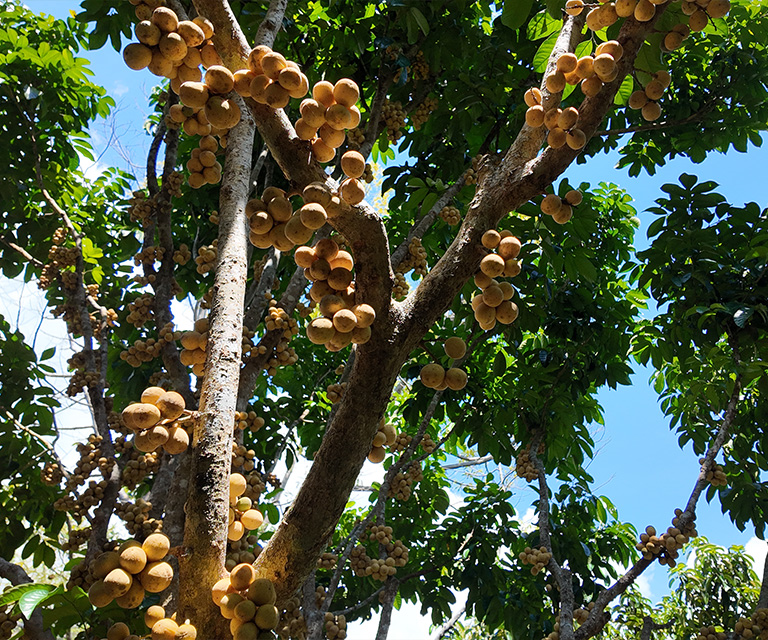
Leaving behind an office career in the city was daunting, but life on the farm offered Mercado an unexpected sense of fulfillment.
“I didn’t see myself doing this,” he admits. “Pero eventually, sabi ko, instead of being stuck in an office, I found it rewarding kasi po I’m in nature.”
The farm also allowed him to provide employment for people in the community. His wife joined him in the venture, handling the back-end operations as they turned the family property into a livelihood of their own.
Today, the farm has grown beyond its original lanzones trees. It produces calamansi, dragon fruit, mangosteen, rambutan, herbs, vegetables, and hydroponic lettuce. Chickens, ducks, geese, and cows are also part of the operation.
The different parts of the farm work together. Chicken manure is composted and used as fertilizer, while pruned branches are turned into mulch. Ducks and geese help with insects, while cows graze on grass and return nutrients to the soil.
“It’s connected lahat,” Mercado explains.
For him, farming has become an exercise in understanding those connections. Every crop, animal, and resource has a role, and maintaining the farm means learning how each part can support another.
For Melchor, the farm’s circular design inspired a shift in perspective. Unlike the fast-paced city, where success is measured in quick, isolated results, the soil thrives on interdependence. Tending the land taught him that true sustainability comes from working with natural systems rather than trying to dominate them.
By trading corporate timelines for the natural rhythms of growth and renewal, he gained a grounded sense of patience—a reminder that meaningful progress cannot be rushed, but requires daily care, quiet resilience, and deep respect for the environment.
Growing Beyond Lanzones
The farm’s diversification is also a practical response to the realities of agriculture.
Lanzones can be unpredictable. The trees need years before they bear fruit, while weather conditions can affect flowering and harvests. Too much rain at the wrong time can make it difficult for the trees to produce.
Market prices can be just as challenging. During periods of abundant harvest, prices can drop sharply. Mercado recalls instances when local buyers offered as little as ₱10 per kilogram.
“You have to pay for harvesters, you have to pay for the box, you have to pay for transportation,” he explains. “So 10 pesos, parang wala ka nang kikitain.”
That is why the farm does not depend solely on lanzones.
The market may reduce a year’s hard labor to ₱10 a kilo, but the soil does not measure value in currency. Diversification shifted the farm’s measure of success from purely economic gain to broader stewardship and security.
When a harvest yields low financial returns, a rich and varied ecosystem still offers sustenance, community reliance, and purpose. It is a subtle shift from chasing maximum yield to cultivating genuine self-reliance.
A Hydroponic Experiment Takes Root
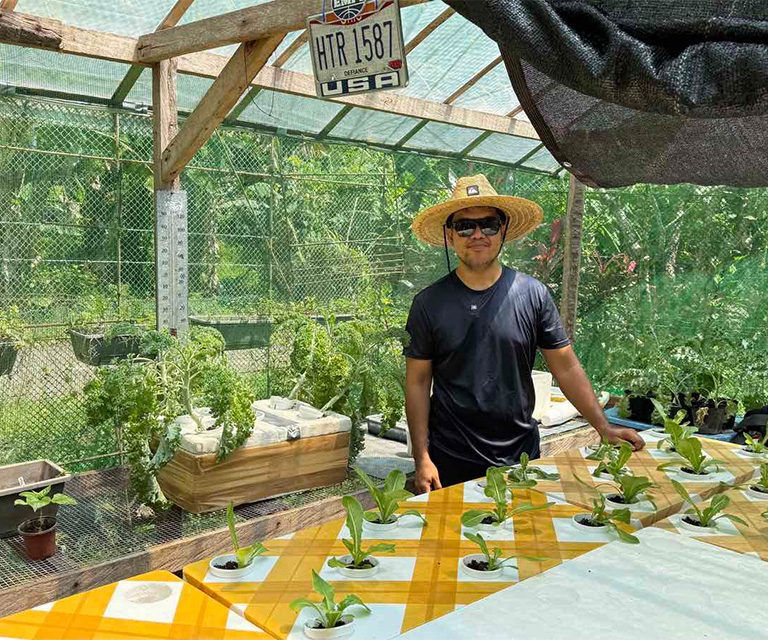
One of Mercado’s newer ventures is hydroponic farming.
The farm initially tried growing lettuce in soil. Although the crop was successful at first, pests eventually became a problem. Instead of giving up on lettuce, Mercado changed the way they grew it.
“We tried to plant lettuce po,” he says. “Kaya lang, at first it was successful and then eventually kinakain na siya ng peste.”
The solution was a shift to hydroponics.
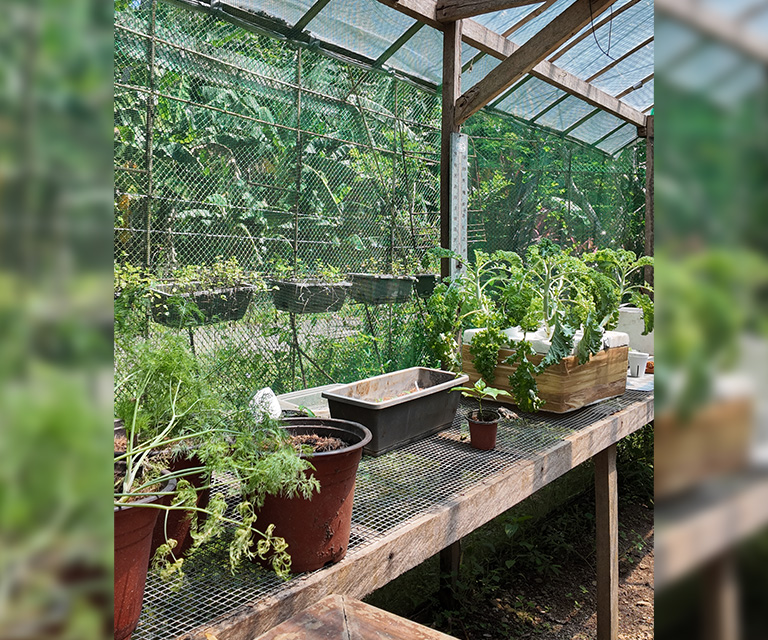
The farm now grows hydroponic lettuce alongside kale and other vegetables. Some of these crops are supplied to local resorts and restaurants. The farm also grows herbs such as basil, cilantro, mint, chives, arugula, and peppers.
The approach allows Mercado to respond to what the local market needs. One restaurant, for example, asked the farm to grow cherry radish specifically for its pickling preparations.
For an island community that often relies on produce transported from the mainland, local farming can also provide an important alternative. When bad weather prevents boats from traveling, deliveries can be disrupted.
This pivot highlights the ultimate ethos of farming: staying in the game not by controlling nature, but by adapting to it. In an industry defined by unpredictable pests, weather, and markets, treating every setback as a defeat is exhausting. Farming, as Mercado sees it, is played for the love of the craft, where hydroponics was simply a tactical maneuver to keep playing.
Choosing to adapt rather than surrender shows that true passion isn’t tested when conditions are easy, but in the willingness to change tactics, master new tools, and find joy in solving the puzzle.
A Life Deeply Rooted
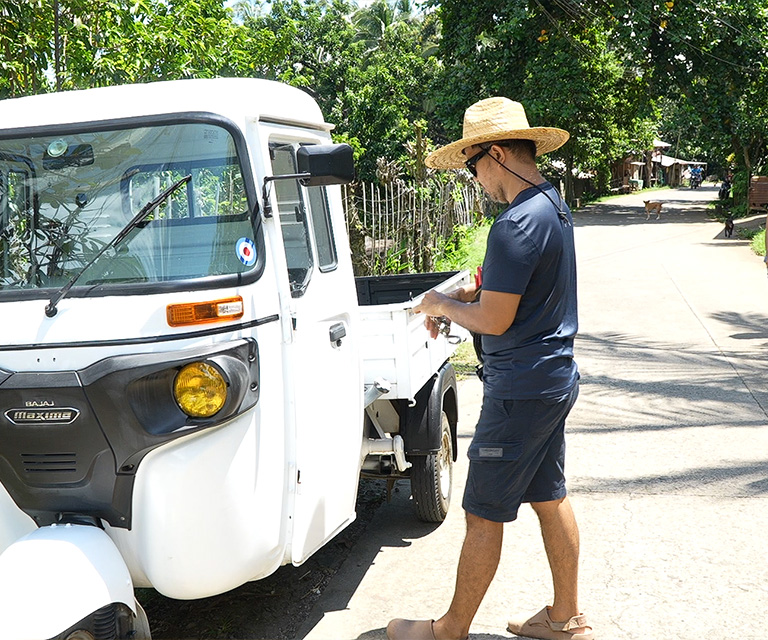
Eventually, Mercado and his wife built their home on the farm, choosing the quieter surroundings of Camiguin over the pace of city life.
“We like the peaceful vibe here in Camiguin,” he shares. “It’s less stressful and there’s peace of mind.”
Among the rewards of farm life, one of the simplest remains the most personal: having food growing right outside their home.
“We enjoy fruits in our backyard,” Mercado says. “You have your own fruit basket in your backyard. That’s why we wanted to live here specifically.”
What began as occasional family visits to an island orchard has evolved into a life shaped by seasons, experimentation, and deep-rooted community ties. In Camiguin, Mercado did more than inherit his family’s land—he transformed it into a thriving, self-sustaining sanctuary.
With every season and every harvest, he continues to demonstrate that true fulfillment isn’t found in controlling the land, but in learning to grow alongside it.
Read more stories on Simpol.ph
Chef Jackie’s Food Tubs Were The Stepping Blocks Of Gianetto
From Accidental Chef to Industry Mentor: Chef Kalel Chan on Grit and Growth
No Safety Net: Chef Danilo Puga Teaches the Next Generation to Fear Less