When people think of Cebuano food, lechon often comes first to mind. But for many locals, home tastes like steamed fried rice — served piping hot, topped with a savory-sweet gravy.
At the heart of Cebuano style dim sum, this dish has anchored Harbor City’s legacy for over five decades.

The Legacy Behind the Steam
Harbor City was born from a partnership between Henry T. Uytengsu and the Kokseng family — united by shared Chinese roots and a deep love for food. Ding How opened in 1969 on Colon Street, the city’s first all-day dim sum house. In 1987, Ding Qua Qua followed on Mango Avenue, introducing Cebu’s first dim sum buffet.
Meals that were “lami”, “paspas”, “barato” (delicious, fast, affordable) quickly became a habit. Unlike in Manila, where dim sum is a side dish, in Cebu it became the main dish attraction.
In 2019, Harbor City marked its 50th year — a rare feat in the food world. Over time, dim sum became more than novelty — it became memory, ritual, and a regional pride. Passed down through generations, it’s now tradition — with a legacy still growing, dish by dish. Passed down through generations, it’s now tradition — with Cebuano style dim sum becoming comfort food for birthdays, errands, reunions, and cravings across the Visayas and Mindanao (VisMin) Region.

A Cebuano-Chinese Heritage
Cebu’s early Filipino-Chinese community helped shape Harbor City’s identity. Chinese migrants brought not only trade but also the flavors of Southern China. That heritage merged with local tastes and habits to create something new.
“Our earliest supporters were family and friends from the Filipino-Chinese community in Cebu,” the founders recall. “But it didn’t take long before locals embraced the flavors as their own.”
Steamed fried rice — unheard of in traditional Cantonese menus — was born in Cebu City and has since become the centerpiece of Cebuano style dim sum. A dish reimagined for its new home.

What Defines Cebuano Style Dim Sum
Cebuano dim sum breaks the rules. In Hong Kong and Manila, it’s a side dish. In Cebu, it’s the meal on its own.
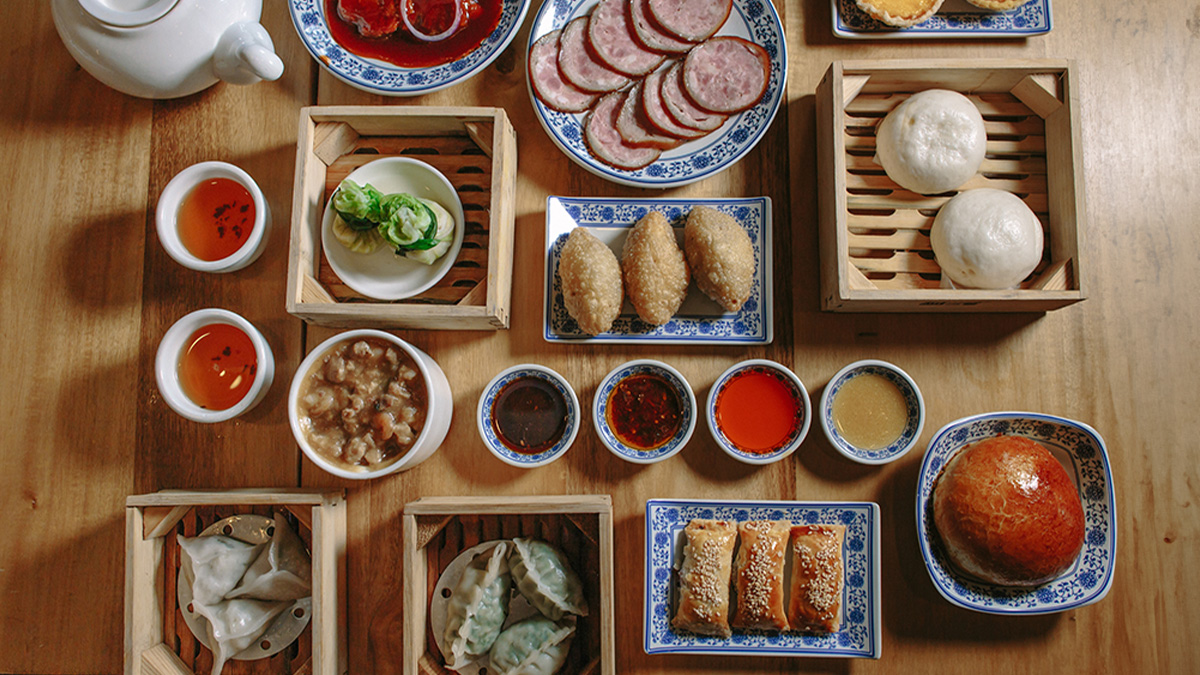
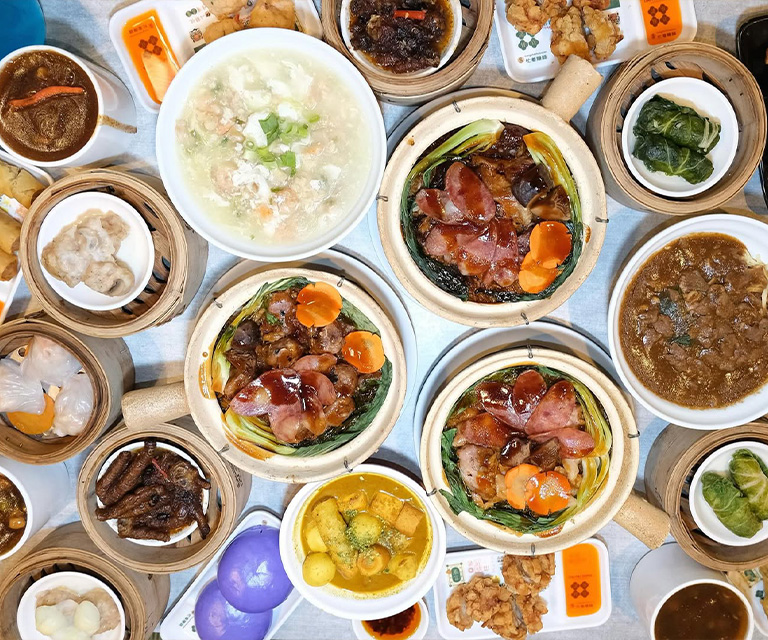
Dimsum is served in small portions — like snacks, but endlessly customizable. You don’t just order one dish; you curate your own combination, mixing steamed rice with baskets of siomai, dumplings, and spareribs. It’s not just a meal — it’s a choose-your-own ritual.
Steamed fried rice starts with soy and pepper fried grains placed into bowls and steamed. Just before serving, it’s topped with pork and shrimp gravy — mildly savory, faintly sweet. When it arrives, you dig in, pulling seasoned rice from the bottom to mix with the sauce. That ritual is part of the experience.
Unlike trend-driven menus, Harbor City’s Cebuano style dim sum lineup hasn’t changed much in 50 years. It stays grounded: small plates, bamboo baskets, no-frills service. Food to be shared. Food that endures.
From Carts to QR Codes
A defining feature of Harbor City used to be the steaming trolleys weaving through the aisles. Diners would simply point to a bamboo basket as it rolled past, choosing what looked good in the moment. The carts added rhythm, motion, and theater to the meal.
Today, ordering is digital. Customers scan a QR code and tap in their selections. The clatter is gone, but the intent remains: speed, freshness, and choice.
Each brand fills a role — Ding How is classic, Ding Qua Qua is buffet, Dimsum Break is fast and casual, and Dai Pai Dong channels Hong Kong streets.
Generations of Loyalty
I first tasted steamed fried rice at Ding How in the late ’70s. I was five. That bowl — soy rice, pork, shrimp — left a mark. Since then, it’s been part of my life: birthdays, errands, sudden cravings. It offered comfort — warm, familiar, and deeply satisfying. Priced within reach, it felt accessible to all. Over time, it became more than just a favorite dish — it became a shared heritage.
Families have passed it down for generations. Now, tables are shared across generations with memories they can all connect to. Some balikbayans make it their first stop after landing in Cebu. The next generation now leads the business, expanding to cities like Davao and Pagadian, where steamed rice still draws lines.
“In today’s paradox of a hyperconnected world, we’ve never felt more alone. But shared meals still bring us together. Dimsum does that.”
What’s Next
Manila isn’t on the radar — VisMin remains home. But the brand is evolving: spice-level options, frozen retail, faster systems. Tweaks that preserve what matters most.
Harbour City Dimsum House Co., Inc. now runs over 35 branches across the Visayas and Mindanao. A legacy built not just on flavor, but on familiarity — anchored in Cebuano style dim sum that generations have grown up with. — and one that’s still expanding beyond its first 50 years, inviting the next generation to sit down, dig in, and write their own Harbor City story.
More Cebuano Stories from Simpol.ph
Craving more stories of Filipino comfort food? Read our deep dive on lechon’s cultural legacy in House of Lechon Cebu: From Craving to Quiet Success and discover how food connects generations.
What dish brings you back home?