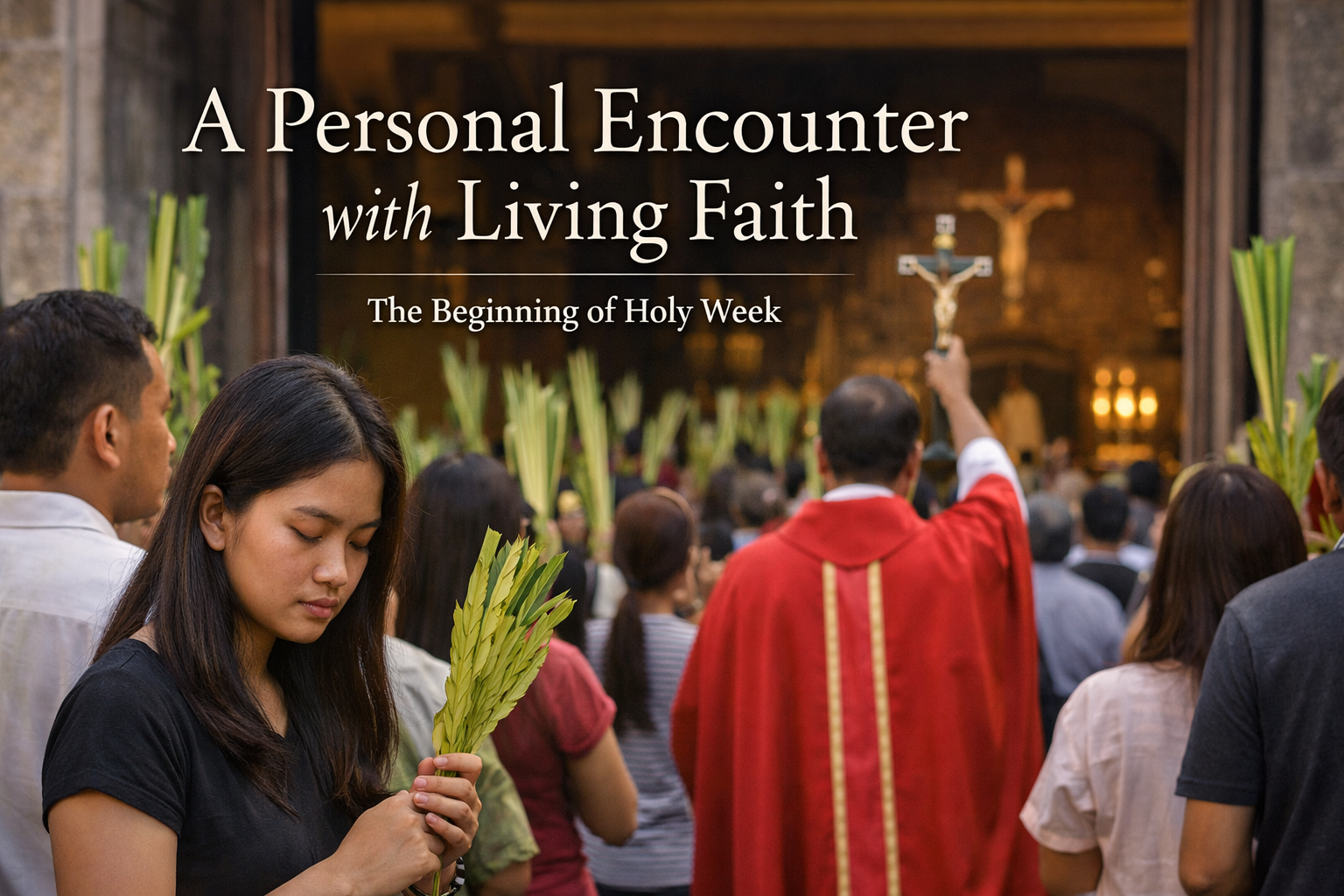
For many, stepping into the first liturgy of Holy Week is more than a tradition—it is a necessary pause. Notably, Holy Week reflection in the Philippines offers a rare moment to recalibrate in a fast-moving world, to confront one’s inner life, and to rediscover meaning beyond routine. Experiencing this sacred beginning is important because it grounds faith in action, reminding individuals not only what they believe, but why it matters in their daily lives.
A Personal Encounter with Living Faith
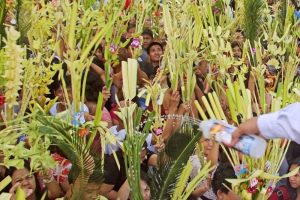
The opening of Holy Week often unfolds not as spectacle, but as quiet immersion. Devotees describe the experience as deeply sensory—the rustle of palm leaves, the collective rhythm of footsteps in procession, and the solemn stillness that follows. These moments, though simple, carry emotional weight. They are not merely observed; they are felt. In particular, Holy Week reflection in the Philippines is experienced through these sensory details.
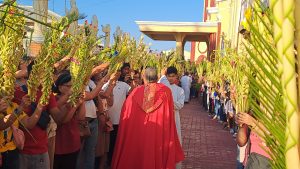
What distinguishes this experience is its ability to draw individuals inward. While the rituals are communal, the reflection is deeply personal. Attendees often speak of a heightened awareness—a sense that, even within a crowd, the message is directed at them alone. The shift from celebration to solemnity during the liturgy mirrors real human experience: joy that is fleeting, faith that is tested, and hope that must be sustained.
Beyond Ritual: The Meaning People Carry Home
For many Filipinos, the significance of the day extends beyond the church doors. The act of bringing blessed palms home transforms the experience into something enduring. These are not just symbols; they become quiet witnesses to daily life—placed beside altars, tucked into doorways, or kept in prayer books.
More importantly, what people carry home is not the palm itself, but the reflection it represents. Devotees often describe a renewed sense of intention: to be more patient, more forgiving, more present. In this way, the observance becomes less about obligation and more about transformation. Additionally, Holy Week reflection in the Philippines encourages this kind of deeper intention.
A parish coordinator from Quezon City shared during a local interview:
“Every year, you see people come in carrying different burdens. But after the Mass, there’s a noticeable lightness. It’s not that their problems disappear—it’s that they are reminded they don’t carry them alone.”
The Tension That Deepens Faith
One of the most powerful aspects of the experience lies in its contrast. The same voices that begin in praise are later confronted with the narrative of suffering. This transition is not accidental—it is central to the reflection.
For many attendees, this is where the experience becomes most real. It prompts uncomfortable but necessary questions: How consistent is one’s faith? Is devotion present only in moments of ease? These reflections resonate strongly, particularly among those navigating personal struggles. Furthermore, Holy Week reflection in the Philippines gives context to these spiritual questions.
A longtime church volunteer noted in a published diocesan feature:
“You begin the day with joy, but you leave with questions. And I think that’s the point—faith grows when it is examined, not just expressed.”
Why This Resonates Today
In a time defined by constant noise and distraction, the structured stillness of Holy Week offers something increasingly rare: clarity. It allows individuals to step away from digital routines and reconnect with values that often go unexamined.
The experience is especially meaningful for those seeking direction or renewal. It does not demand perfection; it invites honesty. Whether one attends out of devotion, curiosity, or habit, the encounter often leaves a lasting impression—subtle, but significant.
A Continuing Invitation to Reflect
What makes this tradition endure is not only its history, but its relevance. Each year, it meets people where they are—offering the same narrative, yet allowing for different interpretations depending on one’s personal journey.
For devotees and first-time participants alike, the invitation remains the same: to move beyond surface-level observance and engage with the deeper questions of faith, humility, and purpose. In doing so, the experience becomes more than a yearly ritual—it becomes a meaningful step toward renewal.
Ultimately, the beginning of Holy Week is not about marking time. It is about making space—for reflection, for growth, and for a faith that continues to evolve with each passing year. Clearly, Holy Week reflection in the Philippines is an ongoing source of spiritual renewal for many.
Read more Stories on Simpol.ph
Biblical drama gets a Filipino twist in original musical ‘Pilato’
Manuel Baldemor’s ‘Kuwaresma’ exhibit opens at The Manila Hotel