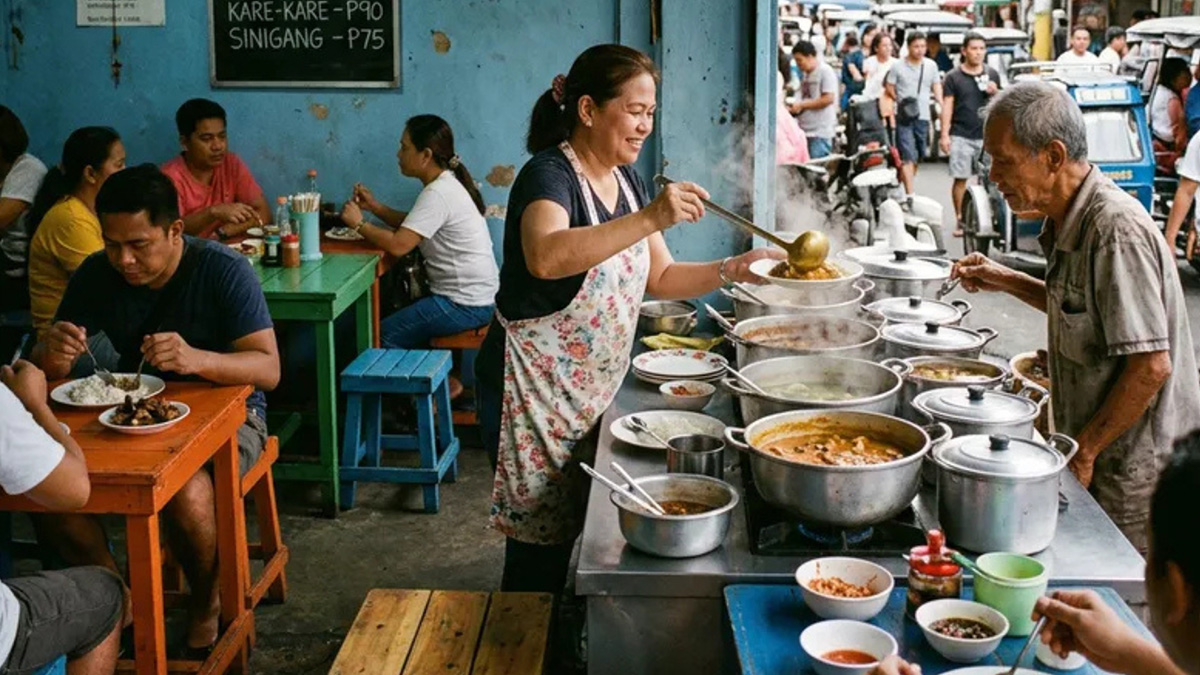
No matter where you go—whether in the city or in the most rural areas of the Philippines—carinderias, eateries, and food stalls are always present. For as little as 60 pesos, one can enjoy a single serving of a filling and tasty ulam that satisfies hunger while staying within budget. In fact, Carinderia culture in the Philippines is something you’ll find everywhere you travel.

Survival Meals Turned Into a Pinoy Staple
In the Philippines, the carinderia—also known as an eatery—is more than just a place to eat; it is a vital social and economic institution. These humble, open-air establishments serve as the backbone of the local food landscape, offering home-cooked meals at prices that remain accessible even amid economic shifts. In essence, the unique carinderia culture found in the Philippines shapes these eateries as an essential part of daily life for many.
For the Filipino working class—including laborers, office workers, drivers, and students—the carinderia is an essential part of daily life. Access to food that is both filling and affordable is not merely a convenience but a necessity. Among locals, the vibrant culture of carinderia in the Philippines is evident particularly for students managing tight baon budgets, minimum wage earners living paycheck to paycheck, and individuals living alone without access to a proper kitchen, a nearby and reliable carinderia is invaluable.
Back then, when I was a student in Manila, I really relied on carinderias for my meals. Even now that I work in an office, I still eat at a carinderia near my place. In my experience, the carinderia culture in the Philippines offers a taste of home on a budget, and it’s very convenient,” said Jefferson, an office worker who lives alone.

The Birth of the Carinderia in the Philippines
The word carinderia is believed to have originated from the Spanish term cari, which traces back to Indian sepoys who settled in Cainta and Taytay in the 1700s. They introduced curry-style dishes (kari), eventually giving rise to the term kari-nderya. This unique origin story demonstrates the long-standing carinderia culture and history in the Philippines.
Over time, these establishments evolved from simple roadside stops for travelers into what is now commonly known as turo-turo (literally “point-point”), where customers select their meals by pointing at dishes displayed in metal pots (kawali) or glass-encased trays. Truly, carinderia culture permeates the Philippines through this evolving tradition.
A Welcoming Table for Every Juan
At a single table, it is not uncommon to see a construction worker in dusty boots seated beside an office employee in a crisp Barong. The carinderia offers a warm and hearty meal for anyone who needs it—without judgment or distinction. The culture of the carinderia is a cherished aspect of daily life in the Philippines.
There are no dress codes or service fees. It is a space where everyone is welcome, reinforcing a sense of community and shared Filipino identity through food that resonates with the local palate and cultural heritage. Overall, the vibrant carinderia culture across the Philippines is reflected in its inclusivity and hospitality.
By providing nourishment that tastes like home at a price aligned with the everyday Filipino wage, the carinderia remains an enduring and essential thread in the fabric of Philippine society—both in the past and in the years to come. Carinderia culture in the Philippines is likely to endure for generations.
Read more Stories on Simpol.ph
Why Choosing Pares and Siomai Carts Beats Fast Food in 2026