To step through the doors of Dusit Thani Manila is to cross an invisible border. Amid the kinetic energy of Manila, the hotel operates less like a traditional city stop and more like a portal. Transporting guests directly to the tranquil culinary sanctuaries of Bangkok and Tokyo.
At the center of this sensory getaway are two legendary dining destinations; Benjarong and Umu.
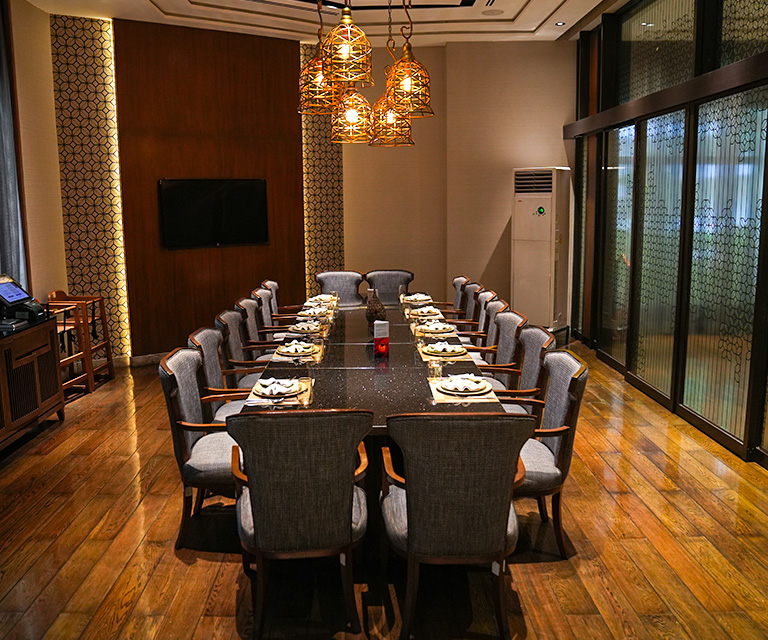
The Harmony of Five Flavors at Benjarong
Derived from the Thai concept meaning “five colors,” Benjarong translates in the kitchen to the harmonious balance of five distinct flavors: sweet, sour, bitter, salty, and spicy.
It’s not just about one or two notes,” explains Watcharaphon Yongbanthom, known as Chef Ja, who has led the kitchen for nearly eleven years.
All five flavors must come together and work in harmony to bring out authentic Thai cuisine.”
At Benjarong, this harmony is anchored by fresh, fragrant herbs imported directly to match the authentic Thai palate. Bright, citrusy aromatics are introduced through fresh kaffir lime leaves, and lemongrass contributes an essential earthy sharpness to the dishes.
Furthermore, authentic Thai limes are utilized to deliver a precise, biting acidity that balances each culinary creation.
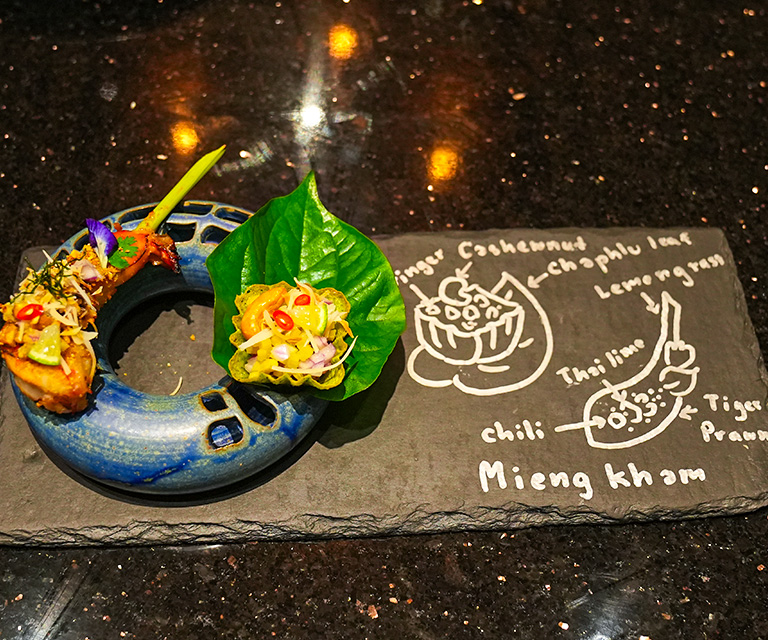
From Time-Honored Classics to Cutting-Edge Tasting Menus
While first-time guests frequently reach for beloved classics like Tom Yum or Pad Thai, Chef Ja delights in introducing diners to deeper, lesser-known traditions. The meal often begins with appetizers such as Tod Man Kung, which features tender, golden shrimp cakes fried to crisp perfection.
Moving on to the main courses, the kitchen highlights a signature rich Green Curry, featuring sheep braised slowly until the meat turns melt-in-your-mouth tender. In addition to these specialties, diners can explore hearty regional options like the Spicy Pork Cheek Salad and the Braised Herb Noodle Soup, both of which showcase complex, aromatic broths.
Beyond its traditional à la carte selections, Benjarong continuously pushes boundaries with creative, multi-course tasting menus. Developed in collaboration with visiting Michelin-starred chefs, these elevated dining editions offer a contemporary take on Thai gastronomy while maintaining its fundamental roots.
This commitment to innovation earned Benjarong a prestigious inclusion in the Michelin Guide.
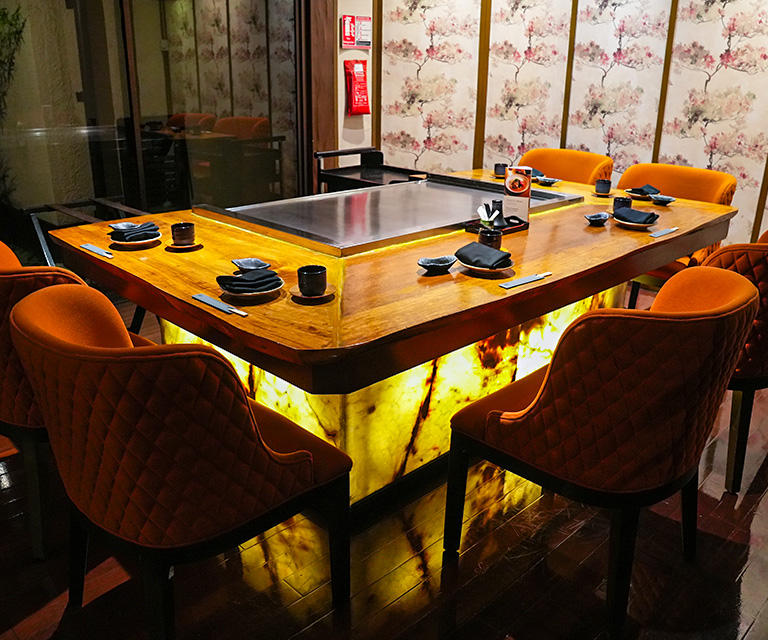
The Art of Nature and Precision at Umu
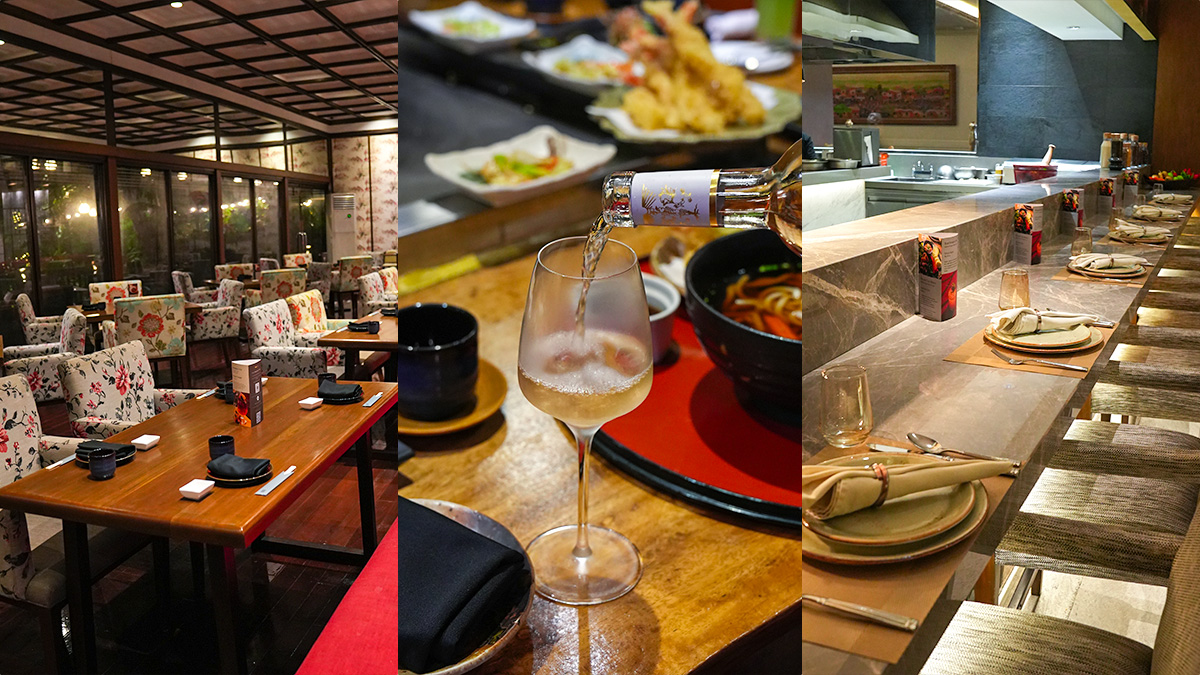
Across the property, Umu, which translates to “born of nature”, transports diners into a serene Japanese sanctuary. The interior design frames natural Marana wood, serene koi ponds, and landscaped Japanese gardens. Creating a grounded setting for traditional culinary art.
At the helm is Chef Hiroyuki Fukata, who has spent sixteen years perfecting Umu’s kitchen operations with a focus on ingredient integrity and pristine seasonality.
The restaurant’s culinary offerings highlight an exceptional range of traditional and fusion delicacies. Guests can enjoy fresh seafood hand-carried directly from Japan, featuring pristine toro salmon belly, tuna, and sweet lobster.
Additionally, Umu serves premium A5 Japanese Wagyu prepared simply with salt, wasabi, or house-made soy reductions to let the natural marbling shine. For those seeking a unique twist, the menu also features Wafu Steak—a beloved local fusion signature that pairs tender beef with a rich teriyaki sauce.
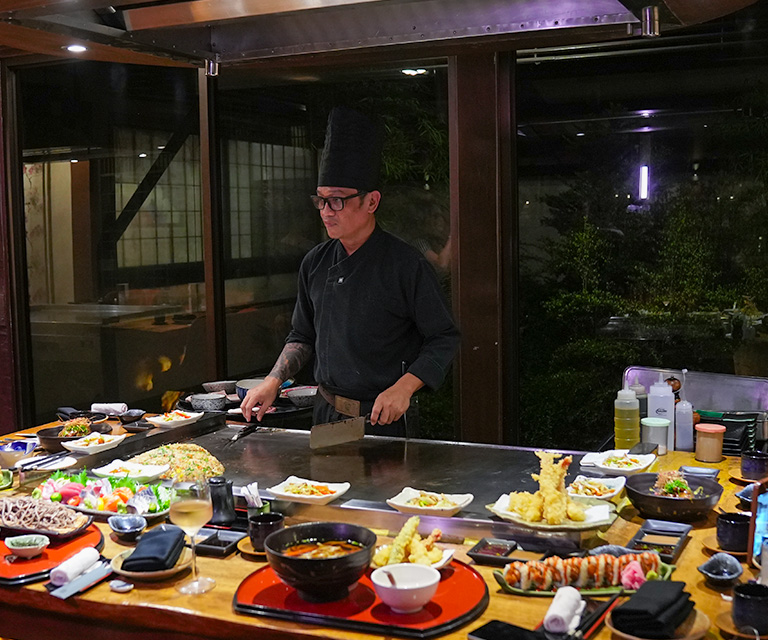
The Theatrics of the Teppanyaki Grill
For guests seeking an interactive experience, Umu’s live teppanyaki tables offer dinner and a show. Under the direction of experienced teppanyaki chefs, the grill becomes an active stage. A place where culinary craftsmanship meets pure theatrical flare.
With theatrical egg-flips, flashes of savory “ocean powder,” and live-seared Yaki Yasai (seasoned vegetables) and Toro Salmon, the teppanyaki counter delivers a meal that is as entertaining as it is delicious.
At Umu’s teppanyaki experience, the sharp aroma of rendered oil and toasted seasoning fills the air moments before the dish is plated and served straight from the heat.
Thoughtful Hospitality: The Heart of the Experience
For Director of Food and Beverage Eric Norbert, the success of both venues rests entirely on authentic, immersive hospitality.
Our goal is to transport our guests,” Norbert notes.
This philosophy extends through every detail of the guest interaction.
We bring the authentic culture and culinary experience right here to Manila, saving you the flight to Bangkok or Tokyo.”
Upon arrival, visitors receive traditional cultural greetings, being welcomed with a classic Thai wai and Sawasdee ka at Benjarong, or a warm Japanese greeting at Umu.
Throughout the meal, attentive service remains a priority as staff members dress in region-specific attire, guide diners through native dish names, and frequently finish noodle bowls or salad tosses tableside.
Ultimately, this seamless execution creates a memorable atmosphere where, as Restaurant Manager Irene Dondiego notes, the service team strives to deliver Omotenashi. A deeply thoughtful Japanese hospitality designed to make every guest feel completely at home.
Whether you are looking to mark a special milestone, gather with family over a weekend feast, or simply satisfy a midweek craving for authentic regional cuisine, Dusit Thani Manila offers a complete sensory getaway—no passport required.
Read more Stories on Simpol.ph
Timeless Thai Elegance Meets Filipino Warmth