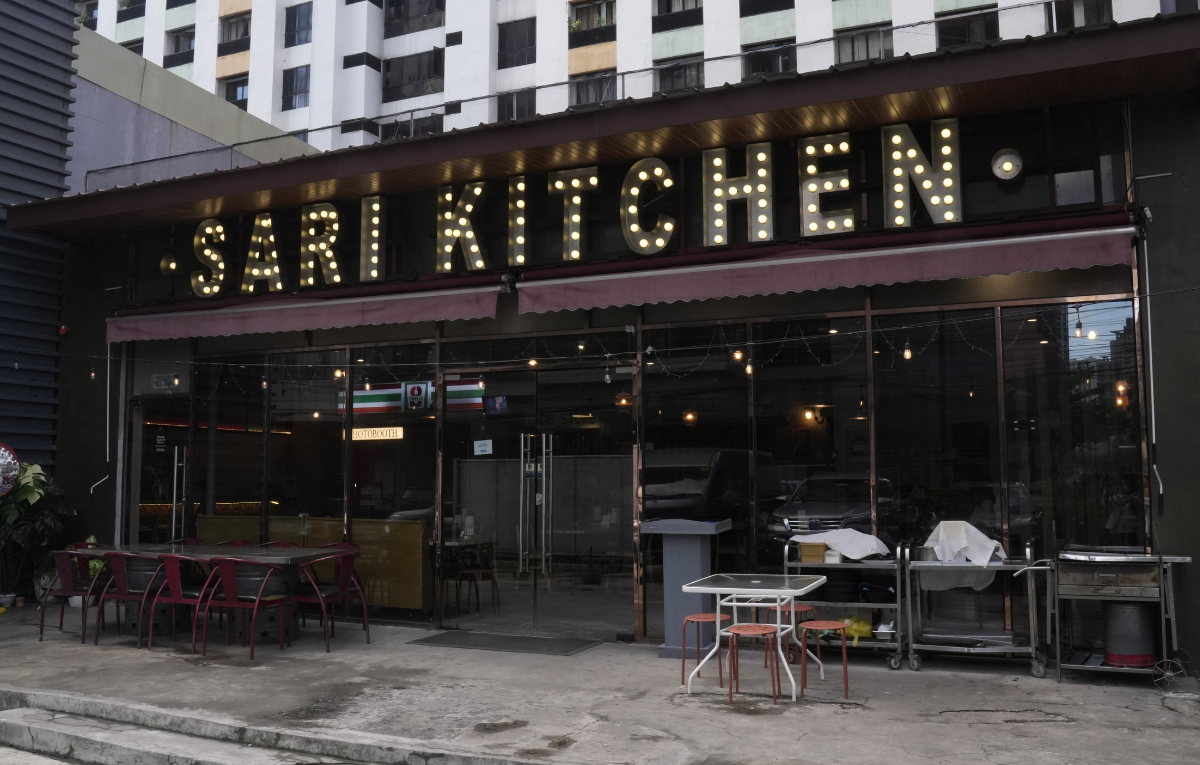
Sari Kitchen did not begin with a Filipino menu.
The restaurant was previously Thai Mookata, a hotpot and barbecue-style restaurant that operated alongside Sari Sari Bar in Makati. But as co-owners Ely Buendia, Pat Sarabia, and Audry Dionisio got to know the people coming through the bar, they began to see an opportunity to rethink what the restaurant could be.
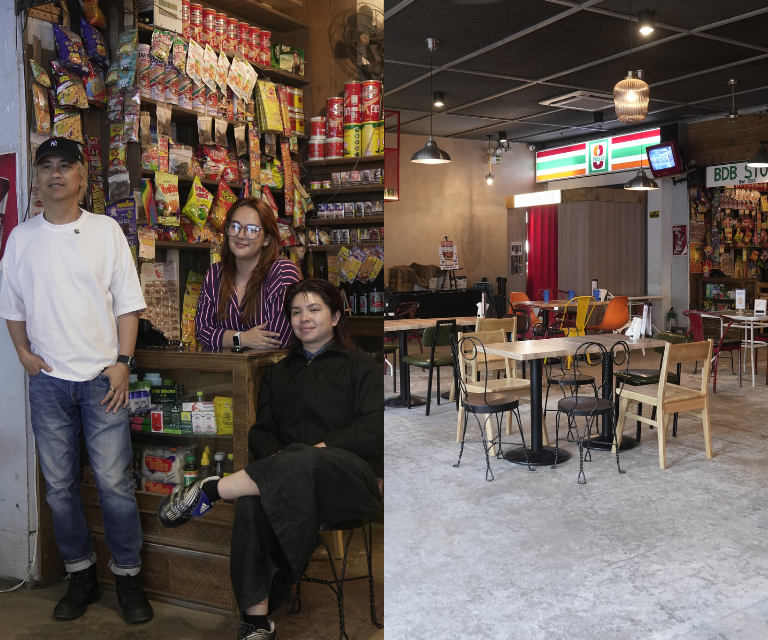
The shift toward Filipino food was a natural response to the crowd they were attracting. As Sarabia explains, “We decided to shift the direction to something more Filipino because of the demographic of the people that come in here for Sari Bar.” With regular gigs and events bringing people together, the team also wanted a menu that suited the atmosphere: “We want to introduce comfort food and inuman na food since there’s always gigs and events here.”
For Buendia, getting into the restaurant business was not necessarily part of the original plan. Best known as a musician and the frontman of the Eraserheads, he initially saw an opportunity in the bar and music venue business. The restaurant became another responsibility that the partners eventually learned to develop.

“I didn’t have an ambition of being definitely not a restaurateur,” Buendia admits. “But I’ve always wanted to get into business because that’s what the adults said I should do.”
The team eventually saw an opportunity to give the restaurant its own identity while staying connected to the Filipino character suggested by the Sari Sari name.
A Menu That Evolved
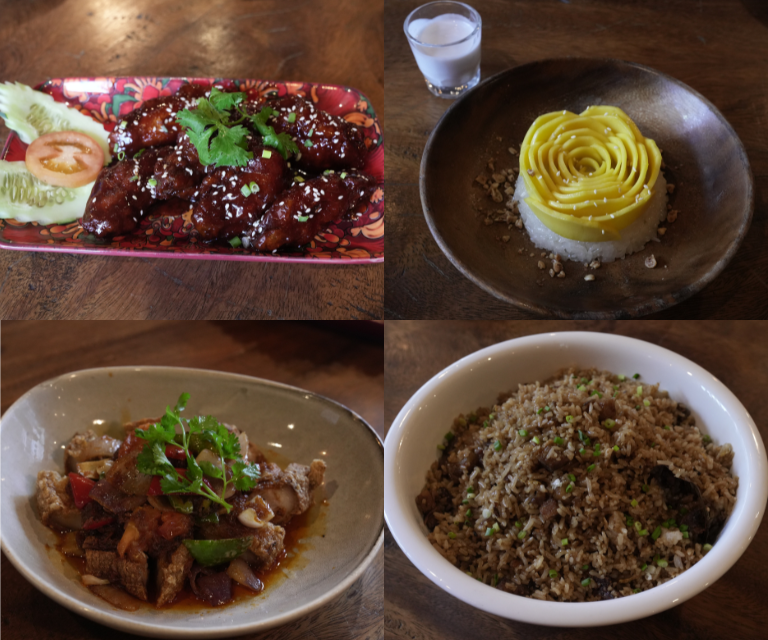
Rather than completely leaving its Thai roots behind, Sari Kitchen built its menu around Asian comfort food.
Pad Thai and Tom Yum remained, while Filipino comfort food and Chinese-inspired dishes joined the lineup. The menu was also shaped by customer feedback, with the team taking time to understand what people actually wanted to eat.
“We decided Asian comfort food was our cuisine, so to speak,” Dionisio shares. The idea was to bring together familiar flavors while giving the dishes a character of their own.
At first, the team considered serving Filipino favorites such as sinigang and tortang talong. But as Buendia points out, simply putting familiar dishes on the menu was not enough. “You really have to put your own spin on it to make it unique.”
That thinking resulted in dishes such as tortang talong topped with sisig and sinigang given a bagoong-inspired twist. Sisig, in particular, became one of the restaurant’s favorite ingredients, also appearing in nachos and tacos at the bar.
Finding the Right Combination
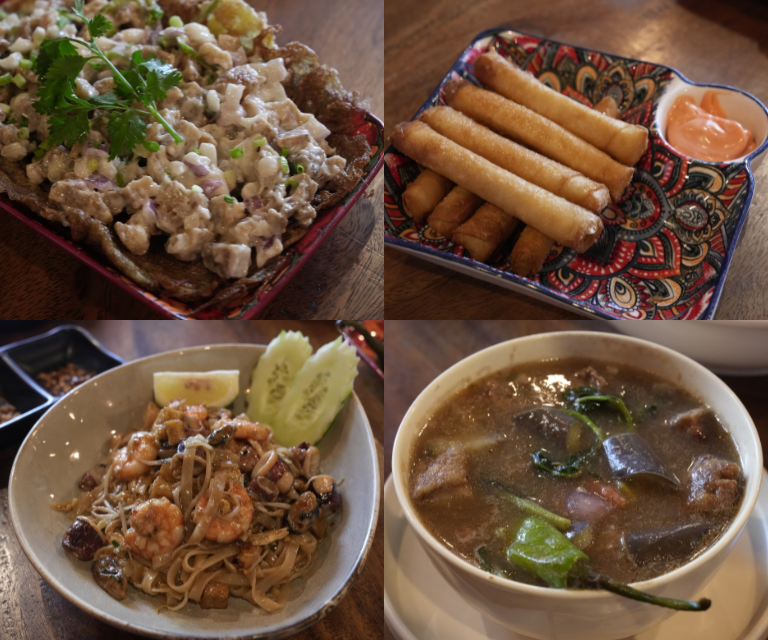
The tortang talong with sisig is among the newer additions to the menu. During its development, the team happened to have a jazz band performing inside the venue try the dish. Their positive response helped confirm that the combination was worth keeping.
“They were our market because they really loved it,” Dionisio recalls. “And so we were like, okay, we made the right decision.”
Buendia also has his personal favorites. He recalls ordering Pad Thai frequently during the first few months after becoming one of the new owners, describing it as one of the best versions he had tasted. These days, he is more likely to reach for the tortang talong or bok choy.
His appreciation for food goes back to childhood, particularly his love for sinigang. “I’ve always loved sinigang from childhood. To me, it was like a real feast. A feast for the senses,” he remembers.
More Than a Place to Eat
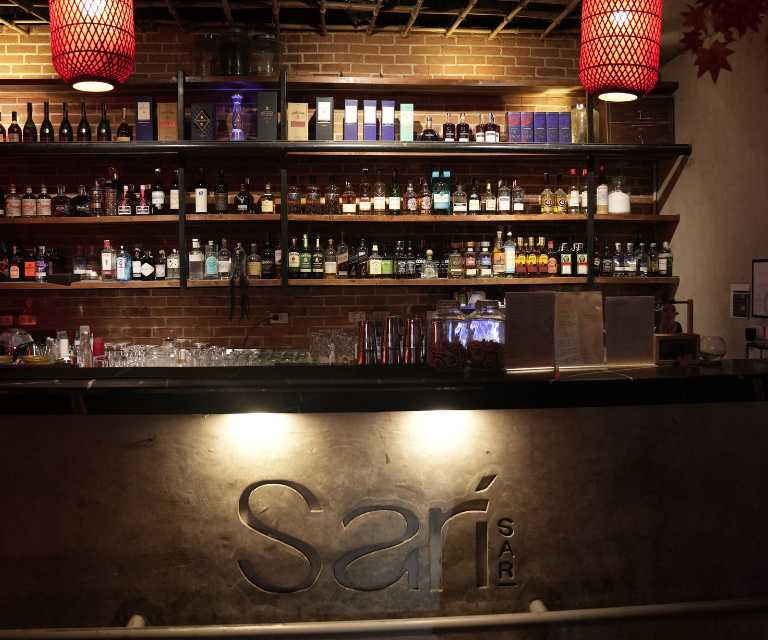
For Sari Kitchen, food is only one part of the experience.
The restaurant occupies the front of the space, while Sari Sari Bar operates inside as a music venue. Guests can have dinner outside, then head in for live music. The space also hosts markets, trivia games, karaoke, film screenings, jazz nights, and other musical events.
Buendia’s experience as a musician has also shaped the way he approaches running a business. In both fields, he sees mistakes as opportunities to learn and adapt. “When you’re a musician, everything is a learning experience, including mistakes. And I try to apply that sa business.”
A Place That Feels Familiar
Ultimately, Sari Kitchen hopes to become the kind of place people return to not just for a particular dish, but for the people and experiences around it.
For Sarabia, the vision comes down to the connection between the two things that bring people together at the venue: “We love music, we love food. So that’s what we really envision for this place, is for people to feel at home here.”
Dionisio describes Sari as something more personal than a restaurant or bar. “It’s more like a watering hole, or a place where I can just be myself. Somewhere that feels like home, but not home.”
And that may be the simplest way to understand Sari Kitchen: a place where Filipino comfort food, music, and different kinds of people come together, with enough variety to make every visit a little different.
Read more stories on Simpol.ph
Camiguin’s Lanzones Festival: A Celebration of Island Life
Lessons in Humanity: What Sir Patrick Stewart Teaches Us About Life