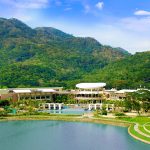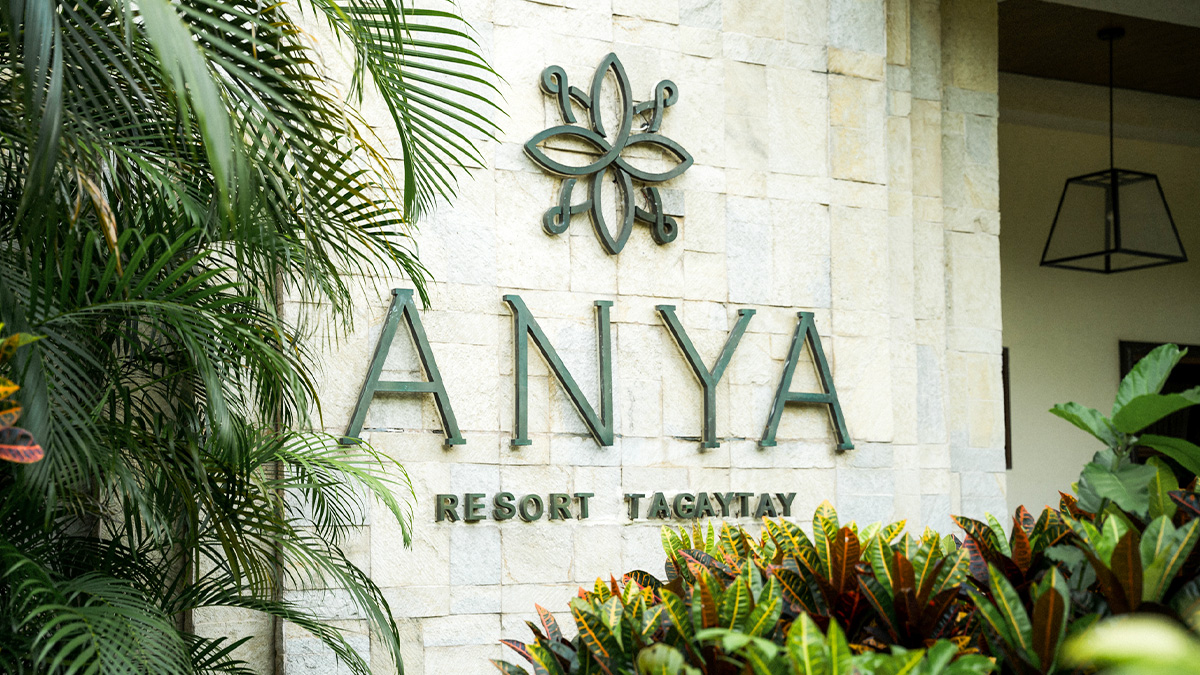
Entering Anya Resort Tagaytay, the first thing you notice is the change in sound. The road narrows through bamboo, the city recedes, and almost without noticing, you begin to slow down.
For a luxury resort, Anya is remarkably low-key. Spend a day here, though, and you understand: its quietness is confidence, not absence.
There comes a point when a place grows comfortable enough with what it is that it no longer needs to chase every trend or constantly prove its relevance. Nine years in, Anya feels close to that point.
The rhythm of the resort is almost meditative. Nothing hurries you along. You walk, you stop, you linger—and after a while, it feels less like a hotel you checked into than a sanctuary.
Perhaps that is Anya’s real luxury: room to slow down.
Corners Made for Stopping
That feeling carried through the resort’s ninth-anniversary celebration, “Reflections,” which I experienced across the property.
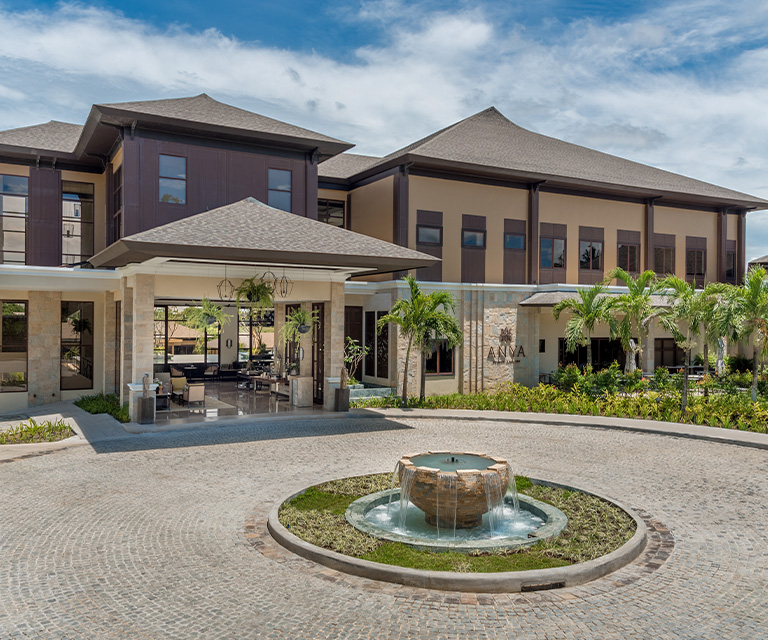
Scattered around the grounds were Reflection Corners—small encounters with art and nature that changed the pace of moving through the resort. Ramon Orlina’s glasswork stood alongside pieces from Museo Orlina, while an installation by Bhem Meijer’s Il Fiore and works from Galeria ng Sining brought Tagaytay and Cavite’s creative community into the landscape.
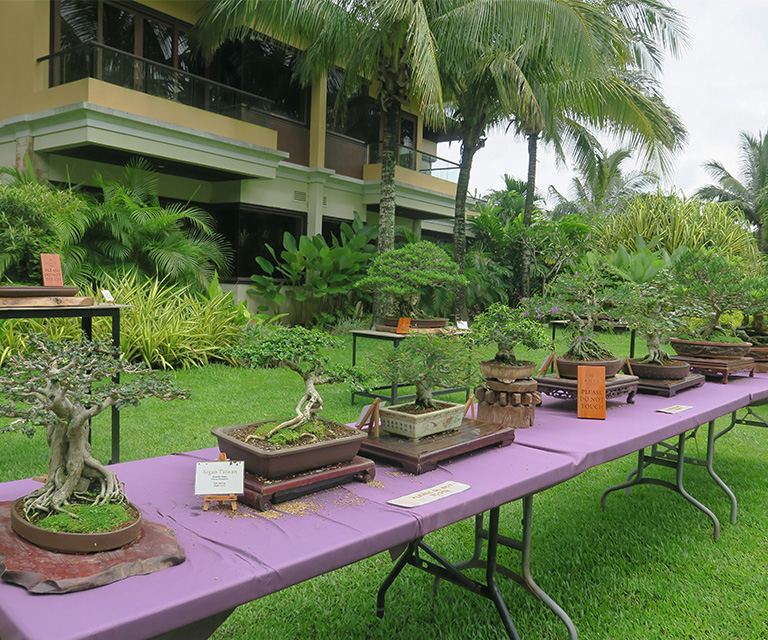
What held my attention longest were the suiseki and Angelito “BoyP” Pangilinan’s bonsai collection—living works shaped slowly over time. You could walk through the arrangement in ten minutes. Somehow, you don’t. The glass caught the light; the bonsai drew the eye downward and inward. Together, the works made the property feel less decorated than contemplative. Perhaps that is why the bonsai stayed with me. Like the resort itself, they reward patience.
Rooms That Let You Settle In
The villas share the same unhurried quality. They are beautifully appointed, but never excessive—the design grounded, personal, considered rather than standardized. The interiors, shaped by Manny Samson and Associates, work native references into places you don’t expect to find them. A headboard carries the weave of traditional banig; capiz appears quietly within a neutral palette; wicker sits against marble in a way that reads as heritage rather than theme.
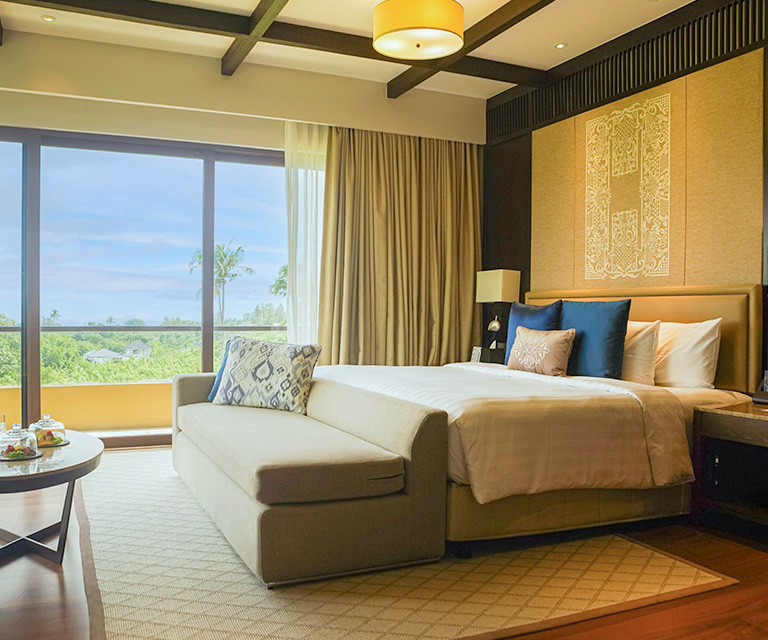
Bespoke details, small treats and quiet surprises are scattered through the room, making the stay feel composed rather than assembled. Nothing calls attention to itself, but the effect is cumulative: the villa becomes easier to inhabit with every passing hour.
Some hotels never let you forget you are being served. At Anya, I forgot about the service altogether and simply felt looked after. It is a different kind of hospitality entirely.
Hospitality Without the Script
Much of that comes down to the people.
The staff’s warmth doesn’t read as rehearsed. They aren’t trying to demonstrate attentiveness—they simply pay it. A greeting arrives when it is welcome; a pause is respected when the room calls for one.
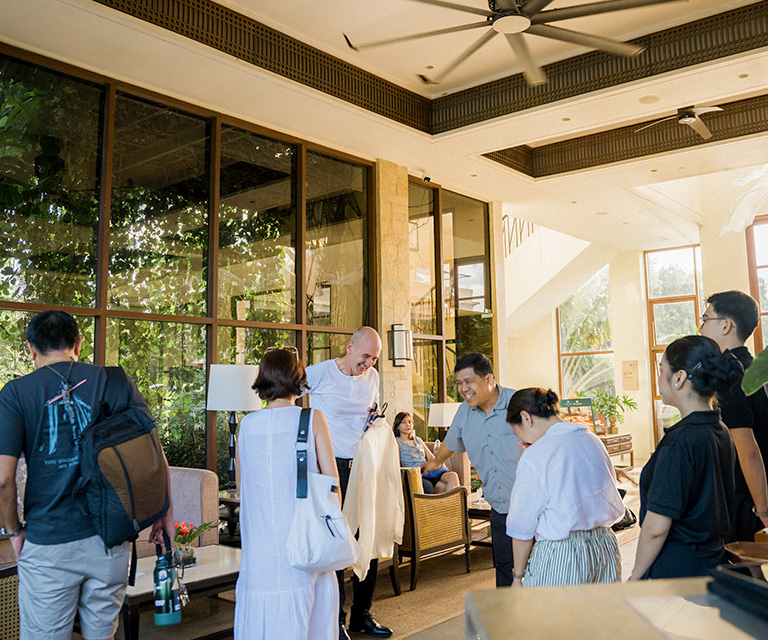
You sense that continuity in people like Resort Manager Melody Amacio, whose presence helps give the resort its sense of familiarity. Around the property, regulars are greeted by name, and the exchanges that follow have the ease of real conversation rather than the scripted small talk of a service industry playing at familiarity.
That kind of ease takes time to build.
Good hospitality knows when someone needs something. Great hospitality knows when to leave them alone. That distinction matters in a place like this. A sanctuary isn’t somewhere you are constantly asked what you need. Sometimes it is simply somewhere you are allowed to be.
Confidence at the Table
The same holds at Samira.
There is something almost classical about the restaurant—not old-fashioned, but grounded in the fundamentals of good cooking, its character built on excellence rather than spectacle.
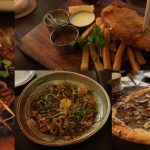
For the anniversary dinner, Chef Chele Gonzalez was joined by Chef James Antolin of Ikomai Tochi for a menu that moved between San Sebastián and Nagoya: Uni Cream Soba and Gildas,
Shrimp Chawan Mushi and Ibérico Pork Skewers. The dishes brought together contrasting textures and temperatures without making the pairing feel forced—the richness of uni against the clean bite of soba, the delicate custard of chawan mushi beside the char and savor of the skewers.
With two accomplished chefs sharing one kitchen, the evening could easily have become about technique or ego. Instead, it felt generous and unhurried, even as serious cooking unfolded behind it. A live dessert station kept things informal.
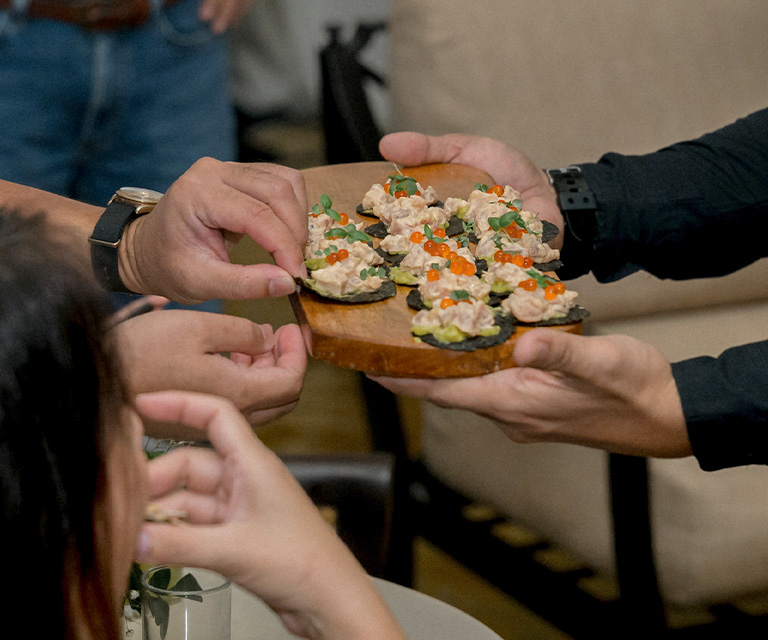
The food had ambition. The evening didn’t need to prove it.
Nine Years In
The anniversary also offered a glimpse of what comes next. Anya’s inclusion in the Michelin Guide’s hotel selection for the Philippines is no small thing, but General Manager Mikel Arriet seemed more interested in where the resort is headed.
Our anniversary is not only about looking back at what we’ve accomplished, but about recognising the experiences that continue to shape us and inspire what comes next,”
he said.
Phase 3 will bring new, more spacious villas, scheduled to open by 2028.
Anya is growing—but not as a resort reinventing itself. If anything, it seems to be growing more comfortable with its own rhythm.
Nine years on, its greatest luxury may be the hardest thing to photograph: quiet. Not emptiness or isolation, but the ease that settles over a place when nothing demands your attention. The bamboo moves with the wind. Dinner unfolds without ceremony. An afternoon can disappear into the villa, and no one insists on turning it into an experience. You arrive at Anya expecting a beautiful place to stay. Give it time, and you realize you came here to retreat.
Chef Tatung Sarthou is a cook who talks too much, writes a bit, and occasionally wins awards for both. He’s the man who started Simpol, where he tries to make sense of Filipino cooking—and life—one guisa at a time.
Read more Stories on Simpol.ph
Ipad Kids Are Groomed Into Violence
The Raging Puddles Of Unsafe Roads: It’s Time For Accountability