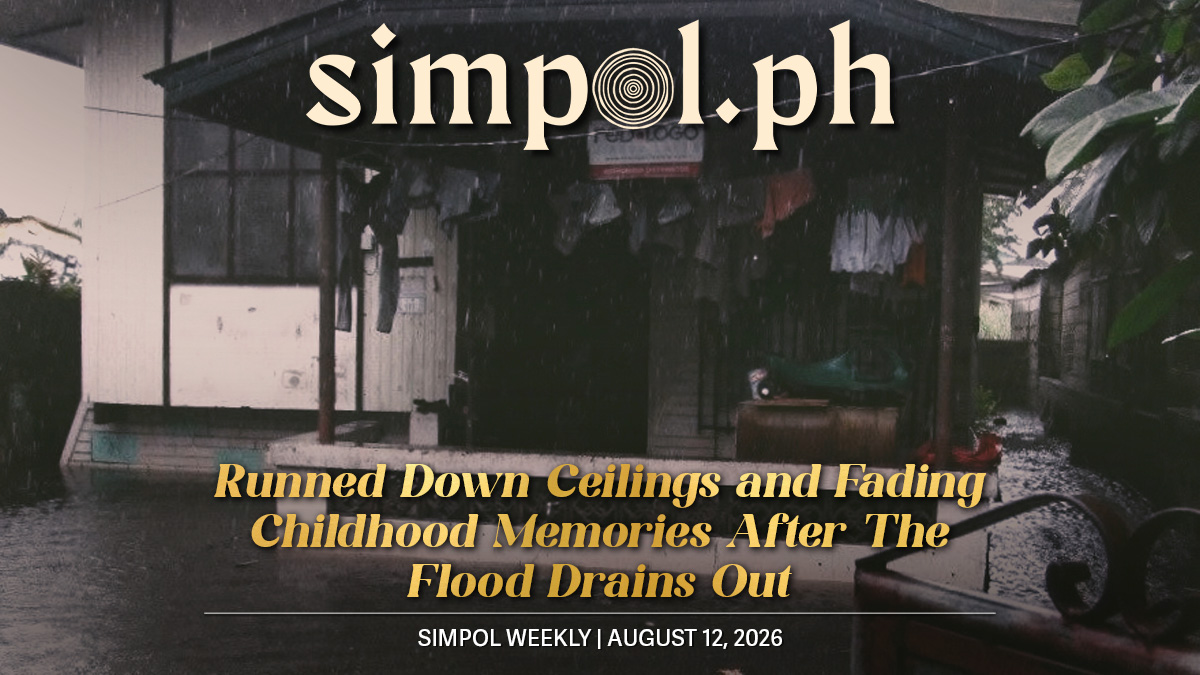
Every year, there is this growing tree of worries that everything we own will just get washed away all over again. Honestly, it has been like this every single year—everything that’s yours is flooded, taken by the tide.
It feels as if having everything taken from you is practically mandatory at this point.
When the storms finally calm down, the rain gets lighter, and the flood leaves, our bodies are left completely weakened after the limas. We try to get our rest and recover ourselves, relying on our innate hallmark of survival and resiliency to feel lucky enough to survive another typhoon.
It leaves us asking: what’s really left of us now?
Tracing What Once Was
First, as the water marks become visible on the wooden walls of our homes, we let out a quiet sigh of relief because we finally get a hold of how high the level of the flood reached.
In that moment, you feel like you owe yourself an apology for frantically being busy lifting your appliances to the immediate high sill or wherever felt safe. However, a crippling worry quickly follows: just how will we manage if it comes back, and by then it’s even worse than what we got today? Consequently, that initial sigh gets replaced by the harsh reality of the now—safe, for now at least.
Furthermore, when the general cleaning or limas dries down, it’s (almost) like your home again.
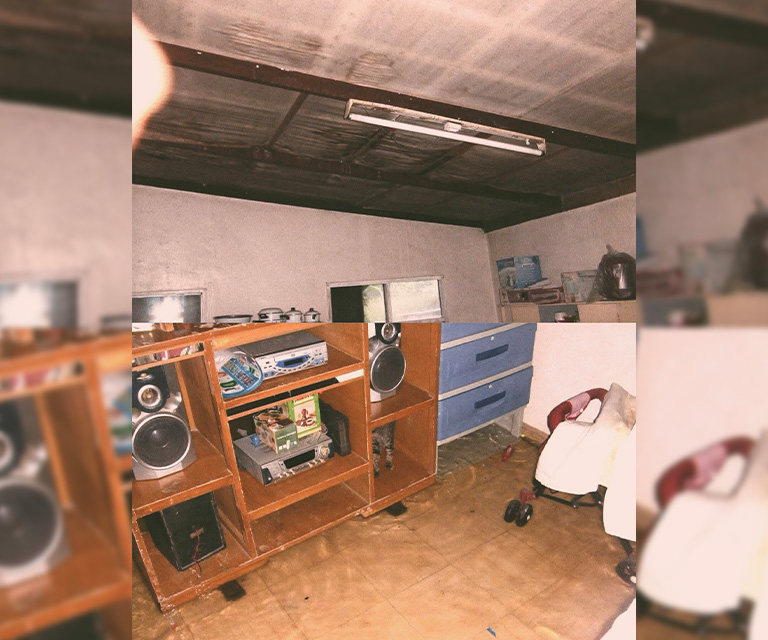
We start rambling down on our torn-down things, eliminating which ones get disposed of and which ones we keep, even though neither of them was truly safe from the floodwater.
Living in a cursed country will really hone your ability to say goodbye, and you just get tougher because it’s the only way. While some things can be washed and cleaned again, typhoons just know their way around, and it’s automatic that something has to go.
And just after everything, we just forget.
Over and over again.
Sanayan na lang.
Eventually, a pile of wet photos finds your hand, and you realize your only kept photo of your grandfather has joined the flood’s tide. As you count the years since he left, it also counts the years you’ve been doing this for your home. A hollow feeling finds your stomach as you start recalling what he used to look like. Like the flood, he flew with no cathartic goodbye—just nature being nature, and human life being fragile.
Almost all of the faces in the photos were washed off.
And forgetting does hurt.
Puddles Of Endurance
Moreover, so many of us grew up with a deep feeling of discomfort whenever we hear the rain. It means our house might be subjected to the flood again. Naturally, it’s funny yet painful how we ask ourselves. How come this has become our default now?
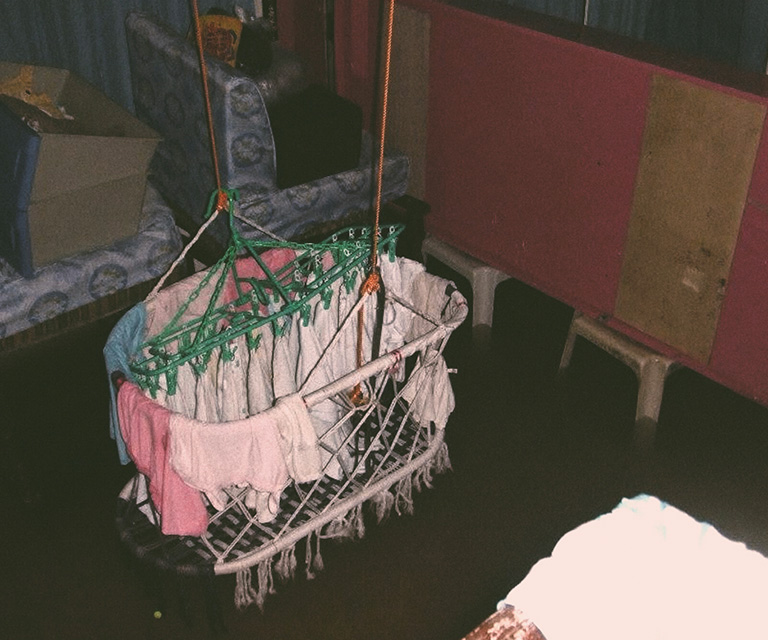
Expressing this exact sentiment, Margaux Brioso. A friend from the arts and from calamity who has lived in Parañaque from her very own home since she was born—shared in a post:
Elementary pa lang ako lagpas tao na baha sa Parañaque, ngayon nagtatrabaho na ako, ganun parin.”
In many cases, the sheer mental toll drives us out of our own homes.
We end up seeking refuge elsewhere—made possible only by the generosity of good friends who open their doors to welcome us in. Being anywhere else feels infinitely better than sitting in the dark, helplessly watching the muddy waters creep up your living room walls hour by hour.
Taking shelter elsewhere offers a temporary illusion of peace, a brief distraction that does the trick for the moment. But no matter how dry or warm you are under someone else’s roof, your mind stays anchored back home. Plagued by a nagging dread. You hope your dog is safe and perched up in a high chair.
What if the water rises just a few inches higher?
We Get Tougher And, Well, Different
Meanwhile, today in a more liberated era, every time it pours a little, people are quick to be the first to reference Bong Joon-ho’s famous Parasite reference—remarking on how the sky will be blue again with no pollution from the comfort of their sports cars, all thanks to the rain last night.
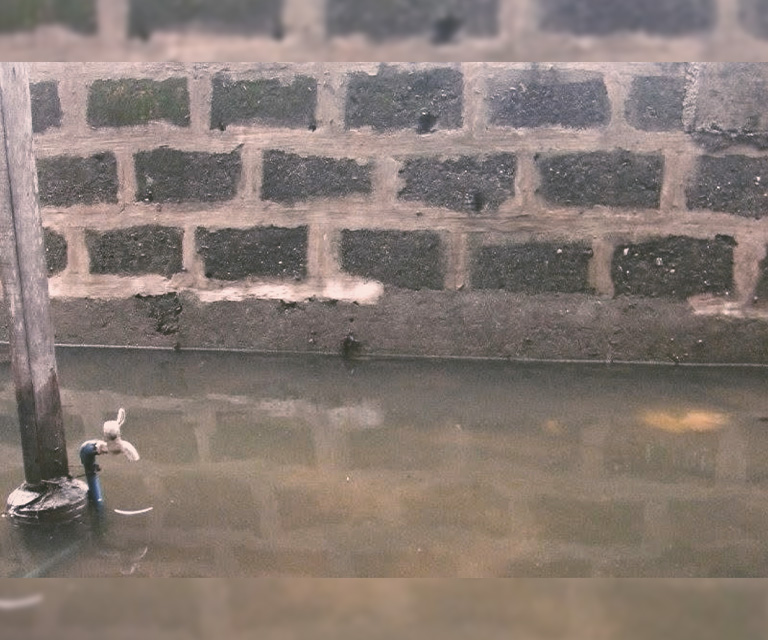
Because of this contrast, you sometimes ask yourself: did we all really deserve a lampas-tao level of flood?
Just what if. If we all got to experience the exact same typhoon experience regardless of social class, would we finally learn better?
After all, you eventually brush off those heavy thoughts. Replacing them with the practical run of how you will survive another calamity life tomorrow.
In the end, it’s just what we do.
Read more Stories on Simpol.ph
The Changing Blueprint of “Success” across Generations
Precious Pages Launches CAT-HA to Make Filipino Stories Free and Accessible
Which is harder, to be an Artist or to not be one in the Philippines?