Have you ever wondered where our everyday slangs (even catch phrases) come from? Sometimes, popular words spring from surprising historical roots, turning fictional creations into permanent fixtures of daily language.
The Birth of The Pioneer Pinoy Comic Character
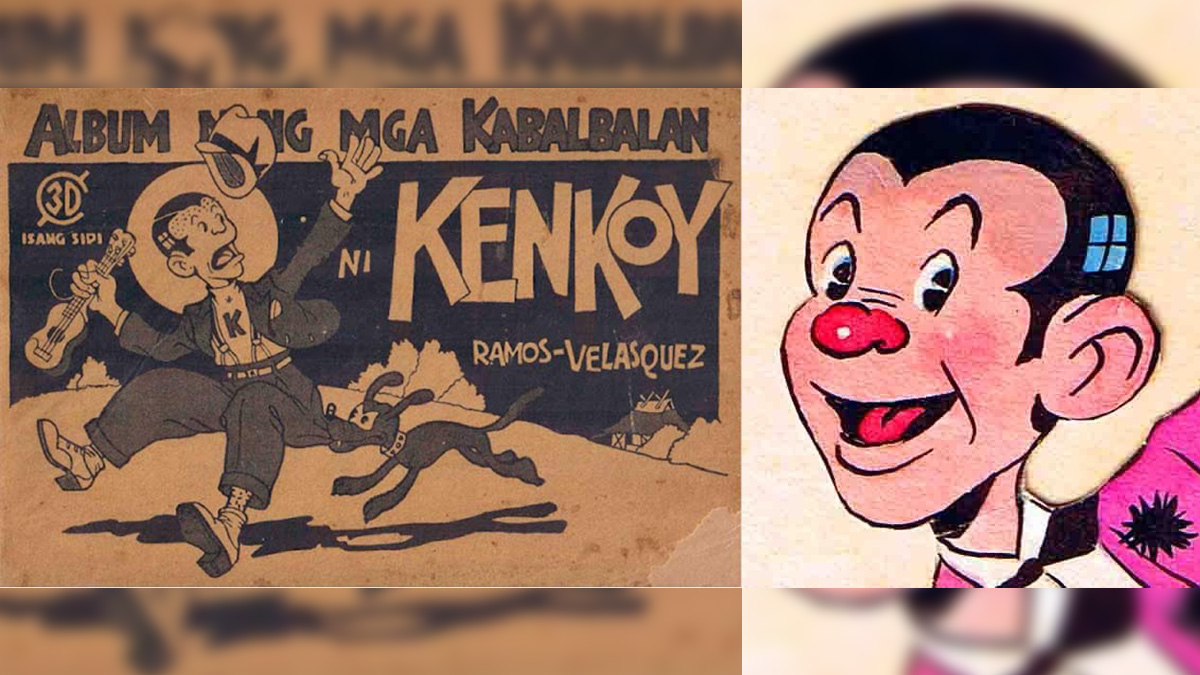
The Filipino word “kenkoy,” was commonly used to describe someone funny, goofy, or comically awkward. Now we just learned that it was actually originated from a comic-strip character introduced nearly a century ago? On January 11, 1929, a character named Francisco “Kenkoy” Harabas made his debut in the Tagalog magazine Liwayway. Created by illustrator Antonio “Tony” Velasquez, with writer Romualdo Ramos providing the original story, Kenkoy became one of the most influential figures in the early development of Philippine komiks.
A Satirical Allegory on American Influences
However, Kenkoy was much more than just a character meant to entertain readers. Set during the American colonial period, his adventures portrayed a Filipino fascinated by Western fashion, language, and behavior.
He wore oversized American-style clothing, displayed exaggerated mannerisms, and spoke in a humorous mixture of Tagalog, English, and Spanish. Through these traits, Kenkoy became a satirical reflection of the growing American influence on Filipino society. Consequently, his stories humorously explored changing lifestyles, social aspirations, language, and the desire of some Filipinos to imitate foreign customs.
From the Page to Everyday Speech
As Kenkoy’s popularity grew, his name gradually moved beyond the pages of Liwayway and entered everyday Filipino speech. Eventually, the words “kenkoy” and “kengkoy” became associated with someone acting humorously, foolishly, awkwardly, or in an exaggeratedly comical manner. Depending on the context, the expression can be affectionate, playful, or mildly critical. What began as the name of a fictional character soon became a familiar part of Filipino vocabulary.
Furthermore, Kenkoy’s success helped establish Velasquez as a pioneer of the Philippine komiks industry, shaping serialized comic storytelling. Nearly a century after his debut, his linguistic footprint remains recognizable, even among those who have never seen the original comic strip. Ultimately, from a fictional character in 1929 to a word used in daily conversation, Kenkoy proves how popular culture can leave a lasting legacy on language.
Read more stories on Simpol.ph
PAGPAG THROUGH DIPLOMA: Symone Estabillo Did It!