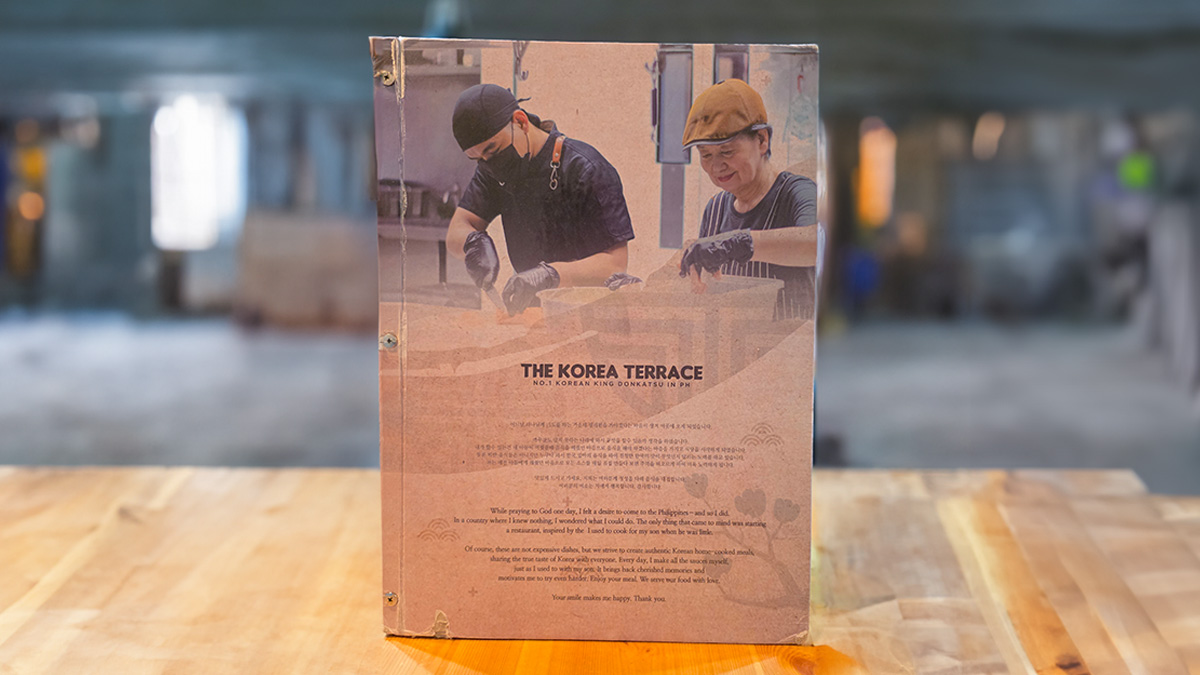
In Pasig City, where new restaurants tend to arrive with a kind of marketing momentum—bright signage, curated interiors, menus built for sharing before they’re even tasted—The Korea Terrace moves against that current. It sits in its space without urgency, as if it has already decided it doesn’t need to compete for attention.
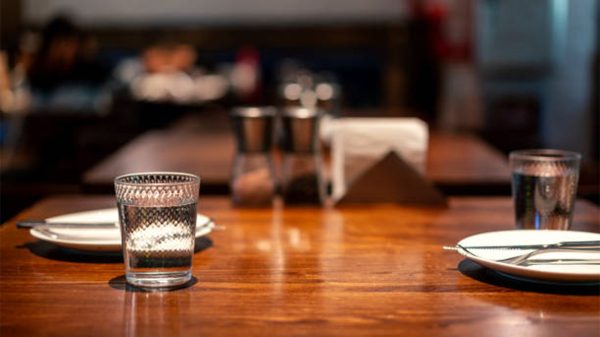
The interior is restrained in a way that feels intentional rather than budget-driven. Warm lighting softens the edges of the room. Wood tones, clean surfaces, and an uncluttered layout give it a calmness that’s increasingly rare in Metro Manila dining. Nothing feels staged for effect, which, ironically, becomes its own kind of statement.
What stands out most is how little the restaurant tries to translate itself. It is Korean-owned, and that fact is not highlighted in a performative way—it simply shows up in the rhythm of service, the pacing of dishes, the consistency of execution. There’s a quiet confidence in that.
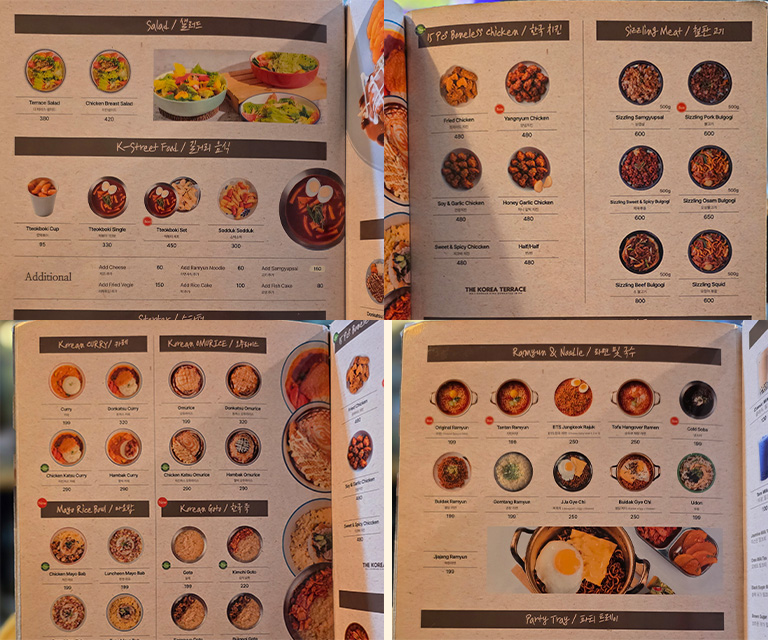
The food arrives without much ceremony. Tteokbokki comes first, the kind of dish that doesn’t try to adjust its personality for the table. It’s straightforward—spicy, chewy, familiar if you’ve had it before, but still assertive enough to hold its shape in memory. The tonkatsu follows, crisp at the edges, steady in the middle, plated without unnecessary framing. Korean fried chicken lands last, glossy but not overdone, the kind of glaze that sticks more than it shines.
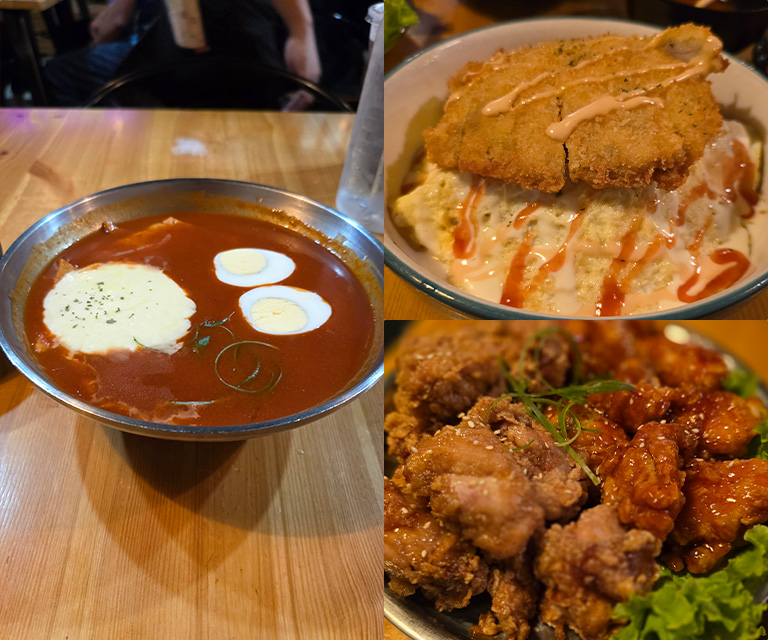
Nothing here feels like it’s chasing reinterpretation. The flavors don’t bend toward novelty or trend. They stay within themselves, which is rarer than it sounds in a city where “fusion” often means dilution.
The crowd reflects that same mix of curiosity and familiarity. You get office workers unwinding after work, groups of friends splitting dishes without overthinking it, and younger diners—Gen Z types who’ve grown up fluent in food content—quietly toggling between eating and taking photos, though the space doesn’t really demand either. It’s not built for content, and that’s part of its appeal.
There’s a kind of restraint in the way everything is paced. Plates don’t arrive in a rush. No one is trying to steer the experience toward a peak moment. Even the table conversation seems to settle into the rhythm of the food—unforced, slightly unhurried, comfortable in its own tempo.
What the Korean ownership brings isn’t spectacle or branding, but continuity. The cooking feels anchored, as if it’s less about presentation and more about preservation of technique. You can taste that in the way seasoning is handled, in how textures are kept distinct instead of layered into excess.
And so the meal doesn’t really end so much as it tapers off. There’s no sharp conclusion, no deliberate finale—just the slow easing back into the noise of the city outside. The city feels a little faster once you step out again, as if the restaurant had briefly held time in place and then released it without comment.
Read more Stories on Simpol.ph
Michelin-starred chef Kisu Bang brings Korean flavors to Manila
Unlocking Korea’s Elite Aesthetic World: A First-Class Beauty Journey for Filipinos