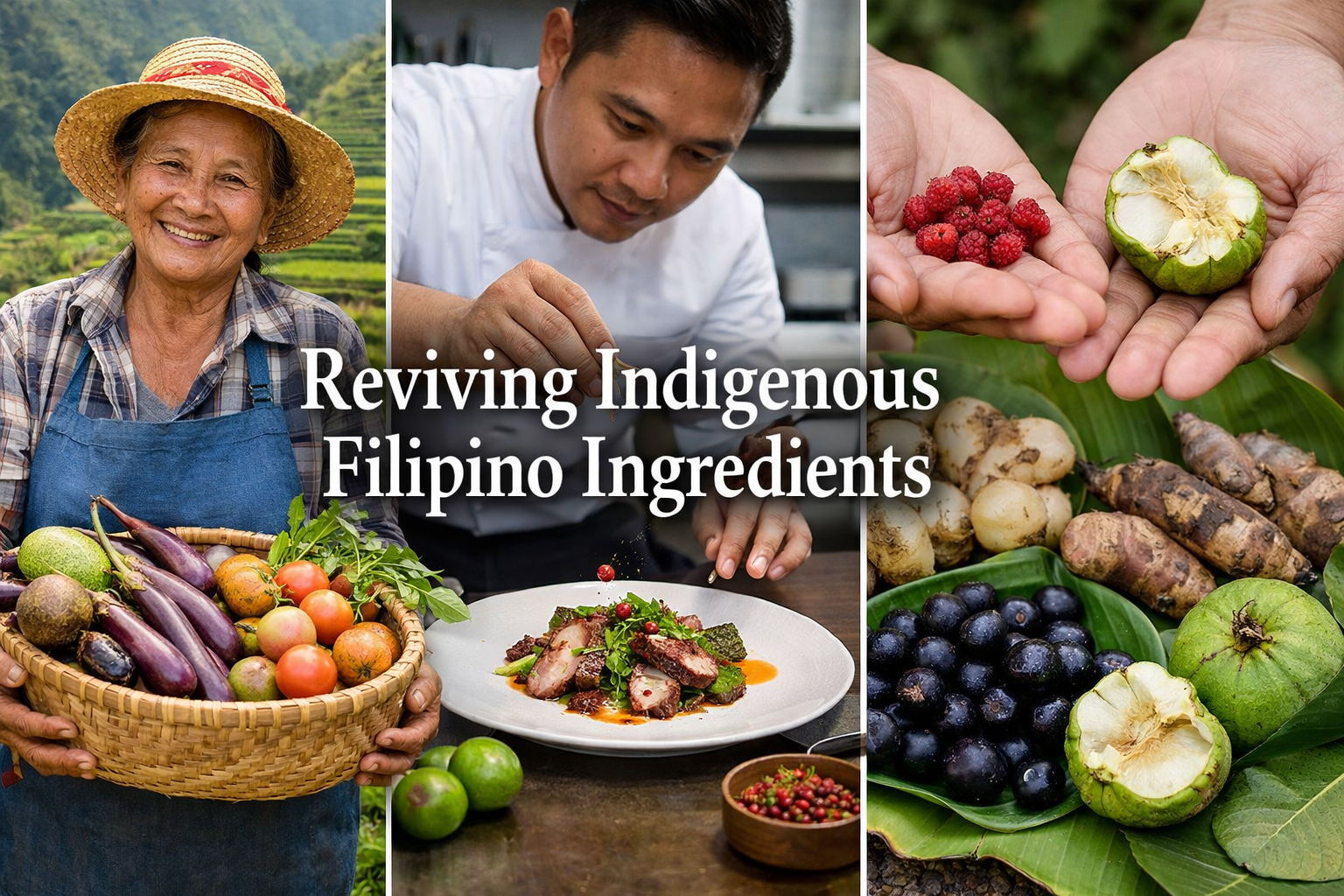
The growing interest in indigenous Filipino ingredients offers more than culinary novelty—it reconnects communities to biodiversity, heritage farming practices, and sustainable food systems. For many, engaging with these foods provides a deeper understanding of how local ecosystems shape everyday meals and cultural identity. This shift matters because it encourages more conscious consumption while supporting traditional knowledge that has long been at risk of fading.
From Foraged Foods to Contemporary Menus
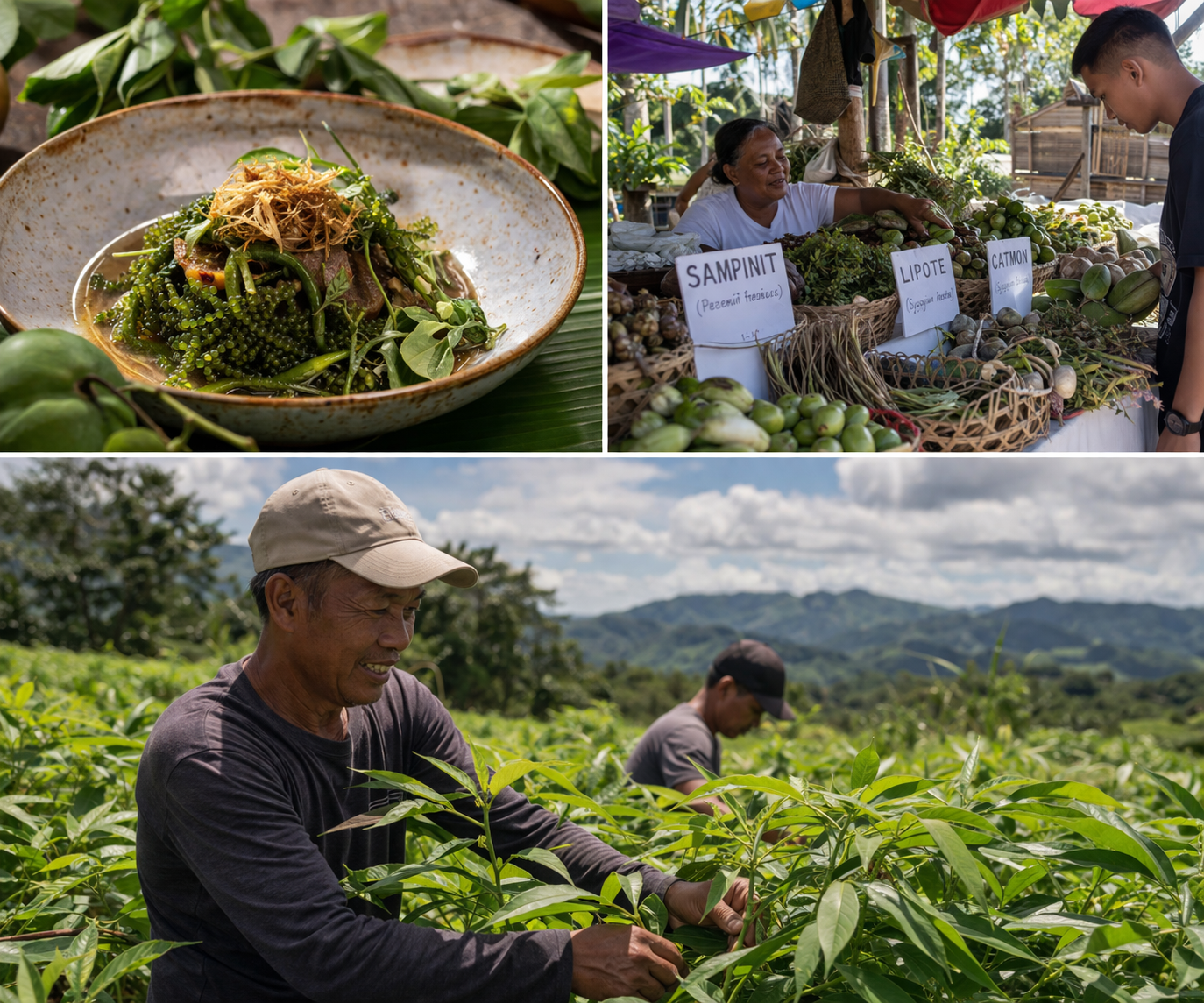
Across the Philippines, chefs, farmers, and food advocates are increasingly turning to wild and regional ingredients such as sampinit, lipote, and catmon. Once considered marginal or seasonal foraged foods, these are now being incorporated into contemporary menus, signaling a broader movement toward culinary rediscovery. Heirloom produce and livestock, cultivated through ancestral methods, are also gaining attention for their resilience and flavor complexity, reinforcing the value of indigenous agricultural systems.
Structural Shift in Philippine Culinary Systems
Industry observers note that this revival is not simply aesthetic or trend-driven, but structural. It reflects a growing awareness of food sovereignty and environmental sustainability. Restaurants and local producers are collaborating more closely, ensuring that sourcing practices honor both ecological balance and cultural context.
Voices from Heritage Food Research
A culinary researcher involved in heritage food mapping described the shift as “a necessary return to what was always available but often overlooked,” emphasizing that indigenous ingredients “carry both ecological intelligence and cultural memory that modern kitchens are only beginning to understand.” This perspective is echoed in farm-to-table initiatives, where growers report increased demand for native crops that were previously underutilized or dismissed as rural staples.
Farmers and the Revival of Heirloom Agriculture
Small-scale farmers have also observed renewed interest in heirloom cultivation. One farmer cooperative in Northern Luzon shared that restoring traditional planting methods has improved soil health and strengthened community food security. While markets remain limited, they noted that chef partnerships have created more stable opportunities for indigenous harvests.
Taste, Memory, and Consumer Experience
From a consumer standpoint, the experience extends beyond taste. Diners encountering these ingredients often describe them as unfamiliar yet grounding, offering flavors that reflect landscapes rather than industrial production systems. This sensory connection reinforces the idea that food is both sustenance and storytelling.
The Significance of This Shift in Contemporary Food Culture
This movement is significant because it reshapes how food systems are understood—linking consumption to ecology, history, and cultural preservation. It highlights the importance of protecting biodiversity while empowering local producers whose knowledge sustains these ingredients. More importantly, it encourages a return to food that reflects place, season, and tradition rather than uniform global trends.
For communities and consumers alike, engaging with indigenous ingredients supports more resilient food networks. It also strengthens cultural continuity by keeping ancestral practices active in modern kitchens. In doing so, it transforms everyday meals into acts of preservation and awareness.
Toward a More Resilient Food Future
The continued revival of indigenous ingredients signals a broader reorientation in Filipino food culture—one that values ecological knowledge as much as culinary innovation. As these practices gain traction, they offer a pathway toward a more resilient, grounded, and culturally rooted food future.
Read more Stories on Simpol.ph
Filipino Food Month 2026 Opens in Iloilo City
A Christmas That Stays Close to Home
When Making a Living Feels Like Dying: The Hidden Cost of Running a Business in the Philippines