


A Garden of Wonder at a Butterfly Sanctuary in the Philippines
Each morning in Gasan, Marinduque, the air flickers with color—not from flame or fabric, but from the wings of butterflies rising gently through netted gardens. When you step into one of these butterfly sanctuaries in the Philippines, you enter a living, breathing haven where hundreds of butterflies—big and small, in hues of deep blue, fiery orange, and sunny yellow—flutter among flowering plants.
The experience offers more than visual beauty. It fills you with childlike wonder and a calming sense of peace. For Simpol readers dreaming of quiet getaways or meaningful family adventures, this is the kind of moment that stays with you—a vivid memory shaped by stillness and discovery.
Here on this volcanic island known for Moriones masks and dramatic coastlines, farming takes on a gentler rhythm—one rooted in patience, ecology, and quiet transformation.
From Hobby to Heritage: The Rise of Butterfly Farming in Marinduque
In the 1960s, Romeo Lumawig of Boac began raising butterflies as a hobby. Instead of collecting dried specimens, he chose to nurture them alive. His small act of care sparked a movement that would eventually grow into a thriving local industry.
Today, towns like Boac and Gasan have embraced butterfly farming in Marinduque as both livelihood and legacy. Marinduque now supplies the majority of the Philippines’ butterfly and pupae exports, reaching clients in the U.S., Europe, and New Zealand.
Farmers raise butterflies with remarkable dedication. From egg to caterpillar, from chrysalis to flight, each stage requires close attention. These farms have become more than just workplaces; they serve as living laboratories where science, tradition, and environmental stewardship converge.
Read more on Marinduque on Discovering Marinduque: A Flavorful Escape into the Heart of the Philippines
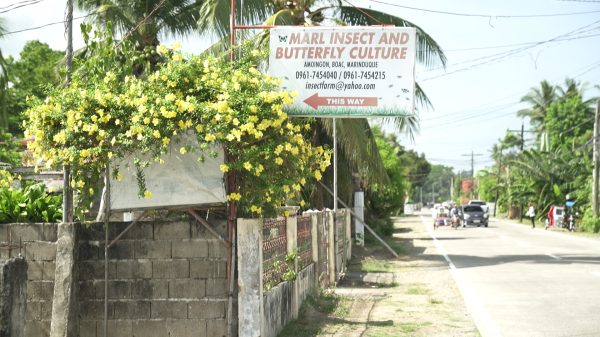
Marl Insects & Butterfly Culture: A Leading Butterfly Farm in Marinduque
One standout example is Marl Insects & Butterfly Culture, located along Cawit Pier Road in Boac City. Leodegario Layron founded the farm when he was just 15 years old. Today, he and his wife Cheryl Layron run the business together, turning their small sanctuary into a flourishing eco-tourism and export hub.
“Sa Marinduque, ang tawag namin sa butterfly ay bila-bila,” Cheryl shares, using the island’s endearing local term.
Cheryl explains that 70% to 80% of the butterfly pupae exported abroad come from their farm. They release another 10% into the wild to help support local ecosystems. Their butterflies travel far and wide, yet the care behind each one begins right here—with host plants, netted gardens, and a hands-on approach.
You can visit them at Marl Insects & Butterfly Culture, Cawit Pier Road, Boac, Marinduque.
From school tours to weddings, their butterflies bring joy to people of all ages. More importantly, they raise awareness about nature’s beauty and the value of nurturing it.
Butterfly Release in the Philippines: A Symbolic and Sustainable Trend With Real Roots
In recent years, the practice of releasing butterflies at weddings and special events has grown in popularity across the Philippines and around the world. These symbolic gestures represent transformation, hope, and new beginnings.
Yet behind the magic lies a lesser-known reality: raising butterflies is no easy task. Families like the Layrons dedicate time, skill, and care to ensure each butterfly is healthy and vibrant. The practice isn’t just beautiful—it’s intentional.
This growing trend offers a chance to reflect—and ask deeper questions. Instead of seeing butterflies only as ceremonial accents, we can start asking: How are these butterflies raised? Who takes care of them? And what does their brief presence say about the kind of world we want to create?
How to Attract Butterflies Where You Live: Planting for a Healthier Ecosystem
Rather than relying on butterfly releases for special occasions, consider creating environments where butterflies naturally thrive.
A healthy ecosystem attracts butterflies when we provide the right conditions. With a few simple changes, you can transform your own space into a welcoming habitat.
Here’s how to get started:
- Plant calamansi—a host for native caterpillars
- Add aratiles (Muntingia calabura)—a native tree that supports pollinators
- Include nectar-rich blooms like lantana, cosmos, and blue pea
- Avoid pesticides and herbicides
- Offer shallow water sources for hydration
You don’t need a big yard. Even a balcony or school garden can make a difference. By planting with intention, you invite butterflies to become part of your daily life—not just a fleeting spectacle.
Marinduque Butterfly Farms: Where Livelihood Meets Ecology
The Layrons’ story represents just one thread in Marinduque’s growing tapestry of butterfly farming. In Gasan, the Marinduque Lepidoptera Farm, founded by Dr. Carmelito Pe Sevilla and his wife, has evolved from a backyard project into a respected global exporter. The couple also helped establish the Gasan Butterfly Breeders Multi-Purpose Cooperative, which now includes over 70 members.
Farmers across the island tend to host plants, monitor pupae, and manage delicate life cycles with skill and dedication. Their work supports biodiversity while offering meaningful livelihoods.
These farms do more than raise butterflies. They preserve native plants, educate visitors, and sustain traditions rooted in harmony with nature.
Bila-Bila Festival in Marinduque: A Celebration of Wings and Community
Every April, Boac comes alive for the Bila-Bila Festival—a vibrant tribute to butterflies and the people who raise them. The festival features costumed parades, open gardens, educational exhibits, and a spirit of shared celebration.
Government agencies, including the Department of Trade and Industry, have supported these efforts through training, marketing, and infrastructure development. Their backing helps smallholders modernize without losing the traditional knowledge that makes this industry so unique.
As a result, Marinduque has earned recognition as a hub for sustainable butterfly breeding in the Philippines.
Think Beyond the Flutter
Butterfly farming may seem delicate, even decorative at first glance. But when you look closer, you’ll find a quiet network at work—farmers raising each life stage by hand, families depending on the harvest, and ecosystems growing healthier because of it.
This practice goes far beyond trend or tradition. It invites us to reimagine how we live with nature.
Rather than releasing butterflies for a fleeting moment, why not create spaces where they can thrive year-round?
Start small. Grow native plants. Let the garden get a little wild. Welcome imperfection—it means life is happening. By avoiding pesticides and welcoming wildness into your space, you begin to build an environment that invites butterflies—not just to pass through, but to stay.
In doing so, you don’t just support pollinators. You reconnect with natural cycles. You give back to the land in the simplest, most joyful way possible.
Because when we plant for life—not just beauty—we create places where butterflies, and so much more, can truly belong. And sometimes, wonder really does arrive on wings.

















1 Comment. Leave new
Hi are you offering training with tesda certificate po?
# contact nos 0962 886 3823