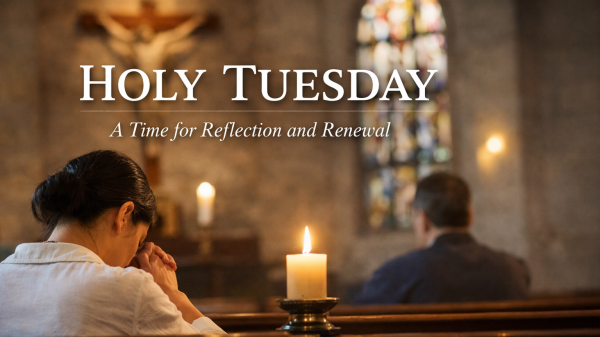
In the Philippines, Semana Santa (Holy Week) is deeply woven into the national identity. However, the 2026 energy crisis and rising inflation have undeniably shifted how the nation observes it. Celebrating this sacred season does not have to be a heavy financial burden; instead, it can be an opportunity to return to the core values of reflection, community, and resourcefulness.

A Rich Heritage of Semana Santa
During the sixteenth century, Spanish missionaries arrived in the Philippines with a clear goal: to spread Catholicism among the indigenous population. Early on, they faced a major challenge, as the local population was largely illiterate in Spanish and Latin. To bridge this gap, the Church used theatricality and sacred imagery to communicate the story of the Passion. Spanish friars successfully introduced Catholic rites, including elaborate public processions.
By the nineteenth century, Spanish influence had introduced specific customs such as the penitentes in Palo, Leyte (1894), where pioneer devotees wore robes to represent penance. Over time, local beliefs merged with Spanish practices, creating unique traditions such as the pabasa (chanting), the senakulo (Passion play), and the salubong.
The pabasa is perhaps the most distinctly Filipino of these traditions. It involves the uninterrupted chanting of the Pasyon, an epic poem about the life of Christ. While the content is Catholic, the melodic chanting style often echoes precolonial indigenous oral epics. Conversely, carrozas are elaborate floats featuring religious statues that are paraded through the streets across different stations.
There is also the panata (vow), which manifests through sacrificial acts of devotion—such as flagellation, carrying heavy crosses, and, in some areas, live crucifixion reenactments. These are often performed to fulfill a solemn promise to the divine.
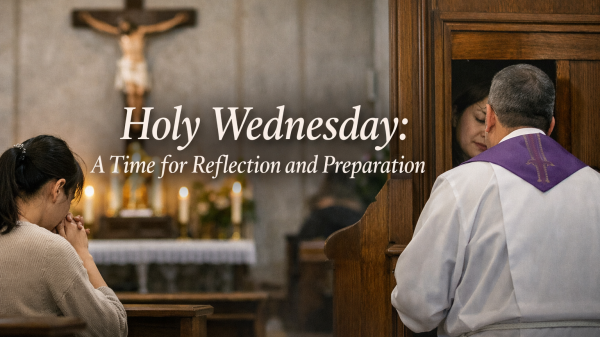
Filipinos also practice Visita Iglesia, a tradition involving the visitation of seven or fourteen churches on Maundy Thursday. Introduced by Augustinians in the 1560s, it was originally a Roman pilgrimage to the seven basilicas, later adapted to fit local geography.
Finally, the Moriones Festival of Marinduque commemorates Longinus, the Roman centurion who pierced Christ’s side; it is known for its colorful, hand-carved masks and Roman-inspired costumes.

The Relevance of Semana Santa to Filipinos
Despite modern shifts, Semana Santa remains a national anchor that integrates cultural, familial, and religious traditions. It effectively halts commerce as Filipinos return to their hometowns. While its roots lie in colonial missions, it has evolved into a uniquely Filipino phenomenon that serves as a cornerstone of the nation’s social fabric.
Over time, Catholicism adapted to indigenous Filipino sensibilities. For instance, devotees often express faith through physical contact—the pahalik, or the touching of the Santo Entierro. This practice makes the abstract concept of suffering for others tangible and deeply personal. The concept of panata transforms a religious obligation into a personal “debt of gratitude” (utang na loob).
Vira, a devotee, said;
“Sa mahigit dalawang dekada kong deboto ng Nazareno, walang Semana Santa na hindi ko sine-celebrate kasama ang family. Parang naging tradition na namin siya sa Poon. Ginagamit namin siyang time para magkasama ng pamilya at magnilay-nilay,”
These practices ensure that the season remains a lifelong expression of faith and a relevant part of the country’s identity.

Economic State as a Hindrance to the Sacred Event
The current energy crisis in the Philippines, fueled by geopolitical tensions in the Middle East, has significantly altered the landscape of Semana Santa 2026. While the cultural tradition of returning to one’s hometown remains resilient, the economic cost has forced a shift in how Filipinos travel.
Many Filipinos accustomed to the annual exodus are finding it difficult to plan trips to their provinces. According to the Parañaque Integrated Terminal Exchange (PITX), over 110,000 arrivals were recorded as of March 30, with volume expected to peak on Tuesday afternoon, March 31.
The terminal is also facing a limited supply of buses due to the impact of recent fuel price hikes. Currently, 70 percent of bus units are fully booked, leaving surges of chance passengers hoping for tickets.
This situation has created a shift in how some families observe the season. Instead of traveling, many are choosing to celebrate in nontraditional ways at home. Some set up makeshift swimming pools for children, while others prepare home-cooked traditional meals with elderly family members.
“Sa sobrang mahal ng gas ngayon, baka hindi na muna kami uuwi sa probinsya. Bawi na lang kami next year; mahalaga magkakasama naman kaming pamilya ngayon kahit nasa bahay lang,” says Ging, a mother of two.

Despite Adversities, a Lifetime of Devotion
Ultimately, the enduring power of Semana Santa lies in its ability to adapt without losing its essence. Whether it is a chanted Pasyon streamed over a patchy Wi-Fi connection or a family reunion shortened by the rising cost of fuel, the tradition remains a nonnegotiable anchor for the Filipino people.
For Filipinos, the cost of returning home is never merely a financial calculation; it is a necessary investment in the communal soul. As long as there are doors to be opened and families to gather, the rhythm of Holy Week will continue to endure. This demonstrates that while the economy may fluctuate, the need for a sacred space remains constant.
The cost of the journey may be high, but for a nation anchored in faith and panata, the peace found at the end of the road is always worth the price.
Read more Stories on Simpol.ph
Where Faith Begins Again: A Journey Into Holy Week Reflection
Holy Tuesday: Reflection, Reverence, and Renewal in Holy Week
Energy Shortages and the Filipino Workforce: Challenges and Adaptation