Every September in the Philippines, the season begins — almost quietly at first. Parols appear on sidewalks, mall elevators switch to carols, and Jose Mari Chan returns like a comforting ghost of years past. Christmas builds slowly but confidently here, stretching across four months of ritual, reunion, and spectacle.
For many, these early signs spark warmth. But for others, the season carries a different weight — one that’s harder to name, and even harder to admit. Quietly, Christmas becomes pressure: to be cheerful, generous, social, grateful — even when real life feels complicated, lonely, or painful.
And this isn’t unusual. It’s simply unspoken.
The Weight Behind the Longest Holiday Season
The world loves to point out that the Philippines has the longest Christmas celebration. It’s a source of pride, nostalgia, and sometimes self-aware humor.
But length has emotional gravity.
Data from the 2021 Young Adult Fertility and Sexuality Survey (YAFS5) shows a sharp rise in loneliness and depressive symptoms among Filipino youth compared to 2013. Cases of reported suicidal ideation also more than doubled — a trend mental health experts link to economic stress, social expectations, and emotional exhaustion.
According to psychologists from the National Center for Mental Health (NCMH), holiday months often amplify these feelings. The pressure to perform happiness — to show up smiling even when hurting — can make December feel heavier, not lighter.
Twinkling lights don’t always soften the ache.
A Story That Happens Quietly
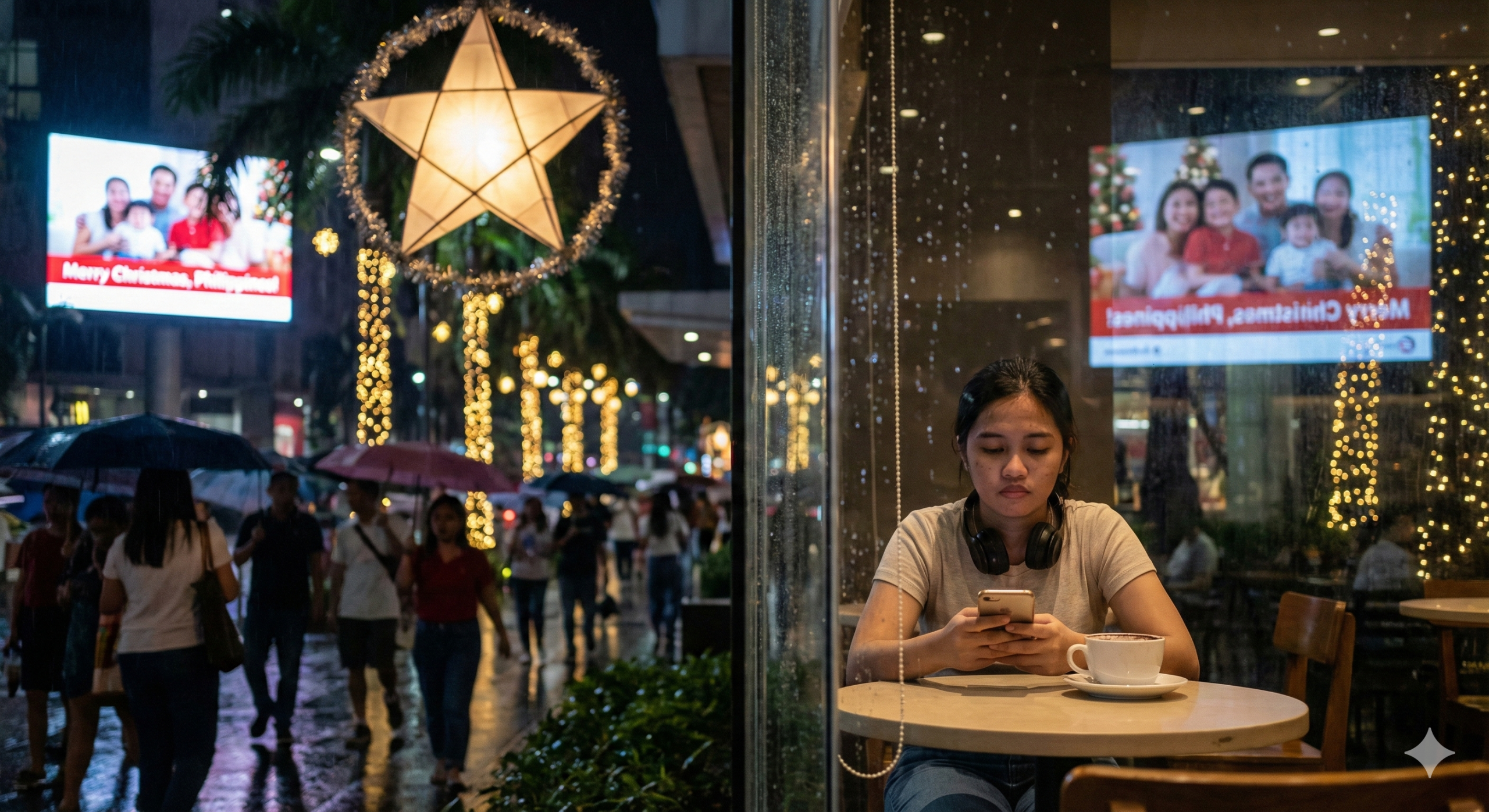
Last December, a 23-year-old call center agent in Quezon City — we’ll call her Mara — walked into a café filled with garlands and warm fairy lights. She ordered hot chocolate and scrolled through photos from a family Christmas dinner she couldn’t attend because of her shift schedule.
“It looked perfect,” she said. “But I kept thinking about our arguments this year. The pictures felt like pretend.”
She stayed until closing — not because she was festive, but because going home to an empty apartment felt heavier.
Her story isn’t dramatic. But it’s real — and common.
Distance, Duty, and the Ache of the Unsaid
For millions of Overseas Filipino Workers, Christmas is not just distance — it’s longing.
We’ve seen the headlines: nurses on night shift watching Noche Buena through a screen; seafarers docked far from home; household workers sending balikbayan boxes instead of hugs.
In one interview with a Philippine Daily Inquirer reporter, an OFW said:
“Christmas reminds me of every hug I can’t give, no matter how hard I work.”
Obligation can sometimes overshadow joy. Affection can turn into proof of sacrifice.
Loss Changes the Celebration
For those grieving, Christmas depression in the Philippines is often tied to memory:
A missing voice during carols.
A recipe no one can get quite right.
A chair at the table that stays empty.
Some families describe the first Christmas after a loss as something to “get through,” not celebrate. One mother interviewed by Rappler said, simply:
“They told me to celebrate because he would want that. But grief doesn’t follow a calendar.”
When We Pretend Everything Is Fine
Even in homes that appear complete, not everything feels joyful.
There are reunions where people avoid certain conversations.
Budgets are stretched thin for gifts no one wants to skip.
Smiles that feel rehearsed.
The Filipino value of hiya — that instinct to avoid stirring discomfort — means many stay silent, even when they’re overwhelmed. So people blend into the season. They say “Merry Christmas,” when what they really mean is:
I’m trying.
A Softer Way to Celebrate
If this season feels heavy, here’s a gentle truth:
You do not need to earn rest, joy, or softness.
Celebration doesn’t have to look big to be meaningful.
Sometimes, the most honest holiday looks like:
A simple Noche Buena.
A quiet morning.
A walk instead of a party.
A day of sleep — instead of a day of performance.
Traditions are inherited.
Healing is personal.
If You Need Help — You Deserve Help
Support exists — private, accessible, and judgment-free.
| Organization | Hotline | Details |
|---|---|---|
| National Center for Mental Health | 1553 / 0917-899-8727 | 24/7 crisis support |
| DOH HOPELINE | 2919 (Globe/TM) | Emotional support |
| In Touch Community Services | +632 8893-7603 | Anonymous support |
Reaching out is not a weakness. It’s care for your future self.
Light Returns
Christmas in the Philippines is built on reunion, food, music, faith, and memory. But there must also be room for those who move through the season quietly — those whose hearts need time, space, or stillness.
If this holiday feels heavy, you are not failing Christmas.
You are human.
Light doesn’t always come on schedule.
But like the parols that appear long before December begins —
It returns.
Slowly.
Quietly.
And eventually — brightly.
Read more Stories on Simpol.ph
A Christmas That Stays Close to Home
Bizu Patisserie Unveils Christmas Collection 2025: A Feast for the Senses
Why Online Scams in the Philippines Are Rising — And What We Can Do About It