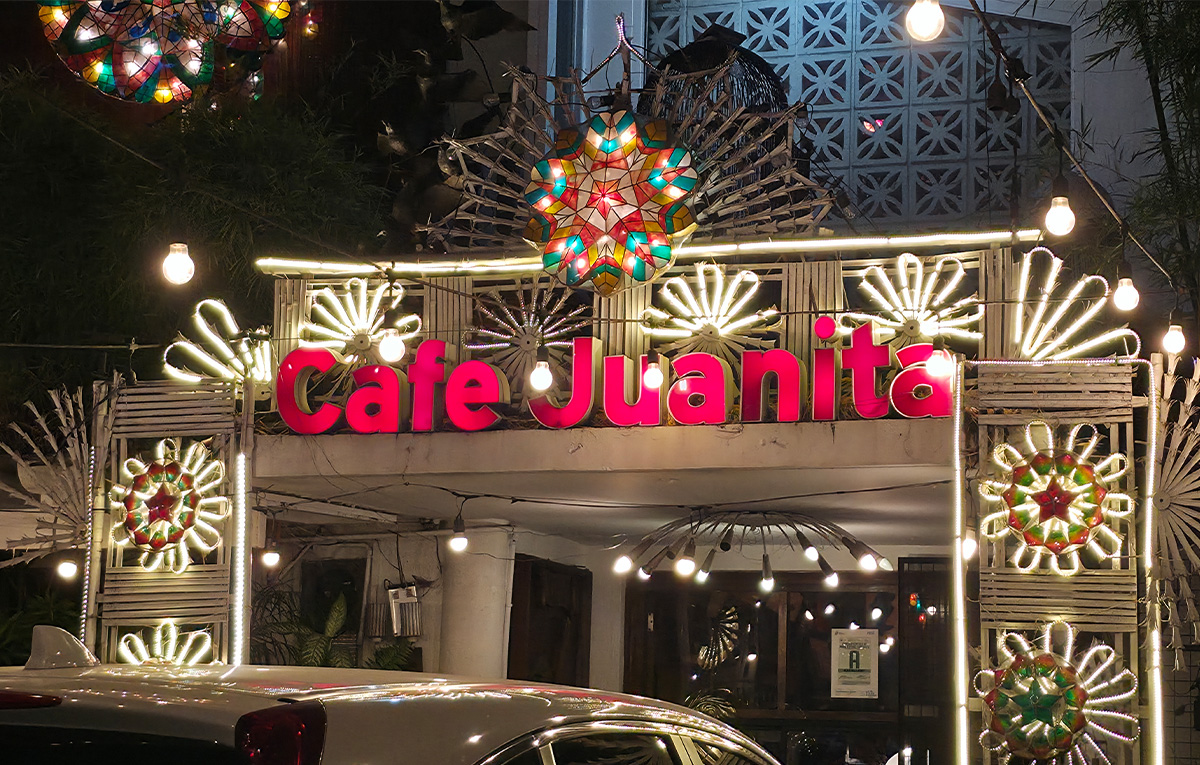
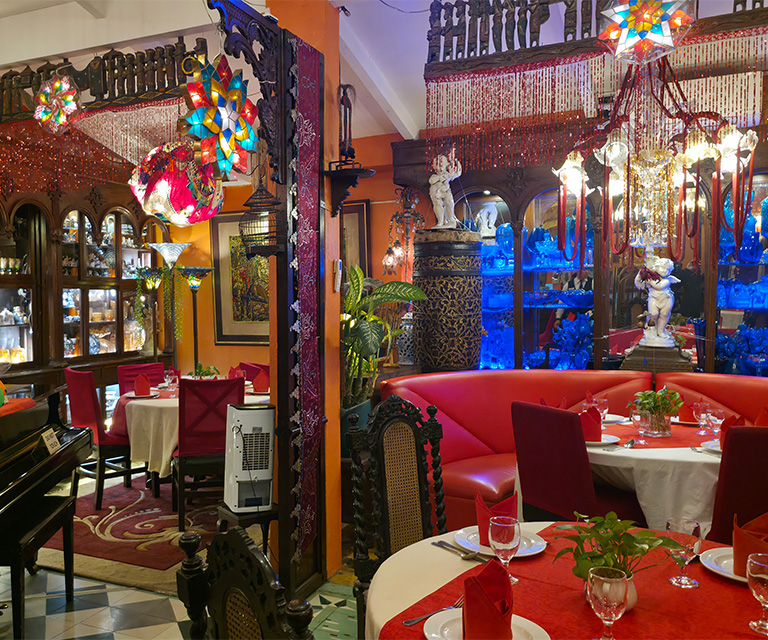
In a city where minimalist cafés and sterile dining rooms often blur into one endless Pinterest board, Cafe Juanita feels almost rebellious. Nothing about the place whispers restraint. It sings. Loudly. Dramatically. With chandeliers overhead, antique saints peering from crowded shelves, and embroidered fabrics draped across nearly every visible surface, the restaurant unfolds like the home of a glamorous Filipino aunt who never learned the meaning of “too much” — and frankly, thank God for that.
A Sensory Production of Maximalist Elegance
Dining at Cafe Juanita is less about simply eating and more about surrendering to a full sensory production. The moment the heavy wooden doors swing open, guests are transported into a fever dream of old Manila elegance and eccentric maximalism. Every corner begs for a photo. Every table looks like it belongs in a period film. One could spend twenty minutes just scanning the room and still discover another porcelain figurine, another vintage lamp, another velvet curtain tied dramatically to the side.
And yes, Gen Z would absolutely call it “main character energy.”
Yet beneath all the visual spectacle lies something increasingly rare in Metro Manila dining culture: sincerity. Cafe Juanita does not feel engineered for social media, even though social media loves it anyway. The place predates the era of curated aesthetics. Its cluttered beauty feels organic, accumulated over decades rather than assembled overnight by an interior designer chasing TikTok virality.
The vibe inside shifts depending on the hour. During lunch, families crowd large tables while titas exchange stories over steaming platters. At dinner, the lighting softens into amber hues, making the restaurant feel theatrical and intimate all at once. There is laughter everywhere — the loud, unfiltered kind that bounces off walls and spills into neighboring tables. No one seems particularly interested in whispering here.
The Abundance of the Filipino Table
The food arrives with the same abundance as the décor.
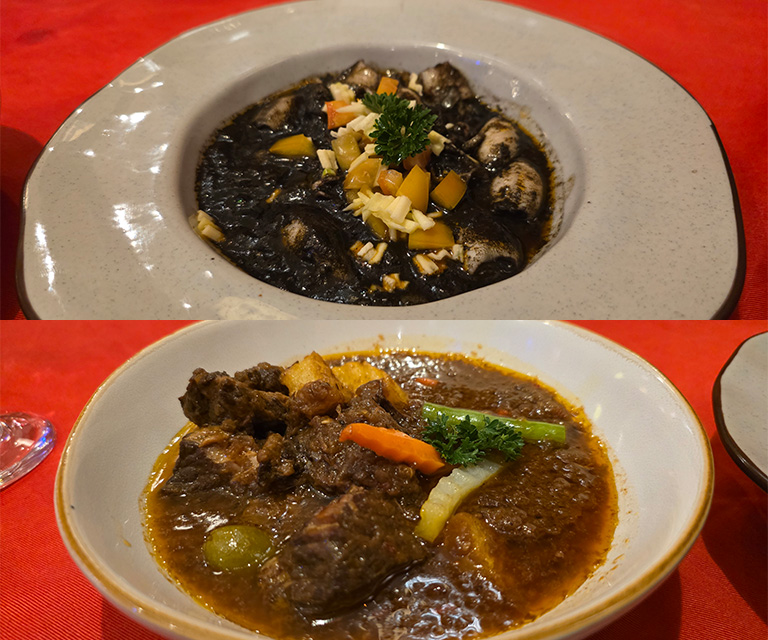
The Beef Kaldereta comes first, slow-cooked until the meat nearly surrenders at the touch of a fork. The sauce is thick, deeply savory, and layered with the kind of richness that tastes like it has been simmering for generations. It is comforting in the way only Filipino stew can be — warm, familiar, and unapologetically hearty.
Then comes the Baby Squid Adobo, perhaps one of the restaurant’s most memorable dishes. The squid carries that signature adobo balance of saltiness, acidity, and umami, while the sauce clings to every bite with velvety intensity. Paired with steaming rice, it becomes dangerously addictive — the kind of dish that quietly steals the spotlight from everything else on the table.
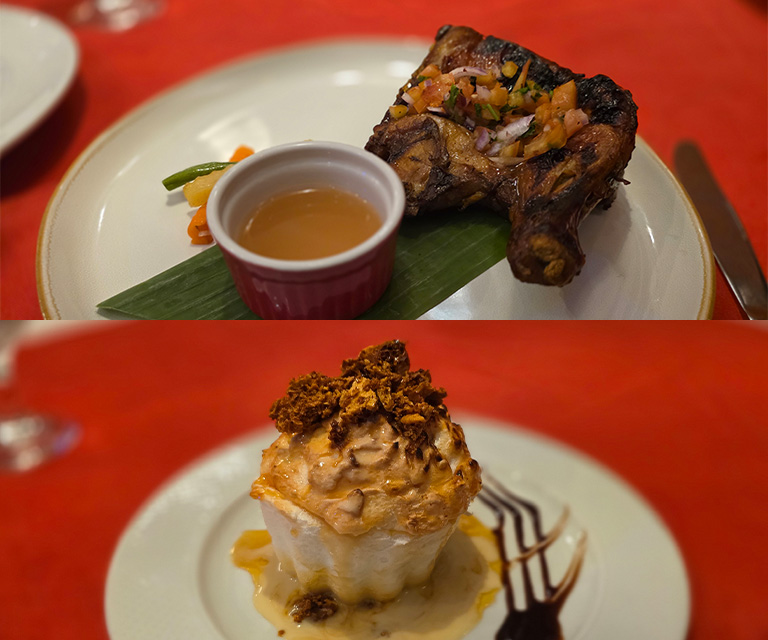
The Chicken Inasal offers a smoky contrast. Its charred skin glistens beneath the restaurant’s dim lighting, while the meat remains tender and deeply marinated with citrus and spices. It arrives looking humble, but the flavors hit with remarkable confidence. It is the culinary equivalent of someone saying very little yet somehow commanding the entire room.
Cafe Juanita’s menu, however, stretches far beyond these standouts. Diners still flock to their crispy pata, kare-kare, and seafood platters served family-style across crowded tables. The restaurant understands that Filipino dining is rarely meant to be solitary. The experience thrives in sharing — passing plates around, stealing bites from relatives, and debating which dish deserves a second serving.
Tasting the Comfort of Home
If you want to taste recipes from way back, like going to your grandparents’ house or to a family reunion and gathering, the food they have here tastes just like the food there.
That feeling — the emotional familiarity of the food — is what keeps Cafe Juanita alive in a city obsessed with novelty. The restaurant does not chase trends or reinvent classics into microscopic tasting portions. It understands something many modern establishments forget: comfort itself is luxurious.
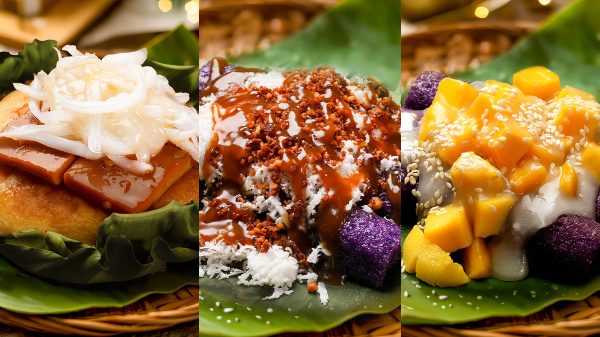
Dessert arrives almost ceremonially. Halo-halo glimmers beneath crushed ice and jewel-colored ingredients, while traditional Filipino sweets carry the kind of sweetness that feels nostalgic rather than excessive. Even the presentation avoids looking overly polished. There is charm in the imperfection.
Unapologetically Alive and Timeless
What makes Cafe Juanita especially compelling to younger diners is its refusal to flatten Filipino culture into something sleek or export-friendly. The restaurant embraces excess, sentimentality, and history with unapologetic confidence. In the age of beige cafés and algorithm-approved interiors, that authenticity feels surprisingly fresh.
Of course, there are moments when the sensory overload borders on chaotic. The décor can feel dizzying. The dining rooms become noisy during peak hours. Some dishes prioritize familiarity over refinement. But perhaps that is precisely the point. Cafe Juanita is not trying to be pristine. It is trying to feel alive.
And alive it certainly is.
Long after the plates are cleared and the final spoonful of dessert disappears, what lingers most is not a single dish or decorative detail. It is the strange comfort of feeling like you have briefly stepped into someone else’s memory — one filled with laughter, heirloom recipes, velvet drapes, and overflowing dining tables.
In a metropolis constantly racing toward the next trend, Cafe Juanita remains gloriously, stubbornly timeless.
Read more Stories on Simpol.ph
Pamumundok: Chasing peace above the clouds
syd hartha and TONEEJAY share mics on tracking their wave back home with new single “Dito Muna Tayo”