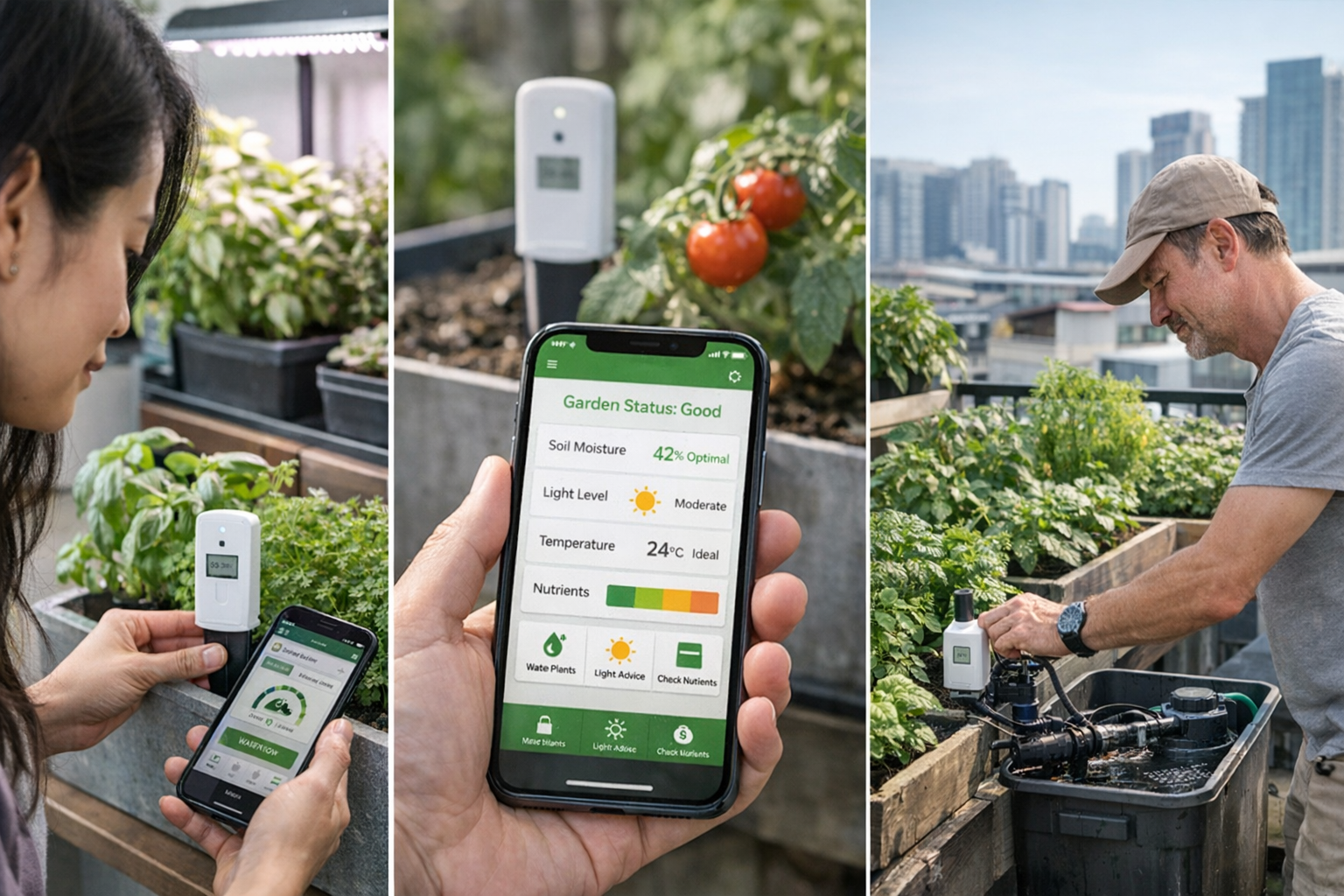
For many households today, growing food or maintaining plants is no longer just a hobby; it is becoming a practical response to rising food costs, urban space limitations, and environmental awareness. Sensor garden kits allow users to monitor soil health, water levels, and sunlight exposure in real time, making plant care more efficient and less reliant on guesswork.
For readers, this shift matters because it turns gardening into something measurable and manageable, even in small urban spaces. It offers a way to participate in sustainable living without requiring advanced gardening knowledge or large outdoor areas. More importantly, it provides a direct connection to what individuals consume and cultivate at home.
Smart Gardening Goes Mainstream: The Emergence of Sensor-Based Plant Care
Sensor garden kits—compact systems equipped with moisture sensors, light detectors, and automated alerts—are rapidly gaining traction among urban gardeners, students, and sustainability advocates. These devices simplify plant care by translating environmental conditions into readable data through mobile apps or integrated dashboards.
In cities like Quezon City, where space is limited and schedules are demanding, these kits are becoming practical tools for maintaining herbs, vegetables, and ornamental plants indoors. Retail interest has grown steadily, particularly among first-time plant owners who often struggle with overwatering or insufficient light exposure.
Industry observers note that smart gardening tools are shifting from niche tech gadgets to everyday household essentials. The trend aligns with broader smart home adoption, where convenience and sustainability intersect.
Inside the Technology: How Sensor Garden Kits Work
At the core of these systems are small sensors inserted into soil or attached to planters. They continuously measure key variables such as:
- Soil moisture levels
- Ambient light exposure
- Temperature conditions
- Nutrient indicators (in advanced models)
The collected data is transmitted to a companion app, which provides real-time recommendations such as watering schedules or optimal placement within a home. Some advanced kits even integrate automated irrigation systems, reducing the need for manual intervention.
This data-driven approach reduces common gardening errors and improves plant survival rates, particularly for beginners.
Urban Sustainability and Everyday Impact
Beyond convenience, sensor garden kits contribute to broader sustainability goals. By optimizing water usage and minimizing plant loss, they help reduce resource waste. In dense urban environments, where green space is limited, these kits encourage micro-gardening practices that support mental well-being and local food production.
For households, the impact is both practical and psychological: plants become easier to maintain, and gardening becomes more accessible to people who previously considered it too time-consuming or unpredictable.
Early User Feedback: Practical, Promising, and Still Evolving
While large-scale independent studies are still developing, early user feedback highlights both enthusiasm and learning curves. Many users appreciate the increased confidence in plant care, though some note a period of adjustment when interpreting sensor data.
“It changed how I care for my plants. I used to guess when to water, but now I get clear signals. I’ve lost fewer plants since using it.”
— Early adopter feedback compiled from verified retail reviews“The app helps a lot, but it took me a week to understand the readings properly. Once I did, it became very useful.”
— Composite user review summary
These responses reflect a consistent pattern: improved plant outcomes paired with a short adaptation period.
Read more Stories on Simpol.ph
Belmont Hotel Manila, Savoy Hotel Manila partner on eco-friendly initiative
The Farming Crisis No One Wants to Talk About
A Leaf of Hope: Filipino Students Find Anti-Cancer Potential in Cassava Leaves