For many of the Philippines’ micro, small, and medium enterprises (MSMEs), there’s a quiet arithmetic of survival—calculated daily behind half-closed shutters and flickering “open” signs.
This isn’t drama. It’s routine.
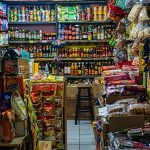
These are the carinderias and corner print shops, neighborhood tailors and small furniture makers, single-branch restaurants and lean logistics startups. Together, they make up 99.6% of all registered businesses in the country—and they employ over two-thirds of the national workforce.
Now, amid discussions surrounding the ₱200 wage hike in the Philippines, these businesses are once again being asked to stretch.
The proposed ₱200 daily minimum wage increase, recently approved by the House of Representatives, is framed as a necessary, overdue adjustment. And it’s hard to argue otherwise: in a country where wages have long lagged behind inflation, the cost of living climbs faster than paychecks can catch up.
For workers like Marlon—a dishwasher in Las Piñas who sends half of his earnings back home—the wage hike could mean more than just extra pesos. “Hindi naman kami namimilit,” he says. “Pero kung kaya, malaking bagay ’yan sa tulad ko.” It could mean medicine, a modest savings account, maybe just a little breathing room.
And he’s right.
But for many MSMEs, the math isn’t as generous. Factoring in the ₱200 wage hike in the Philippines, what feels like long-overdue relief for workers can feel like a breaking point for small business owners already balancing on thin margins.
The Arithmetic of Collapse
A ₱200 increase adds around ₱4,400 in monthly salary per employee. Multiply that by five and it’s ₱22,000 a month in new obligations. For many businesses, that figure exceeds what the owner takes home. It forces hard decisions: cut staff, raise prices, reduce hours, or fall behind. The ₱200 wage hike Philippines could mean drastic changes for these enterprises.
And when prices go up, inflation follows. That ₱85 lunch becomes ₱110. Delivery fees rise. Goods cost more. Before the wage hike lifts families, inflation shrinks its promise. The Philippine Chamber of Commerce and Industry has already warned that a blanket increase, without structural support, will squeeze both ends: those who pay and those who earn. The ₱200 wage hike Philippines might further complicate these predicted challenges.
When businesses can’t afford to comply, some will close. Others will adapt—not always legally. They may hire informally: a cousin from the province, someone willing to work for less, off the books, without benefits. These aren’t bad actors. They’re people trying to survive policy without support.
The shift is already happening. Formal workers are replaced by informal ones. Small companies become informal employers not by strategy, but by necessity. And the more the wage gap grows between policy and practical reality, the more informal labor floods in—particularly from provinces where expectations are lower and protections weaker.
At the other end of the spectrum, larger small businesses will begin to automate. A cashier becomes a QR code. A receptionist, a chatbot. A self-service kiosk replaces a counter clerk. These changes don’t mark growth. They mark retreat. And it is often the lowest-paid workers who disappear first.
The Squeeze on the Middle
There is a dangerous myth in how MSMEs are treated: that they are either tiny and invisible, or large and resilient. The truth is, the most burdened are those in the middle.
The sari-sari store might avoid notice. The large franchise has legal teams. But the single-branch restaurant? The small construction firm? The growing garment workshop? They are too big to fly under the radar and too small to absorb the blow. They are the ones most scrutinized by regulators, most weighed down by compliance, and most vulnerable to wage shocks like the ₱200 wage hike Philippines.
These businesses pay taxes, register with the DTI, shoulder permits and inspections. They are watched closely, but rarely supported. A blanket wage hike treats them as stable when many are, in fact, just surviving.
When a small or medium business closes, the loss is not just economic. It’s personal. These are often family-run operations, built over years with savings, sweat, and sacrifice. What disappears is not just a shop or payroll—it’s the belief that something can still be built, owned, and grown here, against the odds.
MSMEs do not run on deep capital. They run on handwritten ledgers, repurposed equipment, borrowed trucks, and daily prayers. They are not built for crisis after crisis. They survive through grit—but grit has limits.
And yet, tomorrow, most of them will open again. They will sweep the floors, boot up the systems, check inventory, and try again. Because that’s what it means to build something with your own hands in the Philippines. The ₱200 wage hike Philippines remains a critical topic.
And maybe that’s what this conversation should protect.