Cherrie Atilano’s story doesn’t begin with success. It begins with a wound — one that would eventually define her path in Filipino agriculture leadership. Growing up on a sugarcane farm in Negros Occidental, she didn’t learn about poverty from books or reports — she lived it. She felt it in meals stretched thin. She felt it in the long days when farm income still fell short. And she felt it in the early mornings, helping her widowed mother cook for a school cafeteria while raising five children alone.
From the start, she saw how deeply unfair the system was. That injustice stayed with her, settling into her bones long before she learned words like “food security,” “systems,” or “equity.” And at twelve, young, but old enough to know what injustice feels like, she chose to act.
“I didn’t have all the answers — but I felt a deep responsibility to act,” she says. “Teaching farmers organic methods became my small way of saying, ‘You deserve better.’ If we witness injustice and do nothing, we become part of the problem.”
From that single decision — a child refusing to look away — began the path that would shape one of the most important voices in Filipino agriculture leadership today.
A Leader With Global Reach and Local Roots
Today, Cherrie is widely recognized as a global food systems leader. As the founder of AGREA, she has shaped national and local programs focused on rural development, farmer empowerment, and regenerative agriculture. Her leadership has carried her from small barangay meetings to international platforms — including UN-related sustainability events — where she advocates for fair food systems and climate resilience. She also serves on boards and advisory councils that guide agriculture and development policy in the Philippines.

Related: Read our feature on sustainable food systems in the Philippines.
A Childhood That Became a Compass
Cherrie’s earliest lessons came before sunrise. The smell of onions hitting oil. The clatter of pots. Her mother juggles the cafeteria and weekend farm work. Cherrie was helping wherever she could — finishing assignments, then slicing vegetables, then heading to the fields.
“I remember slicing vegetables right after finishing my assignments,” she says. “It taught me that value isn’t always measured in money — but in purpose, hard work, sacrifice, and love.”
Those mornings didn’t just teach her discipline. They taught her the kind of leadership that lasts.
“Leadership begins when we understand what people truly need — not just what systems expect.”
A Filipina Leading With Malasakit
Identity is not a label for Cherrie. It is the architecture of her work.
“Being Filipina means embodying ‘malasakit’ — compassion that moves into action,” she says.
Her leadership carries the resilience of farmers, the strength of Filipina women, and the warmth of communities that raised her.
“Working in a male-dominated sector, I learned not just to lead, but to open doors for others.”
Her approach is simple: dignity first, hierarchy never.
AGREA: Born From Heartbreak and Hope
AGREA began not with a business plan but with discontent.
“I was tired of seeing waste in a land full of abundance, and farmers being last in a system they sustain,” she recalls.
From that heartbreak came a clear vision:
A one-island economy where nothing is wasted, no one is hungry, and every farmer is valued.
At the center of AGREA is Cherrie’s guiding principle: the Ecology of Dignity.
“It’s about building systems that uplift life at every level — soil, farmer, family, community,” she says. “When dignity thrives, sustainability becomes a way of life — not a buzzword.”
Through AGREA, she began proving that farmer-first solutions could reshape Filipino agriculture leadership. By designing models where small communities thrive, and waste becomes opportunity, she challenged old assumptions about what Philippine agriculture could be — and who it should serve.
Proving That Change Is Possible
The beginning was difficult.
“People doubted that a young woman could spark systems change,” she recalls. Funding was scarce. Trust is even scarcer. “We didn’t convince people with promises — we convinced people with proof.”
Cherrie moved constantly between two worlds — the fields and the strategy rooms. Listening, studying, clarifying.
“Change happens when empathy meets strategy.”
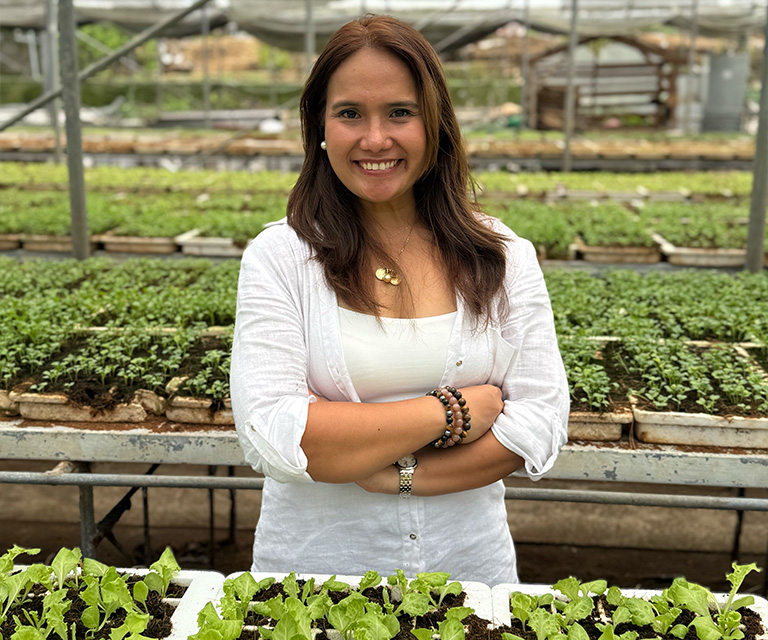
Reframing the Filipino Farmer
One misconception still frustrates her.
“That farmers are resistant to change,” she says. “In truth, they are innovators — deeply knowledgeable and adaptive. What they lack is not intelligence, but access.”
She also fights for women often unseen in agricultural systems.
“Women grow, harvest, cook, nourish, and hold families together, yet they’re often excluded from decisions — especially when they don’t own the land. When women rise, the whole food system rises with them.”
You may also like: How Filipina leaders are reshaping community livelihoods.
#MoveFood: When Communities Carried the System
The pandemic exposed the fragility of Philippine food systems. Yet it also revealed the power of communities.
Through #MoveFood, Cherrie helped distribute more than 200,000 kilos of produce directly from farmers to families struggling in lockdown.
“It showed me that when systems collapse, communities step up,” she says. “It was exhausting and deeply human.”
That movement reframed how Filipinos saw their food systems — and what collective, community-led Filipino agriculture leadership could achieve.
“Resilience is not an individual act — it’s a collective heartbeat.”
Staying Grounded While Leading Big Systems
Despite her influence, Cherrie returns to the soil as often as she can.
“Quiet moments with nature, meditation, journaling, and conversations with farmers remind me why I serve,” she says.
Her leadership principle is simple:
“A true leader builds more leaders, not followers.”
And her optimism is not naive. It is disciplined.
“Hope is not optimism — it is discipline. Hope is the seed we must keep planting.”
Innovation Rooted in People
Cherrie champions technology in agriculture, but she insists that innovation must remain human-centered.
“I begin with dignity, equity, and sustainability. We co-design with communities, test quickly, learn humbly, and scale what works with care.”
Her excitement lies in blending Indigenous knowledge with modern tools.
“When tradition meets innovation, transformation happens.”
To young Filipinos dreaming of working the land, she offers this:
“Your voice is needed. Agriculture is not backward — it is the future. Root yourself deeply — and grow fearlessly.”
More Pipol: Stories of Filipinos reinventing home, work, and identity.

The Moment That Made It All Make Sense
Of all the moments in her work, one stays with her.
“A farmer called crying — not from loss, but relief — because his harvest was finally valued,” she says. “He said, ‘For the first time, I feel seen.’”
That moment — simple, tender, honest — is the harvest she works for.
A Legacy Growing Forward
Ask her what she hopes her movement will leave behind, and she answers without hesitation.
“I hope they say we helped restore dignity to farming — that we planted justice, hope, and pride in agriculture. Ultimately, may they say we didn’t just grow food — we grew a future worth fighting for.”
Because for Cherrie Atilano, the future of Filipino agriculture has always been about more than yields.
It’s about dignity.
It’s about people.
It always has been.
Read more Stories Simpol.ph
Terra Madre Asia Pacific 2025: The Philippines Welcomes the World to Bacolod