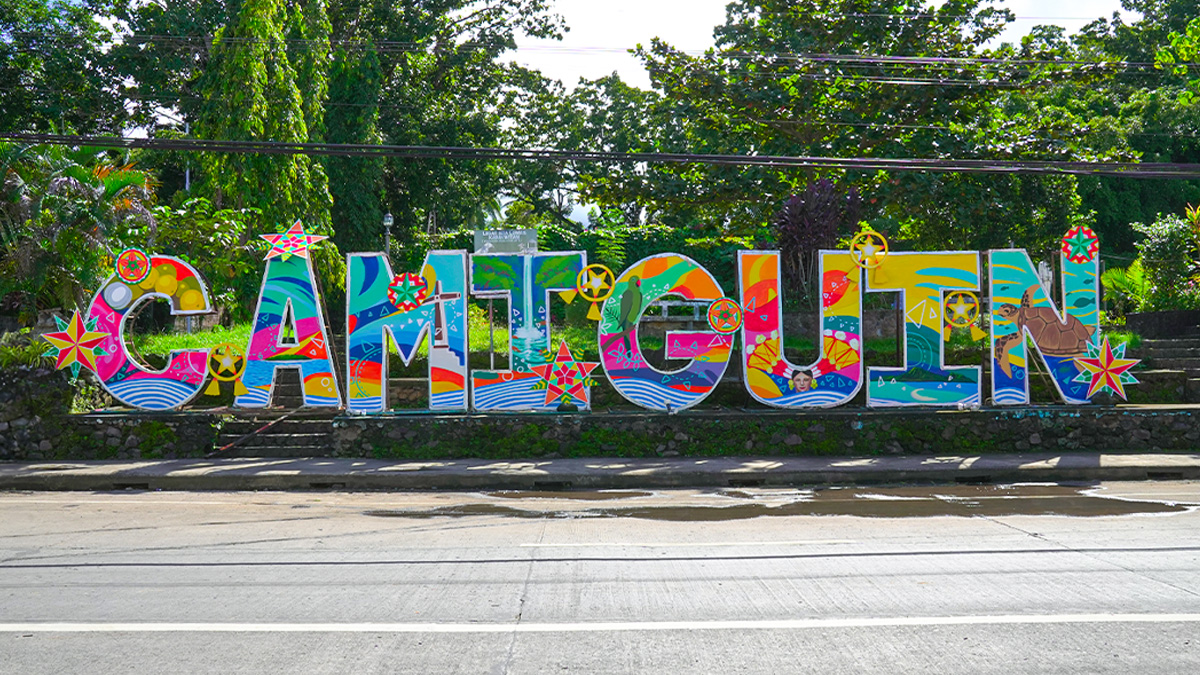
Camiguin does not reveal itself all at once. It does not compete for attention with oversized attractions or tightly packed itineraries. Instead, this small volcanic island in Northern Mindanao asks visitors to adjust their pace—to linger longer, to look closer, and to appreciate moments that unfold quietly. What Camiguin offers is not spectacle alone, but balance: between history and nature, movement and stillness, memory and discovery.
These eight destinations are widely considered the island’s essential stops. Together, they reflect Camiguin’s character—unassuming, layered, and deeply rooted in place.
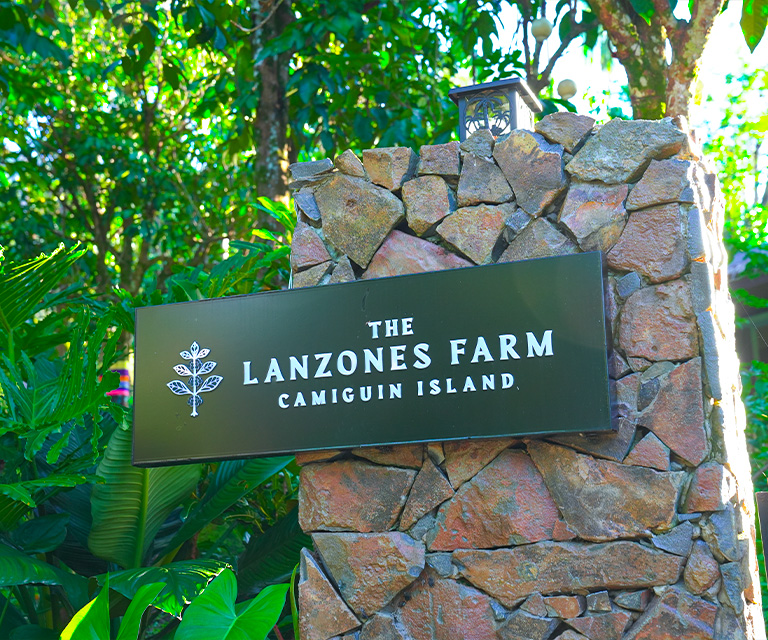
The Lanzones Farm: Sweetness at Its Source
Lanzones is more than a fruit in Camiguin; it is an identity. Visiting a lanzones farm, particularly during harvest season, provides insight into the island’s agricultural rhythm. Trees grow low and heavy with fruit, and harvesting is done with patience and care.
Eating lanzones straight from the farm highlights a freshness that cannot be replicated elsewhere. The sweetness is clean and subtle, unburdened by excess. For many travelers, this simple experience becomes unexpectedly memorable, a reminder that the best flavors often come without embellishment.
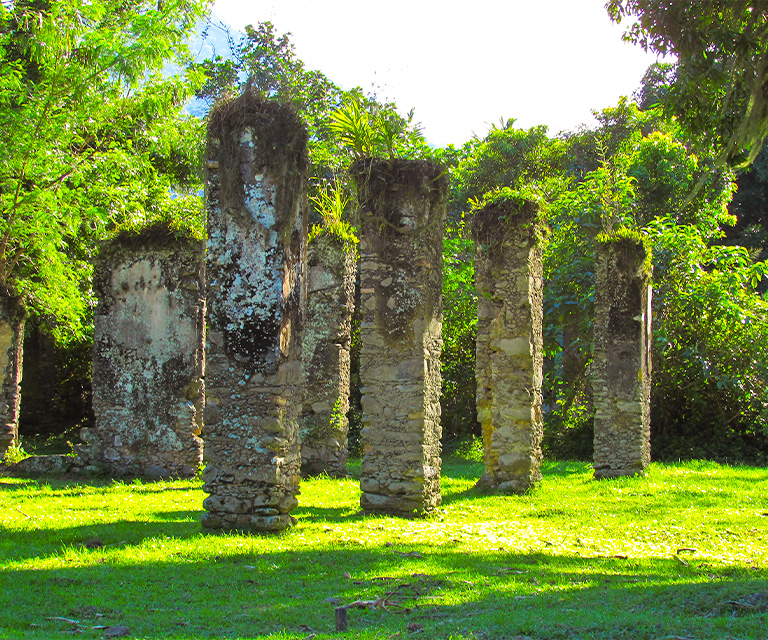
Old Church Ruins: History in Fragments
The Old Church Ruins in Bonbon stand as a testament to Camiguin’s volatile past. Once a Spanish-era church, the structure was damaged by volcanic eruptions and now remains only in fragments—stone walls, partial archways, and weathered foundations.
Visitors tend to move slowly here, voices lowered almost instinctively. The ruins do not explain themselves; they simply exist. It is a place that encourages contemplation, offering a quiet reminder that history often survives imperfectly, shaped by forces beyond human control.
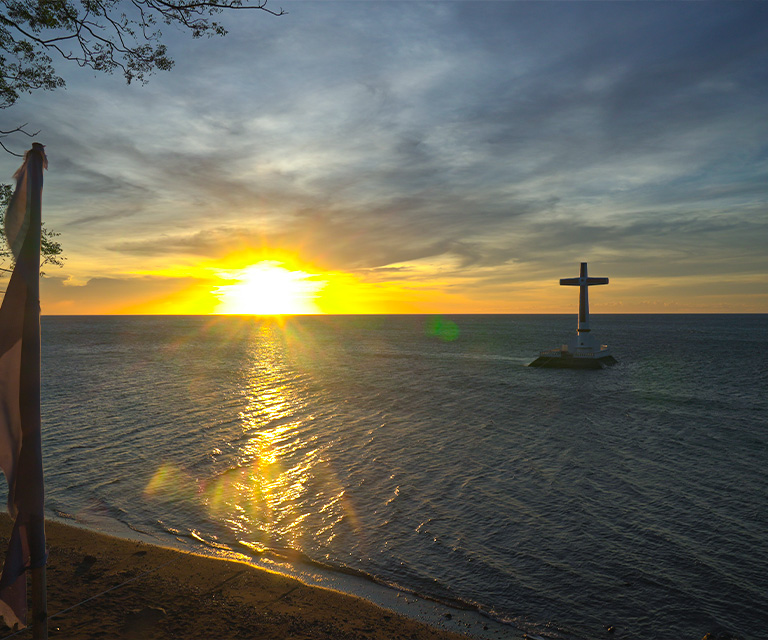
Sunken Cemetery: Memory Beneath the Sea
Perhaps Camiguin’s most iconic landmark, the Sunken Cemetery is marked by a large white cross rising from the water offshore. It commemorates a town that sank beneath the sea following a volcanic eruption in the late nineteenth century.
At sunset, the site becomes especially poignant. The sea reflects soft gold and amber tones, boats drift quietly, and the cross stands in calm defiance against time. It is both a visual landmark and a memorial, capturing Camiguin’s ability to hold beauty and loss in the same frame.
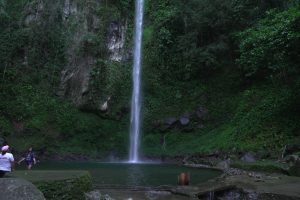
Katibawasan Falls: Nature in Full Command
Katibawasan Falls is one of the tallest waterfalls in the Philippines, plunging more than 250 feet into a cool basin below. The walk leading to it is gentle and shaded, offering little indication of the scale awaiting at the end.
When the falls come into view, the effect is immediate. Water roars downward with steady force, mist rising into the surrounding greenery. Swimming here is bracing and restorative, the kind of experience that clears both body and mind. Katibawasan is nature asserting itself, unapologetically and without ornament.
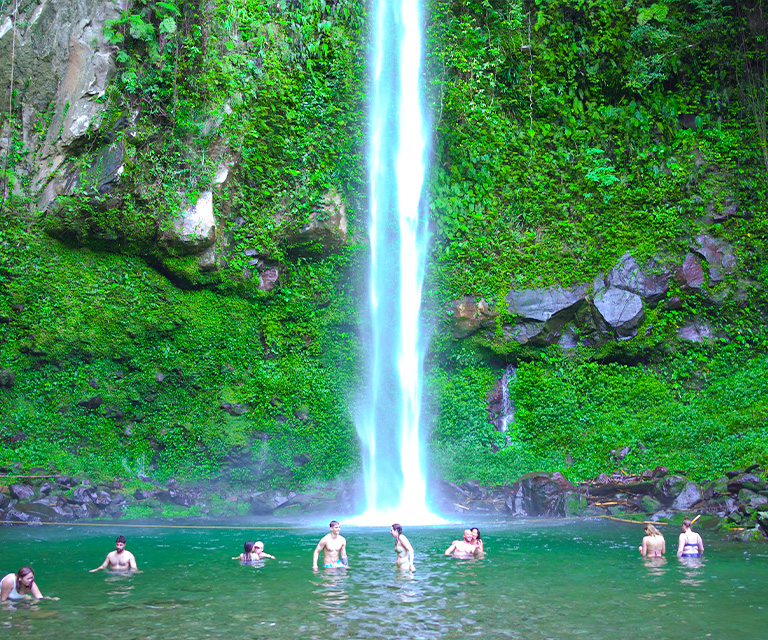
Tuasan Falls: The Reward of Effort
Tuasan Falls requires intention. Reaching it involves a hike through forest paths and shallow streams, making the journey as much a part of the experience as the destination itself.
The falls are wide and powerful, framed by open space and dense foliage. Visitors often linger longer here, aware that effort heightens appreciation. Tuasan is a reminder that some of Camiguin’s most meaningful moments are found by choosing the longer path.
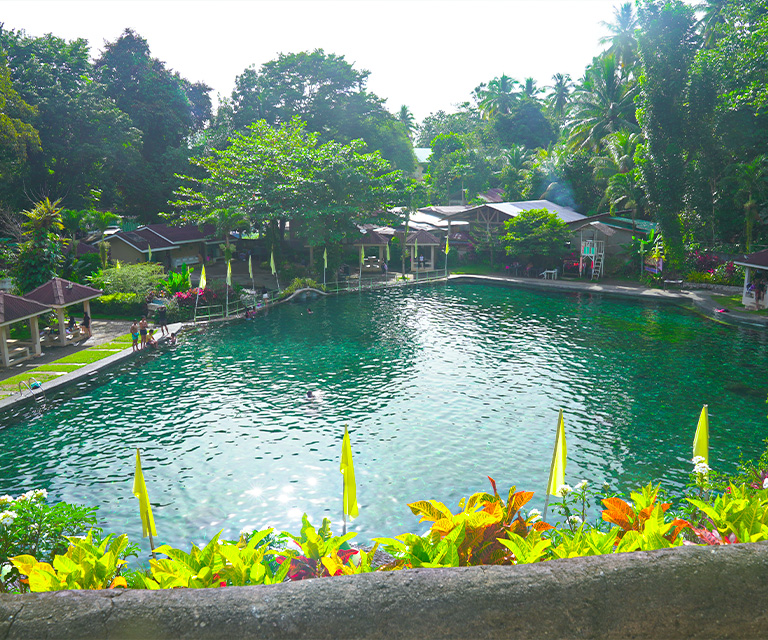
Sto. Niño Cold Spring: A Community Pause
Sto. Niño Cold Spring offers a glimpse into everyday island life. Fed by natural underground springs, the water remains strikingly cold year-round, providing instant relief from the tropical heat.
Families gather, children play, and conversations unfold without urgency. There is no curated experience, only shared space and routine enjoyment. Sto. Niño Cold Spring reflects Camiguin’s unfiltered rhythm—familiar, communal, and refreshingly genuine.
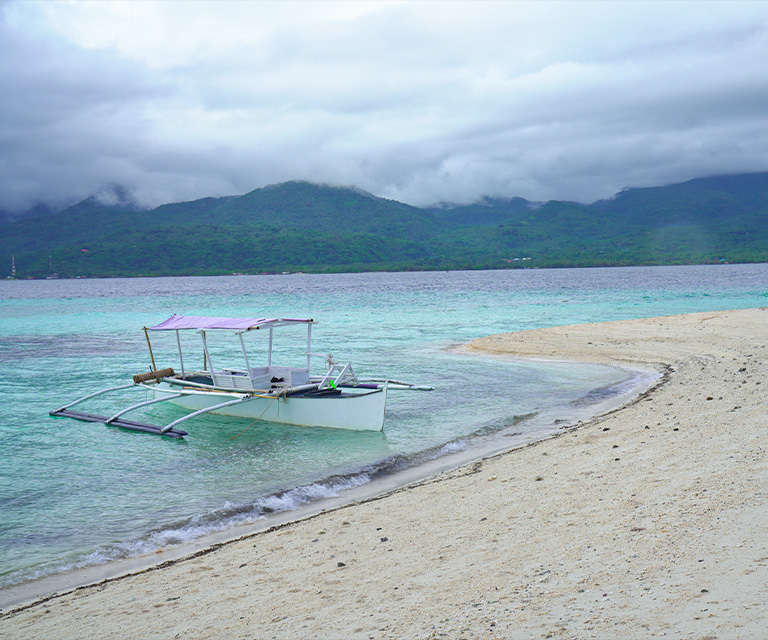
White Island: Simplicity, Perfected
White Island is a sandbar devoid of trees, structures, or shade. What it offers instead is space—open sky, white sand, and unobstructed views of Camiguin’s volcanic peaks.
Early mornings are quiet and contemplative, while later hours bring a more social energy. White Island strips travel down to its essentials, proving that minimalism, when intentional, can be deeply satisfying.
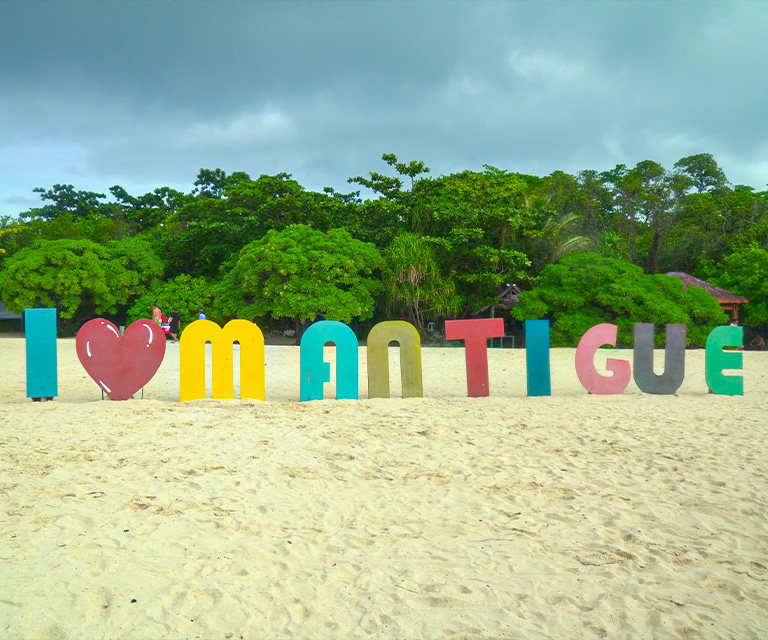
Mantigue Island: Preservation in Practice
Mantigue Island is small, protected, and carefully managed as a marine sanctuary. Its surrounding waters are clear, its coral reefs healthy, and its atmosphere notably restrained.
Snorkeling here feels intimate rather than performative. The island can be explored quickly, yet it leaves a lasting impression. Mantigue represents Camiguin’s commitment to sustainability, showing that restraint can coexist with tourism.
Why Camiguin Lingers
Camiguin does not rush its visitors, nor does it ask to be consumed quickly. Its most popular sites never feel overwhelming, because each one invites presence rather than performance. The island rewards attention, patience, and curiosity.
For younger travelers seeking meaning beyond images, and for anyone craving a destination that feels grounded rather than manufactured, Camiguin offers something increasingly rare: the permission to slow down. Long after the journey ends, it is not just the landmarks that remain, but the feeling of having experienced a place on its own terms.
A full visual exploration of Camiguin’s landscapes and experiences can be viewed on YouTube.
Savor Camiguin: Flavors That Speak Island | Flavorful Escapes: Camiguin
Camiguin Is On The New York Times List For A Reason | Flavorful Escapes
Read more Stories on Simpol.ph
Five Restaurants to Try in Camiguin: Island Dining Worth the Journey
The Rooted Brew: At Man Apsol, Kamote and Community Define the Baguio Table
The Island Born of Fire Finds Its Sizzle: Camiguin’s Culinary Rebirth