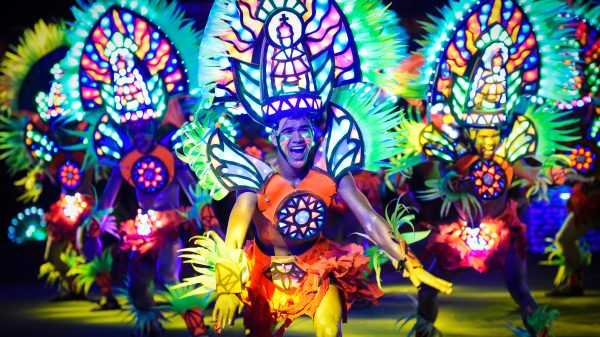
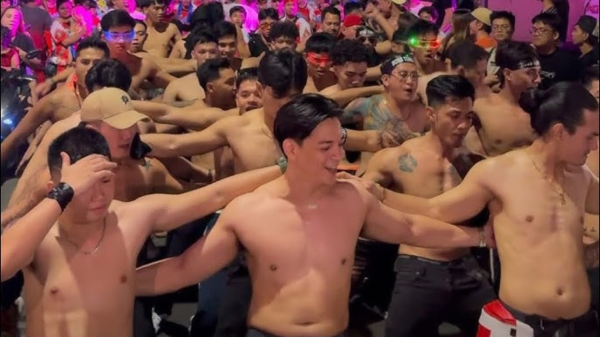
PANDACAN, MANILA — The streets of Pandacan wake early in the first week of September, though the town’s energy is measured, deliberate. Drums are tested in quiet corners, feet trace familiar steps across concrete sidewalks, and dancers begin assembling in small groups. By midmorning, the air is thick with incense and the scent of candles. Faces are painted, expressions solemn yet eager. The Buling-Buling Festival does not arrive politely; it insists on participation.

The rhythm begins subtly. Small clusters of devotees wind through the neighborhood, chanting prayers in time with drums and tambourines. Slowly, others join, until the streets themselves seem to move, a living mosaic of faith, memory, and community. Here, the festival is not merely spectacle—it is a sacred negotiation between devotion and everyday life, expressed in gesture, in step, in shared heartbeat.

The Weight of Tradition
Buling-Buling traces its origins to early Spanish colonial Manila, a ritual devoted to the Santo Niño. Unlike festivals that prioritize grandeur, Buling-Buling emphasizes continuity and intimacy. Each dance step carries meaning: a petition, a thanksgiving, a reflection. It is a choreography of memory, a devotion inscribed on the body.
Observers sometimes ask: why persist in this centuries-old dance amid the urban bustle of Manila? The answer is preservation. To be Pandacanon is to carry history in motion, to make faith tangible. When dancers turn, twist, and sway in synchrony, they embody their community’s collective memory, insisting that devotion must be felt, not merely seen.

Between the Sacred and the Ordinary
On festival day, the streets hum with activity. Vendors line the sidewalks with candles and statuettes. Children dart between dancers, while elders observe from shaded doorways, offering quiet blessings. Movements are mirrored by the congregation: a bow here, a nod there, a rosary swaying to tambourine beats.
The festival folds ordinary life into sacred ritual. Smartphones may capture fleeting images, but they cannot contain the festival’s essence. Buling-Buling lives in motion—in the sway of a body, the lift of a hand, the shared rhythm of the crowd.

Why the Dance Endures
Buling-Buling does not erase hardship. It does not fix broken infrastructure or economic precarity. But it provides rhythm, communal endurance, and shared hope. For a few hours, disputes fade, differences dissolve, and the town breathes as one.
By late afternoon, the drums soften, the dancers tire, and the streets return to ordinary life. Candles are extinguished, statuettes returned to shrines, and Manila resumes its usual pace. Yet the festival leaves more than memories—it leaves a community that has moved together, step by step, in a rhythm that has sustained generations.
Pandacan dances not to escape, but to affirm: that faith, like the human body, must move. And in that movement, it endures.
Read more Stories on Simpol.ph
Where Faith Takes to the Street: The Enduring Pulse of Ati-Atihan