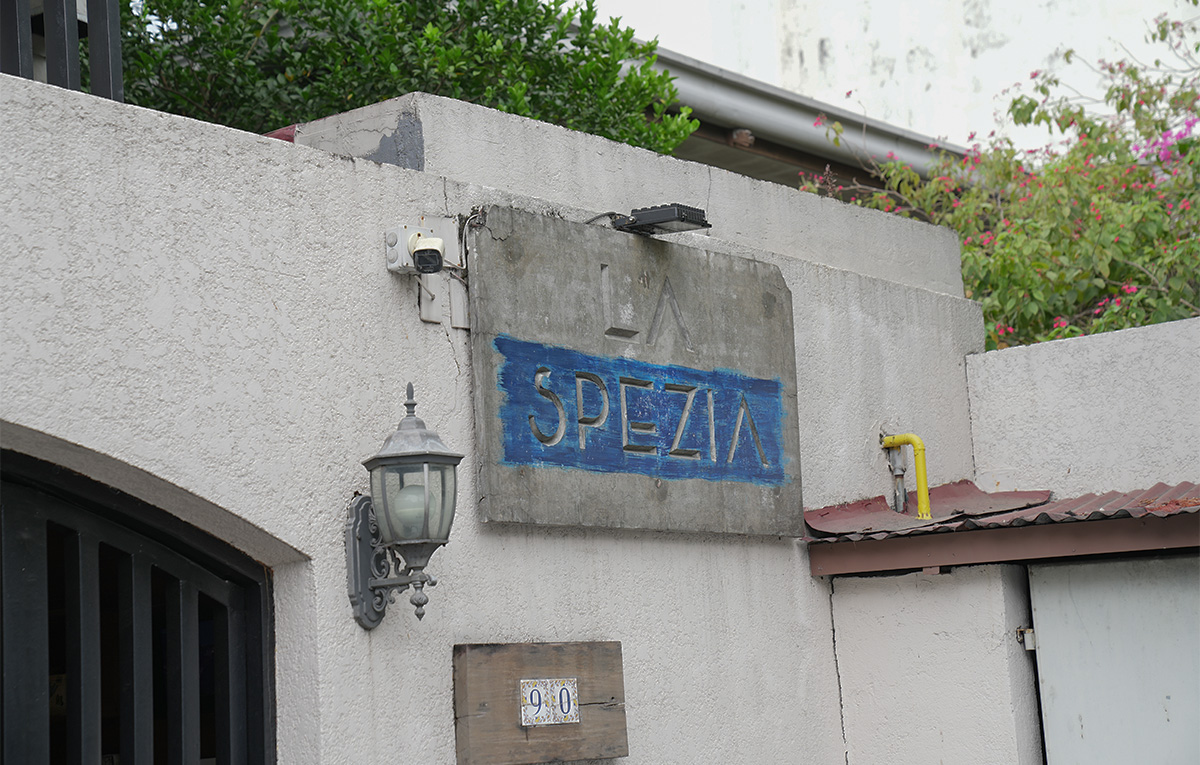
There are restaurants that announce themselves the moment you walk in. And then there is La Spezia, which feels more like it slowly notices you.
Slowing the City Down
The shift begins at the threshold. Quezon City outside is its usual self — jeepneys threading through intersections, motorcycles negotiating space like it’s a full-time job, the city’s soundscape layered and relentless. Inside, however, the volume drops without warning. Not silence exactly, but a softened register of life: clinking glasses, low conversations, the occasional laugh that doesn’t try to compete with anything.
It is not designed to impress you quickly. It is designed to keep you longer than you planned.
The room itself carries a restrained European warmth — stone textures, soft lighting, wooden surfaces that seem designed to absorb sound rather than reflect it. Nothing here competes for attention. Instead, everything leans toward continuity. You are not meant to rush through it. You are meant to settle.
Salt, Depth, and Restraint
Then the pastas begin to arrive, each one shifting the table’s attention in subtle ways.
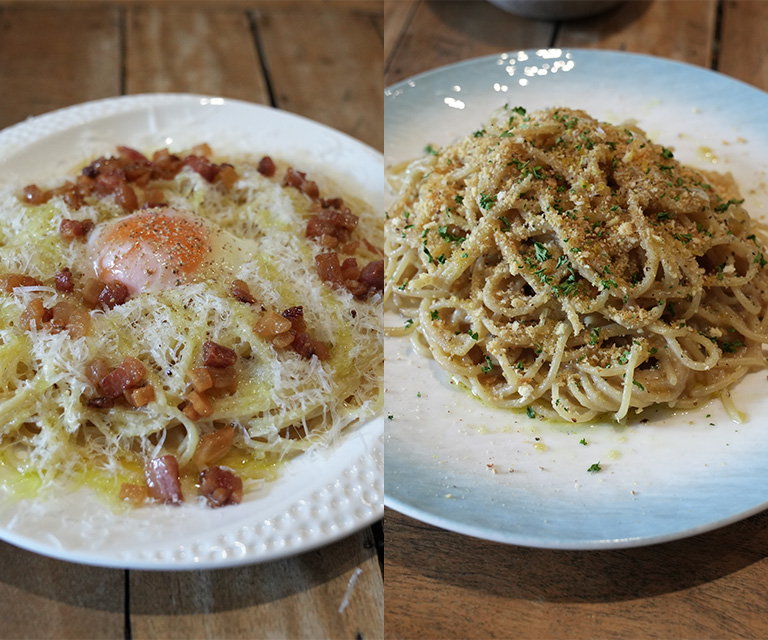
The carbonara comes rich and structured, creamy without collapsing into heaviness. It holds onto its balance — egg, cheese, and cured depth working in quiet alignment. There is no excess here, only restraint shaping comfort into something more refined.
The anchovy pasta follows with a sharper personality. Briny, assertive, but never overwhelming. It does not try to soften its edges, and that honesty becomes its strength. Each forkful feels precise, almost conversational — salt meeting warmth, intensity meeting control. It is the kind of dish that divides attention at the table in the best way, prompting brief pauses mid-sentence just to register what is happening.
The Patience of the Main Course
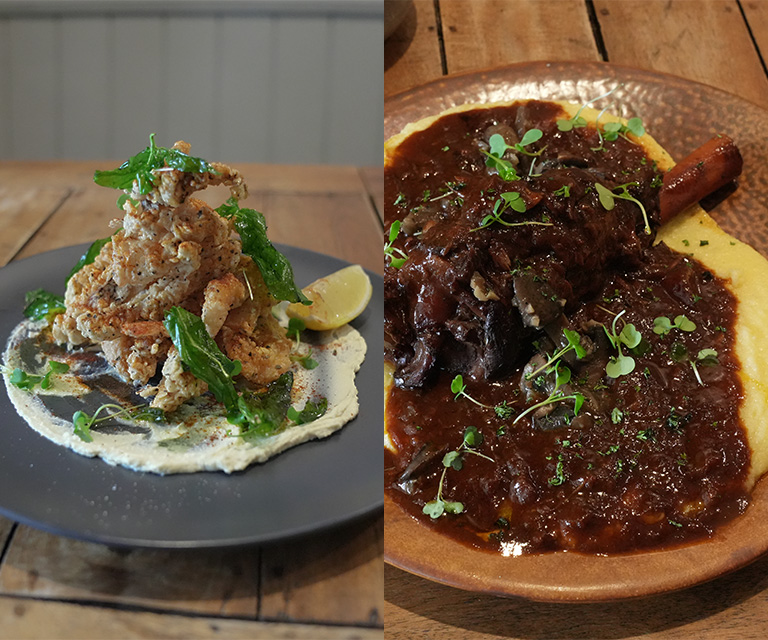
Then comes the lamb shank, the most patient dish of the whole meal.
It arrives like something that has been given time — real time — not just cooking time. The meat yields without resistance, falling apart in a way that feels almost inevitable. The richness is deep but not heavy-handed, layered with a slow-building savoriness that lingers rather than peaks. It does not demand attention. It earns it gradually, through persistence rather than force.
Around the table, the pace has already shifted. No one is rushing between bites. Plates are passed without urgency. Conversation stretches without direction, circling back on itself in the way only long meals allow.
A Bright Contrast to Close
And then dessert arrives, changing the tone without breaking it.
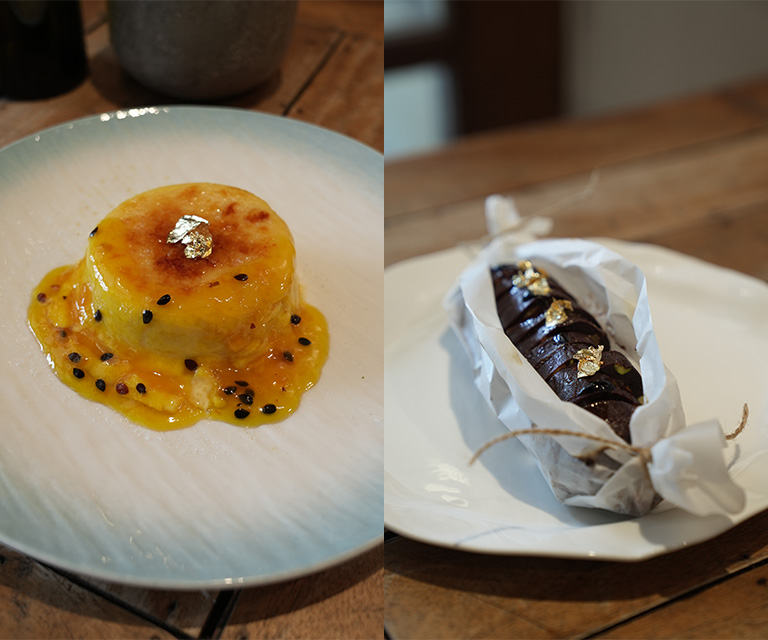
The passionfruit flan is bright, almost unexpectedly so. Its acidity cuts through the meal’s earlier richness with a clean, tropical lift. It feels like a reset rather than an ending — sharp enough to wake the palate, soft enough to still belong to the table.
The chocolate salami follows with a quieter finality. Dense, nostalgic, slightly playful in texture. It does not try to impress through technique. Instead, it leans into comfort, offering a familiar sweetness that feels almost handwritten rather than constructed. It lingers just long enough before fading into memory.
Measured in Pauses, Not Clocks
Somewhere between the last spoonful and the empty plates, the room changes again. Not outwardly — nothing in the space shifts — but perceptibly, in the way time feels less structured.
That is what defines La Spezia more than any single dish. It is not a restaurant built on spectacle or reinvention. It is built on pacing. On the idea that food should not just be eaten, but experienced at its own speed.
Even service reflects this philosophy. Plates appear when they are ready, not when they are demanded. Water is refilled quietly, without interruption. Recommendations are offered gently, as if they assume you might stay longer than planned — and you usually do.
Eventually, you step back outside into Quezon City. The noise returns immediately, as it always does. The city resumes its urgency without hesitation.
But La Spezia does not leave with you in a hurry.
It stays behind as a slower register of time — one measured not in movement, but in pauses between courses, between conversations, between bites that ask nothing more than to be noticed.
Read more Stories on Simpol.ph
Inside Odd Café, Makati’s Calm Vegan Cafe
Moving past the noise with Pasay City’s Lime Resort and Hotel