Understanding AI warfare narrative control is increasingly vital in today’s digital landscape.
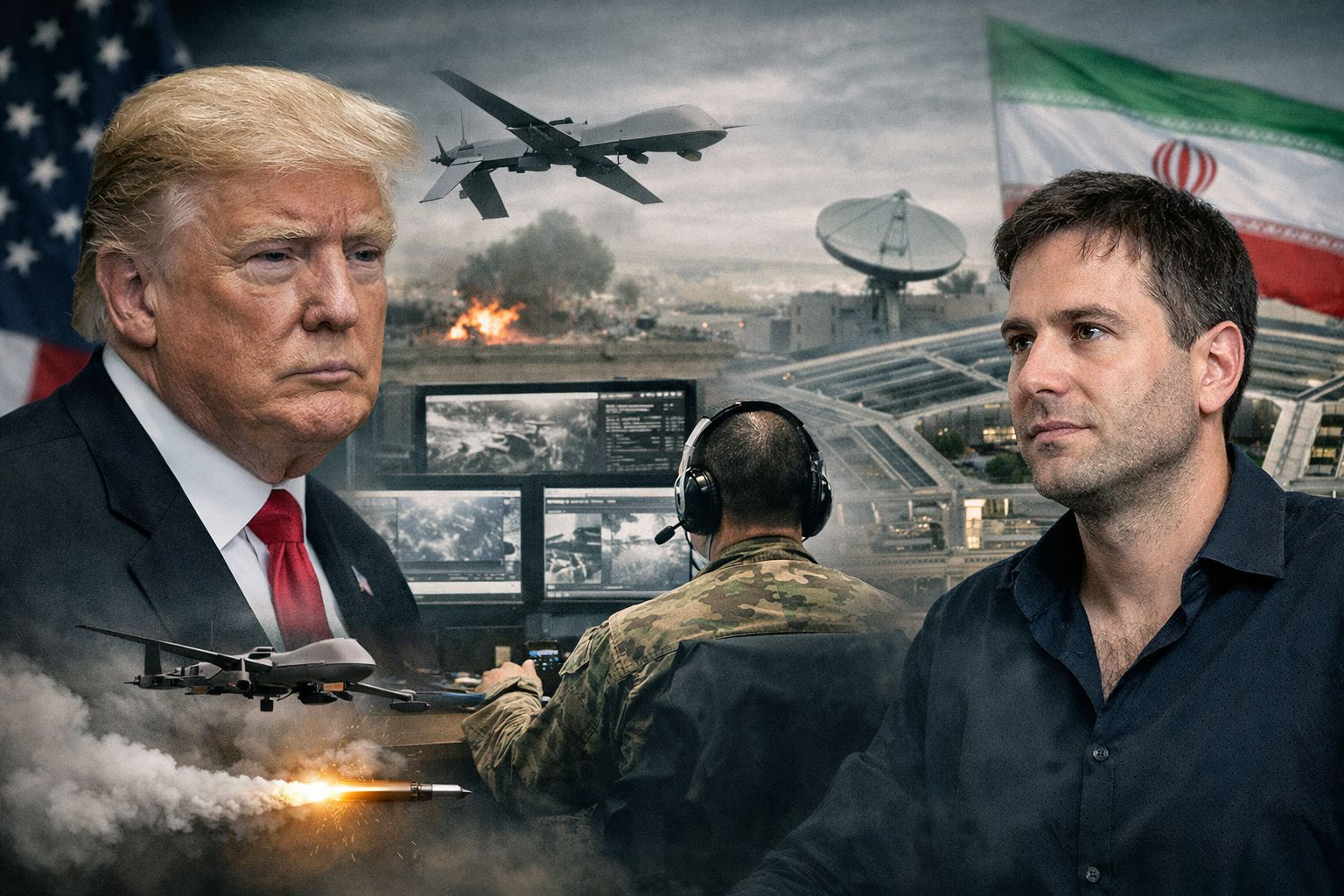
The recent controversy surrounding Claude AI is not just another tech story—it is a glimpse into the future of war. For months, the United States government had been using Claude in classified environments, integrating it into intelligence and military workflows across agencies. Reports indicate that AI systems like Claude have already been used to accelerate targeting and decision-making in real-world operations, including strikes linked to Iran, demonstrating the growing impact of AI warfare narrative control in modern conflicts.
That relationship has now fractured. Donald Trump ordered federal agencies to stop using Anthropic’s systems after a dispute with Dario Amodei, who refused to allow unrestricted use of the AI for autonomous weapons and mass surveillance. The Pentagon responded by labeling the company a “supply chain risk,” triggering a legal battle that continues to unfold.
This is not simply a clash of personalities. It is a struggle over a deeper question: Who controls artificial intelligence in war, and under what limits? Clearly, questions about AI warfare narrative control are central to these debates.
Across the Battlespace
What makes this moment significant is not just the controversy, but what it reveals: Artificial intelligence is no longer peripheral to warfare. It is already embedded across the entire battlespace, shaping AI warfare narrative control in both direct and indirect ways.
On land, AI systems assist in surveillance, pattern recognition, and targeting. In the air, drones—now central to modern conflict—operate with increasing levels of autonomy, guided by machine-learning systems that can identify and prioritize targets faster than any human analyst. At sea, autonomous vessels and AI-assisted detection systems track movements across vast and contested waters. In space, satellite imagery is processed through algorithms that transform raw data into actionable intelligence in near real time.
What once took hours—or days—now happens in minutes.
The shift is not just technological; it is structural. AI is moving from being a tool of war to becoming part of its infrastructure. A tool can be set aside; an infrastructure cannot be “unplugged” without collapsing the system it supports. Military decision-making is no longer purely human-centered but is becoming an algorithmic ecosystem in which the “kill chain”—from detection to decision to action—is compressed by systems operating at speeds beyond human cognition.
This marks a critical transformation: Humans are no longer always the primary processors of battlefield information. Instead, they are increasingly positioned on the loop, monitoring systems that interpret reality on their behalf.
Yet even this transformation may not be the most consequential.
Beyond land, sea, air, and space lies another domain—less visible but arguably more powerful—where AI is reshaping the nature of conflict. In particular, AI warfare narrative control is now a defining feature of this new domain.
Narrative as Weapon
If traditional warfare is about controlling territory, modern warfare is increasingly about controlling perception. In this terrain, cognition itself becomes the contested domain.
In cyberspace, AI is already deployed in both defensive and offensive operations, automating threat detection and identifying vulnerabilities. But the more profound shift lies in the domain of information.
Artificial intelligence can now generate persuasive text, images, and videos at scale. Narratives that once required coordinated human effort can now be produced instantly, replicated endlessly, and tailored to specific audiences. Influence is no longer slow; it is industrial.
Consider figures like Jiang Xueqin, who appear across multiple platforms such as YouTube and other digital media spaces. The question is not whether such individuals are part of propaganda networks—there is no evidence to support that claim—but how the gravity of the algorithm itself produces that visibility.
When content is amplified, repeated, and circulated at scale, it becomes difficult to distinguish between organic influence, algorithmic promotion, and coordinated messaging. AI does not merely flood the information space; it exploits evolved human heuristics—pattern recognition, repetition bias, and authority cues—at machine scale. In an AI-mediated environment, repetition can be engineered, and credibility can be simulated.
This is the new terrain of war: not just the destruction of infrastructure, but the shaping of belief; not just the movement of troops, but the circulation of narratives.
In such a terrain, truth itself becomes contested—not because it disappears, but because it is overwhelmed.
Fractured Realities
Recent developments involving Donald Trump and Iran illustrate this instability. Conflicting statements—ceasefire or no ceasefire, negotiations or no negotiations—circulate almost simultaneously, each claiming authority, each demanding belief.
In earlier eras, such contradictions might be dismissed as miscommunication or propaganda. Today, they may signal something more complex: a world in which narratives are continuously generated, amplified, and reshaped by machines in real time.
The unsettling possibility is not simply that leaders disagree. It is that they may no longer be operating within the same informational reality.
And perhaps the most unsettling possibility is this: One side believes it is negotiating with another human, carefully weighing signals and intentions.
Or perhaps one of them—if not both—is talking to an AI, and they simply do not know it yet.
Do the three-finger test. Or whatever low-tech heuristic still works in an age of synthetic reality.
Read more Stories on Simpol.ph
Ready or Not, the Intelligence Age Is Here