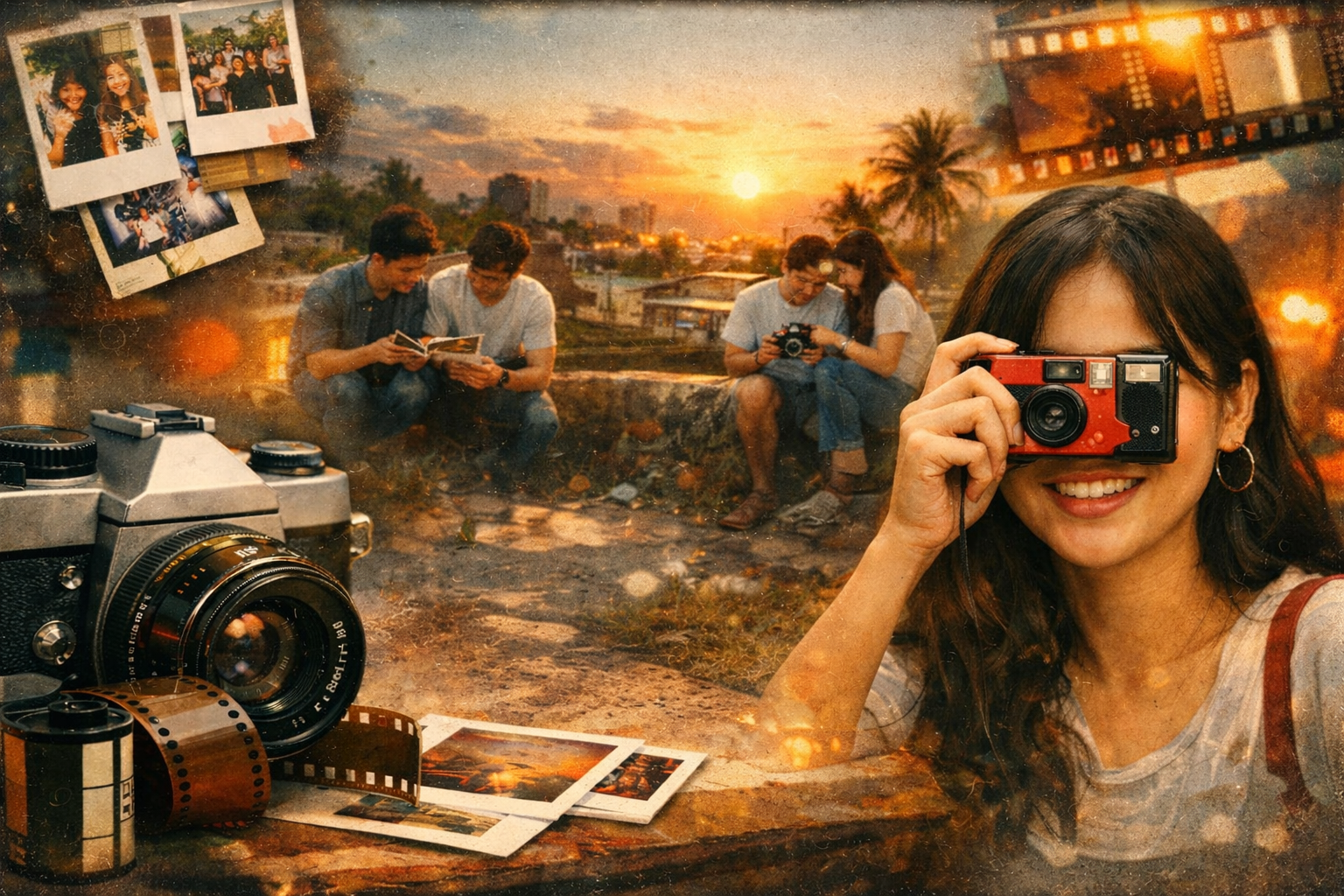
In an era when high-definition photos can be taken and uploaded instantly, many Filipino youth are intentionally stepping away from polished digital perfection. Retro cameras and lo-fi photography in the Philippines are becoming increasingly popular as a way to embrace authenticity. For readers constantly surrounded by carefully curated online images, the growing interest in retro cameras and lo-fi photography offers something different: authenticity, creativity, and a more mindful way of capturing memories.
Across campuses, creative spaces, and social media communities, young Filipinos are reviving film cameras, disposable cameras, and grainy photo aesthetics reminiscent of earlier decades. What began as a stylistic preference has evolved into a cultural movement that celebrates imperfection, storytelling, and nostalgia. By embracing analog techniques and lo-fi visuals, the youth are reshaping how everyday moments are documented and shared.
The Revival of Analog: Why Retro Photography Resonates Today
In a time when smartphones can capture hundreds of high-resolution photos in seconds, many young Filipinos are turning toward something slower, simpler, and intentionally imperfect. Retro cameras and lo-fi photography offer a refreshing contrast to the highly polished images that dominate digital platforms.
Across the Philippines, students, creatives, and hobbyists are embracing film cameras, disposable cameras, and digital filters that recreate the grainy textures and muted tones of photographs from past decades. What may initially appear to be a nostalgic aesthetic is part of a broader cultural shift among youth who seek meaningful experiences rather than perfectly curated images.
Retro photography has gradually become a recognizable visual language on social media platforms. Warm tones, subtle light leaks, and visible film grain have become stylistic signatures that evoke emotion and storytelling. These characteristics stand in stark contrast to the ultra-sharp images produced by modern smartphone cameras, offering a more personal and imperfect perspective of everyday life.
For many young photographers, the appeal lies in the process itself. Unlike digital photography, film cameras require patience and intention. Each frame matters, encouraging photographers to carefully consider the moment before pressing the shutter.
“Film photography forces you to slow down,” said Miguel Ramos, a photography shop manager in Quezon City who has observed the surge in interest. “Young people are not just taking pictures anymore—they are learning how to see moments before capturing them.”
The renewed fascination with retro cameras is also closely tied to nostalgia culture. Many members of Generation Z grew up seeing family albums filled with film photographs, Polaroids, and slightly faded prints. Re-creating that look today allows them to connect with memories and aesthetics from a time they never personally experienced.
From Digital Filters to Film Rolls
While some enthusiasts invest in vintage cameras, others recreate the analog look through digital editing apps and lo-fi camera applications. These tools simulate film grain, date stamps, and light leaks, allowing users to achieve the retro aesthetic without using actual film.
Photography communities across the Philippines have grown rapidly through online groups and campus organizations. Members exchange film rolls, recommend vintage camera models, and organize photowalks in urban neighborhoods, beaches, and cultural landmarks.
According to Alyssa Navarro, a creative director who mentors student photographers, the movement reflects a broader shift in how young people approach creativity.
“Young Filipinos are exploring storytelling through visuals,” Navarro said. “Lo-fi photos feel more honest because they are imperfect. That authenticity resonates strongly with a generation that values genuine expression.”
Aesthetic Culture and Social Media
Ironically, while retro photography emphasizes simplicity and imperfection, social media platforms have played a significant role in popularizing the trend. Hashtags related to film photography and vintage aesthetics continue to gain traction, encouraging users to experiment with analog styles.
Yet the appeal goes beyond visual style. Retro photography also reflects a growing desire among young people to disconnect—even briefly—from the fast-paced nature of digital life.
Disposable cameras at gatherings, campus events, and weekend trips have become increasingly common. Instead of immediately posting images online, users often wait days—or even weeks—before seeing their photos developed.
For Carla Lim, a university student and photography enthusiast, the delay is part of the experience.
“There is excitement in not knowing how the photo will turn out,” Lim said. “When you finally see the developed pictures, it feels more special compared to instantly scrolling through hundreds of shots.”
Creativity, Community, and Cultural Identity
The resurgence of retro photography has also created opportunities for small businesses and creative spaces. Local camera shops, film developers, and independent photography studios have reported increased demand for film rolls, vintage cameras, and development services.
Some cafés and creative hubs now host film photography workshops and exhibitions, showcasing the work of young photographers who capture everyday Filipino life—from street markets and jeepney rides to beach sunsets and campus moments.
These photographs often highlight a strong sense of cultural identity. By documenting ordinary scenes through a nostalgic lens, young photographers reinterpret familiar environments in ways that feel both timeless and contemporary.
“Retro photography gives everyday moments a sense of history,” said Ramon Dela Cruz, owner of a small film processing studio. “When young photographers capture Filipino life on film, it feels like they are preserving memories for the future.”
Beyond the Trend: A Slower Way to See the World
Although some critics initially dismissed the retro photography movement as a temporary aesthetic trend, its continued growth suggests something deeper. For many young Filipinos, analog photography represents a deliberate choice to slow down, appreciate detail, and reconnect with tangible creative processes.
Beyond aesthetics, the movement reflects a broader cultural mindset—one that values authenticity, mindfulness, and personal storytelling in an era dominated by instant content.
As the popularity of retro cameras and lo-fi photography continues to grow, it is becoming clear that the movement represents more than nostalgia. It is a reminder that creativity does not always need to be perfect; it simply needs to be meaningful.
For Filipino youth, the grainy textures and soft imperfections of analog photography are not flaws. Instead, they are part of the charm that makes each captured moment feel real, personal, and lasting.
Read more Stories on Simpol.ph
Threads Through Time: How Fashion Evolves Across Generations